What are the differences between copper-clad aluminum and pure copper wire ?
Author: Site Editor Publish Time: 13-08-2019 Origin: Site
Copper-Clad Aluminum vs Pure Copper Wire: Key Differences
Copper-clad aluminum and pure copper can both be valid conductor materials, but they are not interchangeable. The right choice depends on DC resistance, current and voltage-drop limits, signal frequency, cable construction, termination method, installation rules, and the finished cable's verified performance.
■What is the difference between CCA and pure copper wire?
Pure copper wire uses copper throughout the conductor. Copper-clad aluminum (CCA) uses an aluminum core with a metallurgically bonded copper layer. That construction reduces weight and can lower material cost per unit length, but it also produces higher DC resistance than a same-size copper conductor.
For power, low-frequency circuits, long cable runs, and power-over-data applications, pure copper usually offers more electrical margin. CCA can be appropriate in a cable designed around its properties—some broadband coaxial cables are a good example—but suitability must be confirmed from the finished cable specification rather than inferred from the conductor name alone.
The practical rule
Compare complete, certified cable designs at the required length and load. Do not treat the same AWG size, the same nominal impedance, or a copper-colored surface as proof of equal performance.

■CCA construction and material standards
CCA is a bimetal conductor, not copper plating applied only for appearance. In a properly manufactured conductor, the copper layer is bonded to the aluminum core. ASTM B566 covers bare round CCA wire for electrical purposes and includes classes based on nominal copper volume and temper. Compliance of the bare wire, however, does not automatically establish the rating, safety certification, or transmission performance of a finished cable.
When evaluating a product, check the conductor material marking, conductor size, applicable cable standard, third-party certification where required, and the manufacturer's datasheet. Cable jacket markings and packaging should identify aluminum or copper-clad aluminum when the applicable certification scheme requires that disclosure.
■CCA vs copper: comparison at a glance
Electrical resistance
Pure copper: Lower DC resistance at the same conductor size. CCA: Higher DC resistance, which can increase voltage drop and heat under load.
Weight
Pure copper: Heavier because copper is denser. CCA: Lighter, which can reduce reel weight and handling effort.
Mechanical behavior
Pure copper: Generally offers better ductility and repeated-flex reliability in comparable designs. CCA: Lower weight can help handling, but bend, pull, fatigue, and crush performance depend on temper, strand design, insulation, and the complete cable.
Typical selection
Pure copper: Preferred when resistance, current capacity, PoE heating, flex life, or broad termination compatibility is critical. CCA: Consider only where the cable is specifically designed, tested, marked, and approved for the intended application.
■Electrical performance: DC and high-frequency signals
DC resistance, voltage drop, and current
At the same cross-sectional area, CCA has higher DC resistance than copper. The practical result is more voltage drop over a given length and more conductor heating at a given current. A CCA conductor may therefore need a larger size than copper for a power circuit, and ampacity must be taken from the rules and ratings that apply to that material—not copied from a copper table.
These differences matter in low-voltage power distribution, loudspeaker circuits, CCTV power pairs, and Power over Ethernet. The allowable run length depends on conductor resistance, load current, supply voltage, acceptable voltage drop, bundle size, ambient temperature, and installation conditions.
High-frequency behavior and skin effect
At high frequencies, current density becomes concentrated nearer the conductor surface. This skin effect can make a copper-clad conductor useful in a carefully engineered RF cable. It does not mean that CCA and solid copper automatically have identical attenuation, power handling, return loss, or connector performance above one universal frequency.
Return loss is mainly controlled by impedance uniformity, dimensions, dielectric consistency, shielding, connector quality, and installation. A straight conductor alone does not guarantee better return loss. Compare the finished cable's attenuation, DC resistance, structural return loss, velocity of propagation, and frequency range.
■Mechanical properties and installation
Conductor material is only one part of cable mechanics. Pure copper normally provides greater ductility than an aluminum-core conductor of comparable construction, but the finished cable's flexibility and tensile performance also depend on whether the conductor is solid or stranded, its temper, strand count, insulation, shield, jacket, and reinforcement.
CCA's lower mass can make large reels easier to transport and install. That advantage should be balanced against the specified pulling tension, minimum bend radius, flexing duty, connector compatibility, and environmental exposure. Avoid judging flexibility by conductor material alone.
Use connectors and termination methods identified for the conductor and cable construction.
Follow the product's strip length, preparation, torque, and environmental-sealing instructions.
Do not assume that a connector intended only for copper is suitable for every CCA conductor.
Check local electrical rules and the cable's certification before installation.
■Where CCA may or may not be suitable
RF and CATV coaxial cable
CCA can be a legitimate center-conductor material in broadband hardline and other coaxial cable designs. In these applications, conductor dimensions, copper-layer construction, dielectric, shielding, and connectors are engineered together. Select a specified cable model and verify its frequency range, attenuation, DC loop resistance, power requirements, return loss, environmental rating, and compatible connectors. ZION's current cable and wire product categories can help identify the relevant coaxial or network cable family before model-level comparison.
Ethernet and Power over Ethernet
For standards-based structured cabling—especially longer channels, bundled cables, and PoE—solid copper is generally the safer default. A cable can appear acceptable in a short data test yet still have excessive DC resistance, resistance unbalance, or temperature rise for the intended channel. Confirm the conductor material, category performance, safety listing, channel length, PoE class, bundle conditions, and installation standard.
Power and building wire
CCA is permitted for some electrical uses in some jurisdictions, but sizing, marking, ampacity, connector selection, and installation rules differ from copper. Use only a listed or approved finished product for the intended wiring method and follow the current local code. Never substitute CCA for copper solely because the nominal AWG size matches.
■Cost comparison: evaluate the installed cable
Raw conductor price per kilogram can be misleading because copper and aluminum have very different densities. Compare cost per finished cable length at the required electrical and mechanical performance. Include conductor size, cable diameter, shipping, connectors, installation labor, allowable channel length, power loss, inspection, certification, and expected service conditions.
CCA may reduce weight and initial material cost in a suitable design. Pure copper may lower lifecycle risk where voltage drop, heat, flexing, field termination, or standards compliance is critical. The lower purchase price is only an advantage when the cable meets the complete project specification.

■How to choose between CCA and pure copper
Define the application: power, Ethernet, PoE, RF coax, audio, control, or another circuit.
State the electrical requirements: current, voltage, acceptable voltage drop, frequency range, impedance, attenuation, and channel length.
Confirm the environment: indoor or outdoor use, temperature, moisture, corrosion, fire rating, flexing, pulling tension, and pathway limits.
Verify terminations: connector material, conductor range, preparation method, torque, and sealing.
Check evidence: datasheet, cable marking, test report, applicable standard, and third-party certification where required.
Compare total installed cost: use finished-cable length and verified performance, not raw metal price or reel weight alone.
■Frequently asked questions
Is copper-clad aluminum the same as pure copper?
No. CCA has an aluminum core bonded to a copper outer layer; pure copper uses copper throughout the conductor. Their resistance, weight, mechanical behavior, sizing, and termination requirements differ.
Does CCA perform the same as copper at high frequencies?
Not automatically. Skin effect can make CCA useful in an engineered RF design, but attenuation, resistance, return loss, power handling, dimensions, dielectric, shielding, and connectors must be evaluated for the complete cable.
Can CCA cable be used for PoE?
Only when the exact cable is verified for the required category, channel length, PoE load, bundle size, temperature, and installation standard. Because CCA has higher DC resistance, solid copper is generally preferred for standards-based PoE cabling.
Is CCA always cheaper than copper cable?
CCA often lowers conductor weight and initial material cost, but total cost depends on required size, cable length, connectors, power loss, installation, certification, maintenance, and whether the design meets the project specification.
How can I identify CCA wire?
Start with the cable jacket, reel, packaging, datasheet, and certification record. A freshly cut end may show an aluminum-colored core beneath the copper layer, but visual inspection alone is not a substitute for product documentation or material testing.



 Fiber Optic Tools
Products 6 families
Solutions 6 markets
Resources Tools & docs
Certificate
Certification and compliance references for project review, qualification and purchasing documentation.

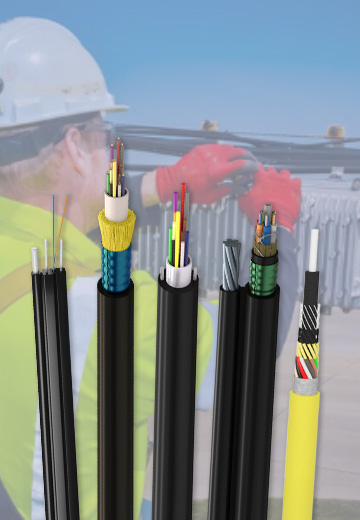 Fiber Optic CableAccess and backbone
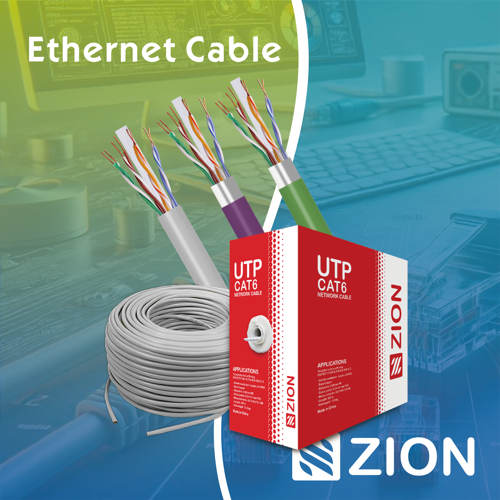 Ethernet CableCat5e to Cat8
 Coaxial CableRF and video signal
 Fire, Security & AlarmSafety systems
 Voice, Audio & VideoSignal cabling
 Power & Control CableEnergy and control
Fiber optic cable systems
Outdoor, indoor, FTTH and distribution cable lines for access networks, backbone routes and campus deployments.
 Telecom & ISP NetworksFTTH, PON, ODN
 Data Center InfrastructureServer room cabling
 Building Low-Voltage SystemsBMS, AV, weak current
 Security & Fire ProtectionAlarm, CCTV, access
 Industrial Automation CablePLC, RS485, fieldbus
 Energy & Power InfrastructureSolar, battery, power
Telecom & ISP Networks
For FTTH / PON access, outdoor fiber deployment, aerial routes, duct routes, direct burial routes, rural broadband and ODN planning.
Tools
Use calculators and planning tools for conduit capacity, PoE voltage drop and fiber optic link loss budget work.