What is the difference between fiber patch cord and copper patch cords?
Author: Site Editor Publish Time: 16-08-2022 Origin: Site
Fiber vs Copper Patch Cords
Fiber patch cords carry optical signals and support high-capacity links over a wide range of distances. Copper patch cords carry electrical Ethernet signals, can deliver PoE, and remain practical for short equipment and work-area connections.
The better patch cord depends on the complete link, not on a universal claim that one medium is always faster. The transceivers or network ports, Ethernet application, channel length, fiber type or copper category, connector interface, power requirement and installation environment must all match.
Selection in one sentence: Choose fiber for optical ports, higher-capacity backbones, electrical isolation and longer reach; choose copper for RJ45 Ethernet connections, short structured-cabling links and devices that need power through the data cable.

■What is a fiber patch cord?
A fiber patch cord is a factory-terminated optical cable with a connector at each end. Common interfaces include LC, SC, FC, ST and MPO/MTP. The assembly may be single-mode or multimode, simplex, duplex or multi-fiber, and it must match the transceiver wavelength, fiber specification, connector type, end-face polish and polarity required by the link.
Fiber carries light rather than electrical current. It provides electrical isolation and is not affected by electromagnetic interference in the way a conductive copper cable can be. It does not, however, deliver PoE to the connected device.
■What is a copper patch cord?
A copper Ethernet patch cord normally contains four twisted pairs terminated with 8P8C modular plugs, commonly called RJ45 plugs. Cat5e, Cat6, Cat6A and other category-rated cords are used between switches, patch panels, servers, computers, access points, cameras and other Ethernet devices.
The cord category must be compatible with the channel performance target. Shielding, conductor size, cord length, jacket rating and plug construction also matter. A higher-category patch cord cannot upgrade a lower-performing permanent link or network port by itself.
■Fiber vs copper patch cords: the main differences
Signal and interface
Fiber: transmits optical signals and connects to optical transceivers, adapters and fiber panels. Copper: transmits electrical signals and usually connects directly to RJ45 Ethernet ports and copper patch panels.
Bandwidth and application speed
Fiber supports many high-capacity and long-reach applications, but the usable speed and distance are determined by the Ethernet standard, transceiver, fiber type, connector loss and complete channel. Copper performance is determined by the Ethernet application, cable category, channel construction and length. Neither patch cord creates a faster port than the connected equipment supports.
Distance
Conventional four-pair copper structured-cabling channels are normally designed around a maximum 100 m channel, including patch cords. Optical Ethernet applications can extend from short rack links to much longer building, campus and carrier routes, but each transceiver and fiber combination has its own specified reach.
Power delivery
Copper Ethernet can carry both data and DC power when the power sourcing equipment, powered device and cabling support the selected PoE application. Standard fiber patch cords carry data only. A remote fiber-connected device therefore needs local power, a separate power cable or an engineered powered-fiber solution.
Electromagnetic and electrical behavior
Fiber is nonconductive when the cable contains no metallic strength member or armor and is immune to electromagnetic interference. Copper can perform reliably in its intended environment, but route design, separation, shielding and bonding may require attention around strong electrical noise. Fiber is often preferred between buildings because it removes the conductive data path.
Handling and maintenance
Fiber connector end faces must be inspected and cleaned correctly; contamination can cause loss or reflection. Fiber also requires control of bend radius and polarity. Copper patch cords are familiar and quick to connect, but damaged latches, crushed cable, excessive untwisting, tight bends and category or shielding mismatches can still reduce performance.
■Does fiber have lower latency than copper?
Not automatically. End-to-end network latency includes propagation delay through the cable, serialization delay at the interface, forwarding or processing delay in equipment, and queuing delay under load. A patch cord changes only a small part of that total.
Propagation delay depends on physical length and the signal velocity in the specific medium.
Serialization delay is packet bits divided by the interface bit rate; it is not determined by whether the patch cord is fiber or copper when the line rates are equal.
Equipment delay depends on the switch, transceiver, PHY and forwarding design.
Queuing delay depends on traffic and congestion and may dominate the small difference between short patch cords.
Practical conclusion: For short rack or room connections, select the medium for port type, required reach, bandwidth, power and environment rather than assuming that the propagation difference alone will determine application latency.
■When to choose fiber patch cords
The equipment uses optical transceivers or fiber interfaces.
The link exceeds the supported copper channel distance.
Electrical isolation is important between buildings or exposed areas.
High-density, high-capacity backbone or data-center connectivity is required.
Strong electromagnetic interference makes a nonconductive optical path attractive.
When specifying a fiber assembly, confirm connector A and B, polish, fiber type, simplex or duplex construction, polarity, jacket rating, diameter, length and test report. The current ZION fiber patch cord range provides LC, SC, FC, ST and other assemblies for different equipment interfaces.
■When to choose copper patch cords
Both endpoints use compatible RJ45 Ethernet ports.
The link is within the selected copper application and channel length.
The connected camera, access point, phone or sensor needs PoE.
Fast, familiar moves and changes are needed at desks or inside racks.
The copper category, shielding, jacket and conductor construction match the channel design.
For copper procurement, specify category, shielding, length, jacket, plug type, conductor construction and PoE requirement. The ZION network cable catalog includes Cat5e, Cat6 and Cat6A copper patch cord options alongside the corresponding structured-cabling components.
■Patch cord selection checklist
Identify the exact ports and transceivers at both ends.
Confirm the Ethernet application, required speed and supported reach.
Check whether the remote device needs PoE or separate power.
Match fiber type and polarity or copper category and shielding to the installed channel.
Select the correct connector, length, jacket and environmental rating.
Request suitable insertion-loss, continuity or channel-test evidence for the project.
■Frequently asked questions
Is a fiber patch cord always faster than a copper patch cord?
No. The application speed is set by the connected interfaces and supported Ethernet standard. Fiber offers broader options for high capacity and long reach, but a fiber cord does not make a slower port operate faster.
Can fiber patch cords provide PoE?
Standard fiber patch cords do not carry electrical power. The remote device needs local power, a separate power cable or a purpose-designed powered-fiber system.
Can an LC fiber connector plug into an RJ45 port?
No. LC is an optical connector and RJ45 is a copper Ethernet interface. A compatible switch port, transceiver or media converter is required to convert between optical and electrical Ethernet.
Which patch cord is better for a data center rack?
Both may be appropriate. Use the medium supported by the equipment architecture, required lane speed, reach, port density, power plan and cable-management design. Many racks use copper for management or short RJ45 links and fiber for high-capacity switch and server connections.



 Fiber Optic Tools
Products 6 families
Solutions 6 markets
Resources Tools & docs
Certificate
Certification and compliance references for project review, qualification and purchasing documentation.

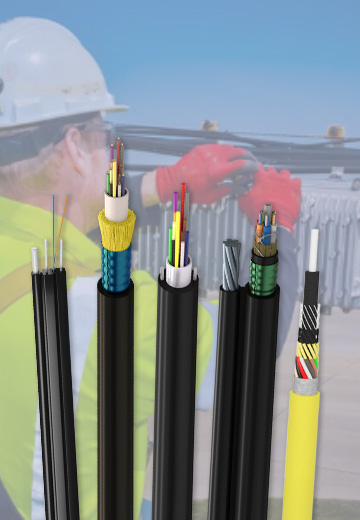 Fiber Optic CableAccess and backbone
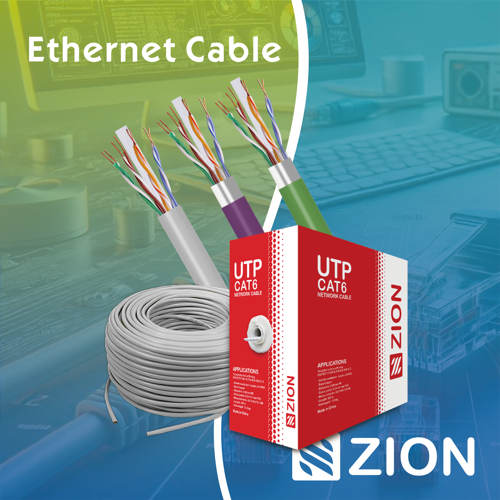 Ethernet CableCat5e to Cat8
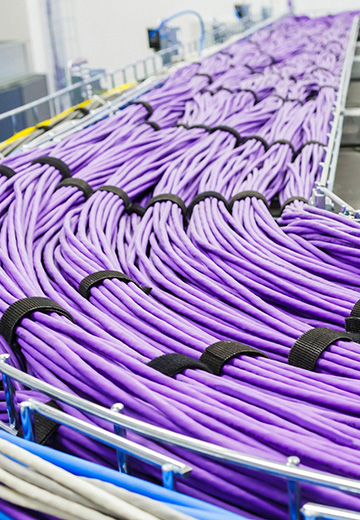 Coaxial CableRF and video signal
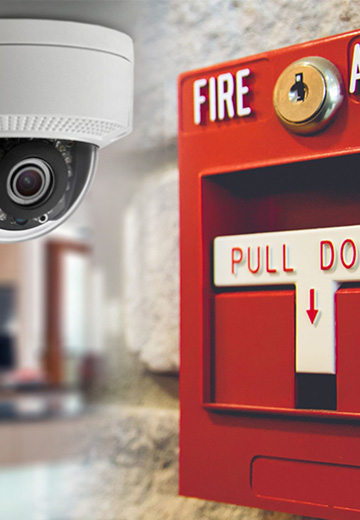 Fire, Security & AlarmSafety systems
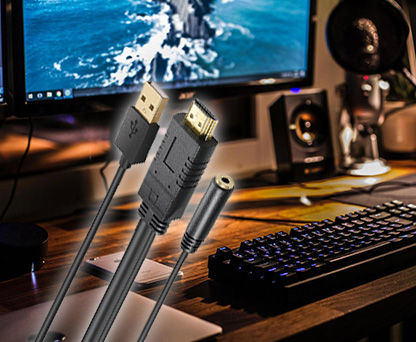 Voice, Audio & VideoSignal cabling
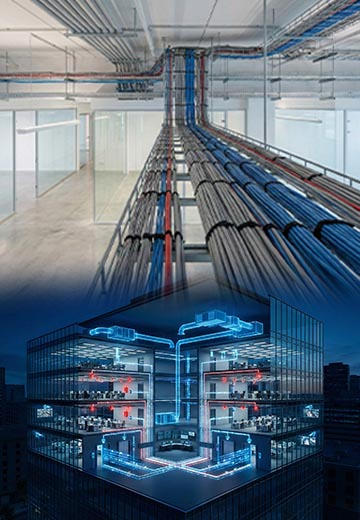 Power & Control CableEnergy and control
Fiber optic cable systems
Outdoor, indoor, FTTH and distribution cable lines for access networks, backbone routes and campus deployments.
 Telecom & ISP NetworksFTTH, PON, ODN
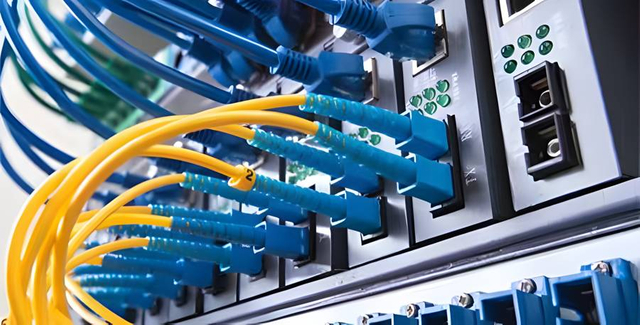 Data Center InfrastructureServer room cabling
 Building Low-Voltage SystemsBMS, AV, weak current
 Security & Fire ProtectionAlarm, CCTV, access
 Industrial Automation CablePLC, RS485, fieldbus
 Energy & Power InfrastructureSolar, battery, power
Telecom & ISP Networks
For FTTH / PON access, outdoor fiber deployment, aerial routes, duct routes, direct burial routes, rural broadband and ODN planning.
Tools
Use calculators and planning tools for conduit capacity, PoE voltage drop and fiber optic link loss budget work.