Why Foaming PE insulation needed in Ethernet network cables
Author: Site Editor Publish Time: 27-08-2020 Origin: Site
Foamed PE Insulation in Ethernet Cables: Benefits, Process, and Selection Foaming can lower effective permittivity and capacitance, but cable performance still depends on geometry, process control, and verification of the complete construction.
Foamed polyethylene, usually called foamed PE, is an insulation construction used around copper conductors in some LAN and telecommunications cables. Microscopic gas cells reduce the amount of solid polymer in the dielectric. This lowers the insulation's effective relative permittivity and can help a cable designer control capacitance, characteristic impedance, propagation delay, attenuation, and overall cable diameter.
Foamed PE is a design option, not a universal requirement. Solid PE, foamed PE, polypropylene, and fluoropolymer insulation can all be used in compliant data-cable designs. The correct choice depends on the target category, conductor and pair geometry, fire-rating construction, mechanical requirements, manufacturing capability, and the tested performance of the finished cable.
What Foamed PE Insulation Does
Polyethylene already has useful electrical insulation properties, including relatively low dielectric constant and low dielectric loss. Introducing controlled gas cells lowers the effective permittivity further because the dielectric becomes a combination of polymer and gas. For a defined conductor and pair geometry, lower effective permittivity generally reduces capacitance per unit length and increases signal propagation velocity.

These changes do not independently determine Ethernet bandwidth. A finished cable must maintain its nominal differential impedance and meet the applicable limits for insertion loss, return loss, near-end crosstalk, propagation delay, delay skew, and other category parameters. Foamed insulation gives the designer another way to balance conductor size, insulation diameter, pair spacing, twist design, material use, and electrical performance.
Why Lower Effective Permittivity Can Help LAN Cable Design
Capacitance control: lower effective permittivity can reduce pair capacitance when other design variables remain comparable.
Impedance design: insulation permittivity and thickness are two of the variables used to achieve the required nominal impedance together with conductor size, spacing, and twist geometry.
Propagation delay: a lower effective dielectric constant generally increases velocity of propagation, although pair twists and construction still influence measured delay and delay skew.
Material efficiency: a controlled cellular structure can reduce polymer mass for a given insulation geometry.
Design flexibility: designers can trade insulation diameter, conductor size, pair geometry, mechanical strength, and electrical targets within the complete cable design.
Published compound data are useful for material selection, but they are not finished-cable guarantees. For example, a resin supplier may report typical dielectric constant, dissipation factor, density, or achievable expansion under defined test conditions. The cable manufacturer must convert those material properties into stable conductor insulation and then verify the complete cable.
Physical Foaming and Chemical Foaming
Two broad process routes are used to create cellular cable insulation. In physical foaming, a gas such as nitrogen is injected into the polymer melt under controlled pressure. A nucleating system helps initiate many small cells as the melt exits the extrusion tooling and pressure falls. In chemical foaming, a blowing agent decomposes or reacts during processing to generate gas within the polymer.

Physical foaming is widely used for high-performance LAN insulation because it supports controlled gas dosing, deeper expansion, and fine-cell process control on suitable equipment. Chemical foaming remains a valid technology for telecommunications and data-cable compounds; it should not be described as universally abandoned. The best method depends on the required expansion, cell uniformity, material system, line investment, production speed, mechanical targets, and finished-cable specification.
How Nitrogen Physical Foaming Is Produced
A typical physical-foaming line meters PE compound into an extruder, melts and homogenizes it, injects nitrogen through a controlled gas system, and mixes the gas into the polymer under pressure. Nucleating additives and stable melt conditions help create many small cells. The conductor then passes through the crosshead, where the foamed insulation is applied, sized, cooled, and monitored.

The original manufacturing window cannot be reduced to one universal temperature, gas percentage, or foaming degree. Those settings depend on resin grade, blowing or nucleating system, conductor size, insulation diameter, line speed, tooling, cooling profile, and target cell structure. Stable production requires closed-loop attention to capacitance, diameter, eccentricity, surface quality, and electrical test results rather than a single nominal recipe.
What Is Skin-Foam-Skin Insulation?
Skin-foam-skin is a multilayer insulation construction produced by co-extrusion. A thin inner solid layer surrounds the conductor, a cellular core provides most of the dielectric benefit, and a thin outer solid layer creates a smooth, mechanically robust surface. The precise layer materials, thicknesses, adhesion targets, and expansion ratio are design-specific.

The solid skins can improve conductor contact, surface finish, handling, and resistance to cell damage during downstream operations. The foamed core reduces effective permittivity. A successful construction must also withstand twisting, cabling, jacketing, termination, bending, and environmental conditioning without collapsing cells or causing unacceptable electrical variation.
Process Controls That Matter
Cell size and distribution: uneven or connected cells can create local electrical and mechanical variation.
Insulation diameter and eccentricity: geometry variation changes capacitance, impedance, and pair balance.
Capacitance stability: continuous measurement can reveal gas, temperature, pressure, cooling, or diameter drift.
Surface and adhesion: the insulation must survive twisting and cabling while remaining suitable for stripping and termination.
Spark testing: detects insulation discontinuities but does not replace the complete electrical performance test.
Finished-cable testing: impedance, return loss, insertion loss, crosstalk, resistance unbalance, propagation delay, and delay skew must be checked against the applicable product specification.
How to Specify Foamed PE Ethernet Cable
Buyers should specify the finished cable performance and installation requirements first, then request insulation construction details where they affect qualification or manufacturing consistency. ZION's verified LAN/Ethernet cable products catalog can be used to identify relevant product families before confirming the exact part number and datasheet.
Required category and applicable cabling standard
Solid or stranded conductor, conductor material and nominal size
Shielding construction, pair design and target installation
Insulation material and whether solid, foam-skin, or skin-foam-skin is required
Nominal insulation diameter, capacitance, impedance and velocity requirements where specified
Jacket fire rating, environmental exposure, temperature and PoE bundle conditions
Required certification, factory test report, packaging, printing and traceability records
FAQ
Is foamed PE required for Cat6 or Cat6A cable?
No. Category compliance is determined by the tested complete cable. Foamed PE is one design option that may help achieve electrical and dimensional targets, but other insulation constructions can also comply.
Does foamed PE make Ethernet data travel faster?
Lower effective permittivity generally increases signal propagation velocity and can reduce delay. It does not by itself increase the Ethernet data rate or bandwidth category; the complete channel and all category parameters determine supported applications.
Is physical nitrogen foaming always better than chemical foaming?
Not in every application. Physical foaming is well suited to controlled, higher-expansion LAN insulation on appropriate equipment. Chemical foaming can remain suitable when its expansion, cell structure, production economics and finished-cable results meet the specification.
What evidence should a buyer request?
Request the exact part number, datasheet, applicable standard and certification, conductor and insulation construction, finished-cable test report, reel and surface markings, and traceability records. Material or foaming claims should support, not replace, complete-cable performance evidence.



 Fiber Optic Tools
Products 6 families
Solutions 6 markets
Resources Tools & docs
Certificate
Certification and compliance references for project review, qualification and purchasing documentation.
 Fiber Optic CableAccess and backbone
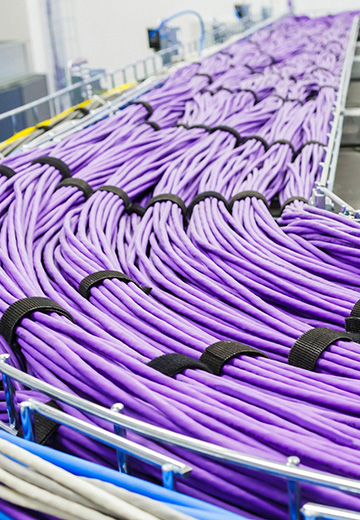
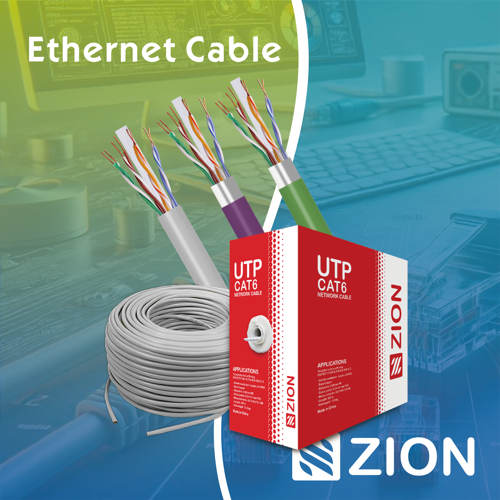 Ethernet CableCat5e to Cat8
 Coaxial CableRF and video signal
 Fire, Security & AlarmSafety systems
 Voice, Audio & VideoSignal cabling
 Power & Control CableEnergy and control
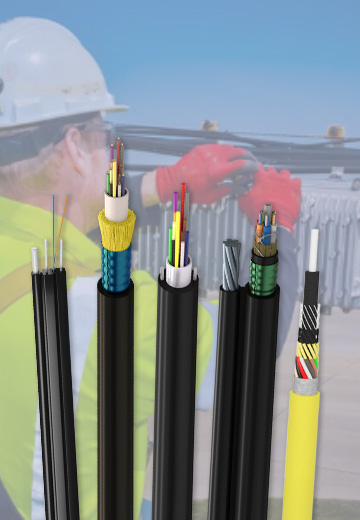
Fiber optic cable systems
Outdoor, indoor, FTTH and distribution cable lines for access networks, backbone routes and campus deployments.
 Telecom & ISP NetworksFTTH, PON, ODN
 Data Center InfrastructureServer room cabling
 Building Low-Voltage SystemsBMS, AV, weak current
 Security & Fire ProtectionAlarm, CCTV, access
 Industrial Automation CablePLC, RS485, fieldbus
 Energy & Power InfrastructureSolar, battery, power
Telecom & ISP Networks
For FTTH / PON access, outdoor fiber deployment, aerial routes, duct routes, direct burial routes, rural broadband and ODN planning.
Tools
Use calculators and planning tools for conduit capacity, PoE voltage drop and fiber optic link loss budget work.