What is LPCB Fire Cable
Author: Site Editor Publish Time: 19-07-2024 Origin: Site
What Is LPCB Fire Cable? LPCB fire cable is a fire-resistant cable covered by a valid Loss Prevention Certification Board certificate and current RedBook Live listing. The approval applies only to the manufacturer, product family, construction, sizes, standards, and classifications identified in that certificate.

■What Does LPCB Certification Mean?
LPCB is the certification brand operated by BRE Global for fire and security products and services. LPCB product certification is an independent third-party conformity assessment. It typically combines initial product testing and technical evaluation with assessment and ongoing surveillance of the manufacturer's quality system and production controls.
Approved products and services are listed in RedBook Live. That online register is the practical verification point for specifiers, contractors, distributors, and end users because certification status and scope can change. A cable marked “tested to,” “complies with,” or “designed to meet” a standard is not automatically LPCB certified.
Verification rule: match the certificate holder, certificate number, LPCB reference, product name, conductor size, core configuration, voltage rating, and listed standards to the exact cable being offered. A similar appearance or family name does not extend the certified scope.
■What Is an LPCB Fire Cable?
An LPCB fire cable is intended for circuits that must maintain electrical continuity for a defined period under specified fire-test conditions, with the exact performance determined by the standards and classifications shown on its certificate. Typical applications include fire detection and alarm circuits, emergency voice communication, smoke-control interfaces, emergency lighting, and other life-safety or emergency circuits where the system design requires fire-resistant cabling.
The term does not describe one universal cable construction. Certified products may use solid or stranded copper conductors, different conductor sizes and core counts, fire-resistant insulation systems, metallic screens, drain wires, glass-fibre tapes, and low-smoke halogen-free outer sheaths. Only the construction and options included in the current certificate should be specified as LPCB approved.
■Key Fire-Cable Standards and Classifications
EN 50200:2015 Class PH120
EN 50200 defines a method for testing the resistance to fire of unprotected small cables used in emergency circuits. A PH120 classification records circuit integrity for the specified 120-minute test classification under the standard's flame and mechanical-shock conditions. PH120 is a test classification; it should not be presented as a universal statement that every cable will operate for 120 minutes in every real fire.
BS 6387:2013 Categories C, W, and Z
BS 6387 uses separate categories for resistance to fire alone, fire with water, and fire with mechanical shock. A CWZ designation means the listed cable has been assessed against the relevant C, W, and Z test categories. These categories are not interchangeable with EN 50200 PH classifications, so project documents should name the required standard and classification rather than using the general phrase “fireproof cable.”
Smoke, halogen gas, and flame propagation
A certificate may also list standards such as EN 61034-2 for smoke density, EN 60754-1 for halogen acid gas content, and EN 60332-1-2 or EN 60332-3-24 for flame propagation. These tests measure different properties. Low smoke, low halogen-acid-gas output, flame retardance, and circuit integrity are related but distinct requirements.

■What LPCB Approval Does and Does Not Prove
It provides third-party evidence that the listed product meets the standards and classifications stated in the certificate.
It connects the approval to a defined manufacturer, product range, construction, and certification scope.
It supports traceable procurement when the offered cable, drum marking, datasheet, and certificate reference match.
It does not approve every cable made by the same company or every variation sold under a similar name.
It does not replace the fire strategy, system design, installation standard, local code, or acceptance of the authority having jurisdiction.
It does not make fire-resistant cable fireproof; performance is demonstrated under defined laboratory test conditions.
■LPCB Approved Product Comparison
The four ZION product pages differ in two main decisions: the required fire-test family and the conductor construction. EN 50200 PH120 products focus on the PH120 classification, while the BS 6387 CWZ products add separate fire, water, and mechanical-shock categories. Class 5 stranded conductors provide more installation flexibility; Class 1 solid conductors suit fixed wiring where repeated movement is not expected.
| Comparison item | PH120 Flexible | PH120 Solid | CWZ Flexible | CWZ Solid |
|---|---|---|---|---|
| Primary standard | EN 50200:2015 Class PH120 | EN 50200:2015 Class PH120 | BS 6387:2013 CWZ; product page also lists BS 7629-1 Standard 60 and EN 50200 Annex E | BS 6387:2013 CWZ; product page also lists EN 50200 PH120 |
| Conductor | Class 5 stranded flexible annealed copper | Class 1 solid annealed copper | Class 5 stranded flexible annealed copper | Class 1 solid annealed copper |
| Insulation | Special-mix silicone rubber | Special-mix silicone rubber | Special-mix silicone rubber | Ceramicized silicone rubber |
| First screen | Glass-fibre tape, more than 110% coverage | Glass-fibre tape, more than 110% coverage | PET foil, more than 120% coverage | Glass-fibre tape, more than 110% coverage |
| Drain and second screen | 0.80 mm tinned-copper drain; aluminum-polyester tape, more than 120% | 0.80 mm tinned-copper drain; aluminum-polyester tape, more than 120% | 0.80 mm tinned-copper drain; aluminum-polyester tape, more than 120% | 0.80 mm tinned-copper drain; aluminum-polyester tape, more than 120% |
| Outer sheath | Thermoplastic low-smoke, halogen-free; red, white, or orange | Thermoplastic low-smoke, halogen-free; red, white, or orange | Thermoplastic low-smoke, halogen-free; red, white, or orange | Thermoplastic low-smoke, halogen-free; red or white |
| Electrical data | 300/500 V; product page lists 2000 V core-core/core-screen test voltage | 300/500 V; product page lists 2000 V core-core/core-screen test voltage | 300/500 V; product page lists 2000 V core-core/core-screen test voltage | 300/500 V; product page lists 2000 V core-core/core-screen test voltage |
| Temperature range | Operation: -30°C to +180°C; installation: -5°C to +50°C | Operation: -30°C to +180°C; installation: -5°C to +50°C | Operation: -30°C to +180°C; installation: -5°C to +50°C | Operation: -30°C to +180°C; installation: -5°C to +50°C |
| Selection emphasis | PH120 projects that need easier routing and flexible termination | PH120 fixed wiring with solid-conductor terminations | Projects specifying CWZ plus flexible installation | Fixed wiring where CWZ and ceramicized insulation are specified |
Selection sequence: choose the standard and fire-performance classification first, then select solid or stranded conductor construction. Treat the table as a product-page comparison, not as independent evidence of current LPCB approval; the offered size, core count, marking, certificate number, and RedBook listing must still match.
■How to Specify and Verify LPCB Fire Cable
Start with the system requirement. Identify the emergency circuit, required operating duration, applicable installation standard, and authority having jurisdiction.
Name the exact standard and class. State EN 50200 PH120, BS 6387 CWZ, or another required classification instead of writing only “fire-resistant.”
Define the electrical construction. Confirm voltage rating, conductor size, solid or stranded conductor class, number of cores, screening, drain wire, and earth conductor requirements.
Define environmental and installation conditions. Check indoor or outdoor location, temperature range, moisture, mechanical protection, bend radius, containment, and compatibility with glands and terminations.
Verify the approval scope. Obtain the current certificate and match it to the RedBook Live listing, product marking, datasheet, and purchase description.
Request traceable delivery documents. Agree the required certificate copy, test documentation, drum identification, production traceability, inspection records, and packing marks before shipment.
■Common Procurement Mistakes
Accepting a test report as proof of current LPCB product certification.
Using a certificate for a different manufacturer, product name, conductor size, or core count.
Treating PH120, CWZ, flame retardance, low smoke, and low halogen content as the same property.
Approving substitutions without checking whether the replacement remains inside the certificate scope.
Specifying only packaging, length, price, or delivery time while omitting the required standard, voltage, conductor, and circuit-integrity classification.
Ignoring installation accessories, joints, glands, supports, and routing requirements that influence the performance of the complete emergency circuit.
■Frequently Asked Questions
Is every fire-resistant cable LPCB approved?
No. Fire-resistant describes a performance objective or test result. LPCB approval requires a valid certificate and current RedBook Live listing covering the exact product and configuration.
Does PH120 mean the cable is fireproof for two hours?
No. PH120 is a classification achieved under the defined EN 50200 test method. Actual system performance also depends on the complete circuit design, supports, joints, accessories, installation quality, and real fire conditions.
What is the difference between PH120 and CWZ?
PH120 is an EN 50200 fire-resistance classification involving the standard's specified flame and mechanical-shock test. CWZ refers to three BS 6387 categories covering fire alone, fire with water, and fire with mechanical shock. A project may require one or both standard families.
What should a buyer request before ordering?
Request the current LPCB certificate and RedBook reference, product datasheet, conductor and core configuration, voltage rating, listed standards and classifications, cable marking, drum length, traceability documents, and any project-specific inspection or test requirements.



 Fiber Optic Tools
Products 6 families
Solutions 6 markets
Resources Tools & docs
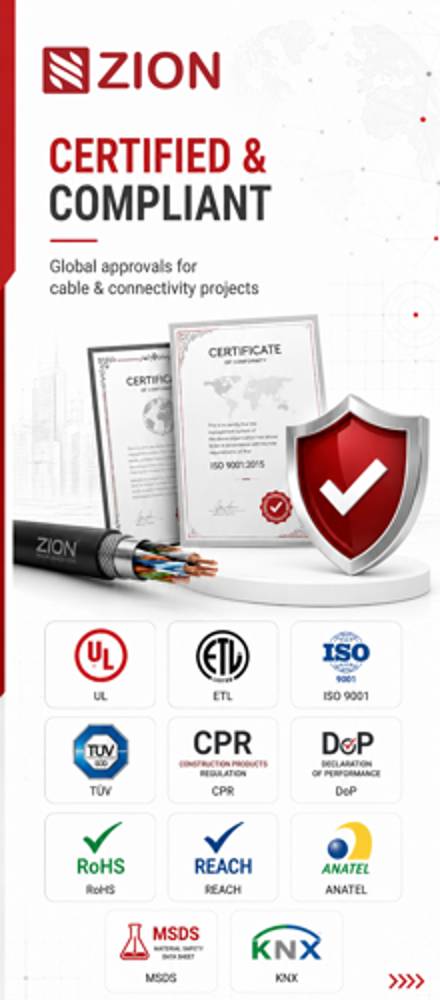
Certificate
Certification and compliance references for project review, qualification and purchasing documentation.
 Fiber Optic CableAccess and backbone
 Ethernet CableCat5e to Cat8
 Coaxial CableRF and video signal
 Fire, Security & AlarmSafety systems
 Voice, Audio & VideoSignal cabling
 Power & Control CableEnergy and control
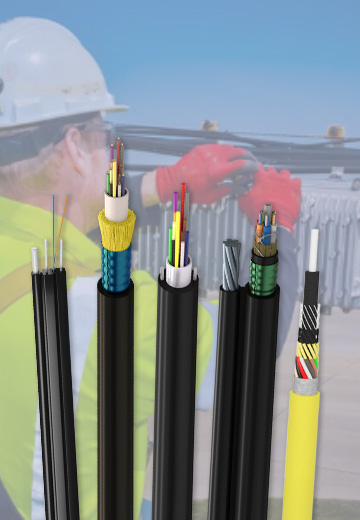
Fiber optic cable systems
Outdoor, indoor, FTTH and distribution cable lines for access networks, backbone routes and campus deployments.
 Telecom & ISP NetworksFTTH, PON, ODN
 Data Center InfrastructureServer room cabling
 Building Low-Voltage SystemsBMS, AV, weak current
 Security & Fire ProtectionAlarm, CCTV, access
 Industrial Automation CablePLC, RS485, fieldbus
 Energy & Power InfrastructureSolar, battery, power
Telecom & ISP Networks
For FTTH / PON access, outdoor fiber deployment, aerial routes, duct routes, direct burial routes, rural broadband and ODN planning.
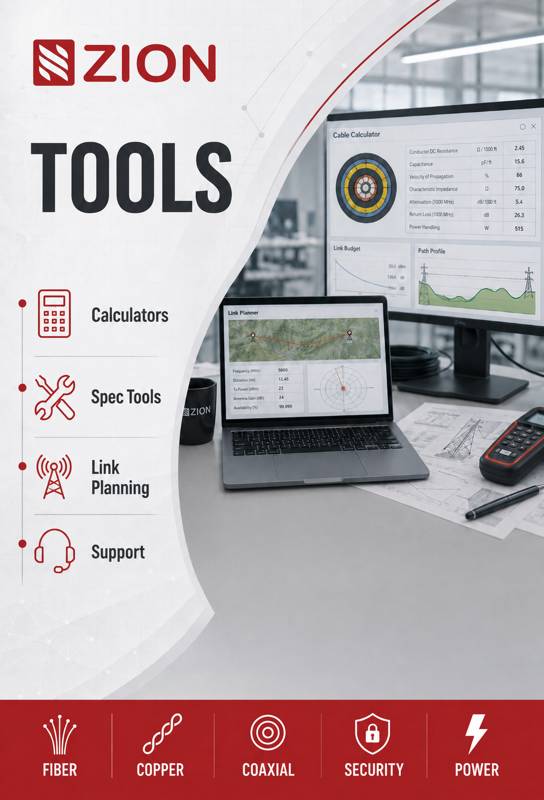
Tools
Use calculators and planning tools for conduit capacity, PoE voltage drop and fiber optic link loss budget work.