What Is an Underwater Fiber Optic Spool?
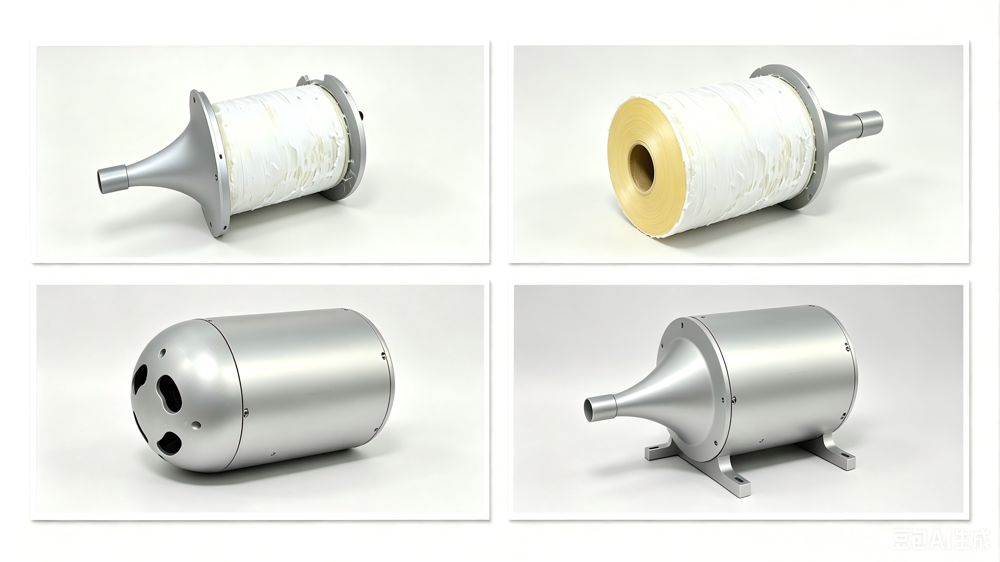
An underwater fiber optic spool is a compact fiber release device used to deploy an optical fiber tether between an underwater vehicle and a control, receiving or monitoring terminal. Compared with copper-based links, optical fiber provides high-bandwidth data transmission, low signal loss and strong resistance to electromagnetic interference in complex marine environments.
ZION positions this product as a field-ready fiber optic communication link for underwater vehicles and marine operations. It is suitable for teams that need a reliable optical fiber tether cable for ROV, UUV, AUV, underwater robots, observation networks, port monitoring and marine engineering communication.
Deployable Fiber Optic Tether for ROV, UUV and AUV
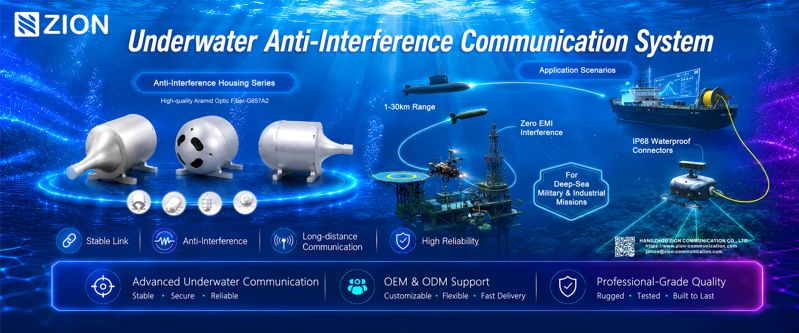
The spool works as the deployable fiber optic tether in the communication link. During operation, the fiber is released as the underwater vehicle moves, helping maintain a stable optical data channel between the underwater platform and the surface-side or receiving-side terminal equipment.
This product is designed as a compact fiber spool and tether communication system for underwater vehicles, not as a long-haul submarine cable network. Project teams can select the spool length, optical interface, connector configuration and transceiver options according to the required mission profile.
System Components
Ready-to-use fiber spool configuration for 1 km to 30 km underwater communication links.
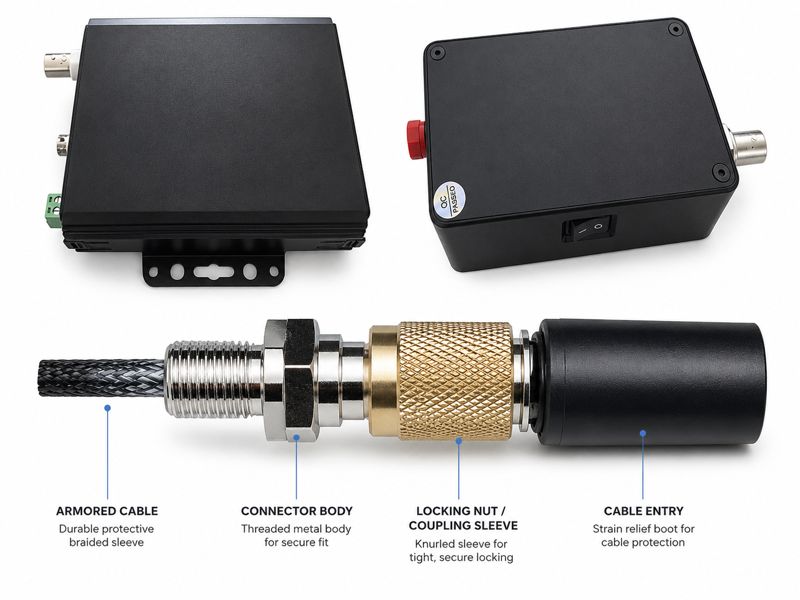
Transmitting and receiving optical terminals with optical, network and serial port options.
Water-tight wired connection structure for underwater link integration and field assembly.
Aramid + PVC sheath with G.657.A2 bend-insensitive fiber is used as the core optical transmission medium, providing a stable data channel with tensile strength and environmental resilience for underwater communication links.
Key Benefits
Fiber optic transmission helps reduce electromagnetic interference risks in underwater and industrial marine environments.
The spool format supports field deployment where a lightweight optical tether is required.
Wavelength, interface type and mechanical design can be matched to project requirements.
Applications for Underwater Robots and Marine Operations
The system is suitable for short-to-medium-range underwater optical fiber communication where anti-interference performance, reliable link quality and field-ready underwater connection are required.
Communication and control links for underwater robots and unmanned underwater platforms.
Data transmission for underwater observation points, sensors and monitoring networks.
Underwater construction, engineering communication and marine resource development.
Monitoring support for ports, coastlines and nearshore underwater infrastructure.
Underwater scientific research, exploration, test communication and mission data links.
Fiber-based communication links for marine industrial scenarios requiring stable transmission.
Underwater Fiber Optic Spool Specifications
| Parameter | Specification |
|---|---|
| Product Name | Underwater fiber optic spool / high-speed optical fiber release device |
| Length Options | 1 km - 30 km |
| Sheath Material | Aramid + PVC |
| Fiber Type | G.657.A2 bend-insensitive optical fiber |
| Optical Cable Diameter | 0.5 mm / 0.65 mm |
| Unit Weight | 248 g/km / 430 g/km |
| Tensile Strength | >150 N / >200 N |
| Operating Temperature | -40°C to +60°C |
| Optical Interface | FC/UPC or LC/UPC |
| Attenuation Coefficient | ≤0.35 dB/km @ 1310 nm ≤0.25 dB/km @ 1550 nm |
| Can Material | Resin & metallic aluminum |
| Standard Dimensions | 237×180×152 mm (10 km) 300×277×248 mm (20 km) |
| Cable Density | 1.25 g/cm³ / 1.3 g/cm³ |
| Color | Yellowish |
Optical Transceiver and Water-Tight Connector Options
| Item | Transmitting Unit | Receiving Unit |
|---|---|---|
| Product Name | Transmitting optical terminal | Receiving optical terminal |
| Wavelength | 1310 nm / 1550 nm | 1310 nm / 1550 nm |
| Interfaces | Optical port (FC), network port, serial port | Optical port (FC), network port, serial port |
| Connection Type | Water-tight wired connection | Water-tight wired connection |
| Customization | Supported for wavelength, interface type and mechanical design | |
Housing, Fiber Spool and Packing Reference
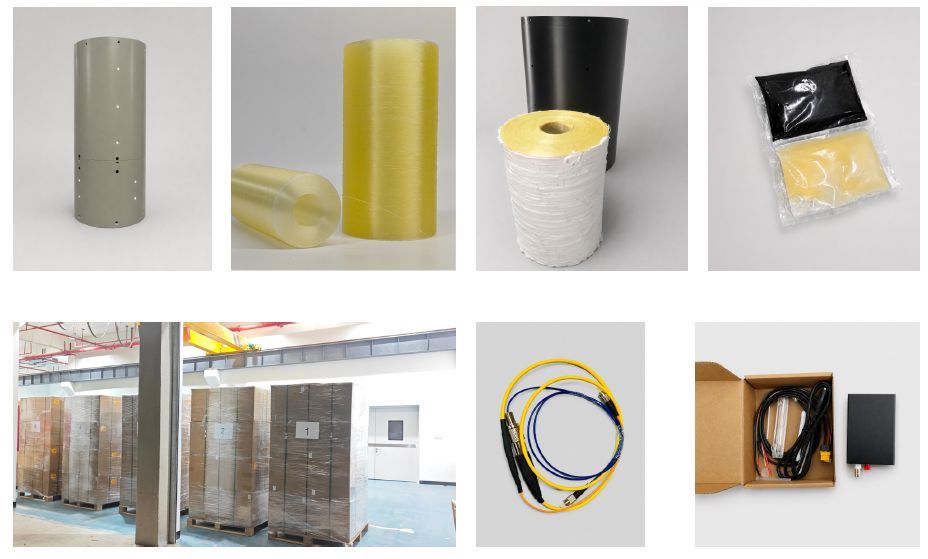
The system can be supplied with housing components, aramid/PVC fiber material, fiber spool packing, connection cable assemblies, terminal kit packaging and palletized shipping references. These details help project teams confirm mechanical integration, packing requirements and RFQ documentation before ordering.
Engineering Selection Notes
Before quotation, confirm whether the application is ROV/AUV control, UUV communication, underwater observation, marine engineering communication, port monitoring or research testing. Then confirm transmission distance, optical interface, connector waterproof requirement, terminal port type, wavelength and mechanical design requirements.
If your project requires a single-use fiber optic spool or disposable fiber optic spool, confirm mission duration, launch method, recovery plan and housing requirements. For reusable or semi-fixed applications, confirm the mechanical design and protection requirements separately.
RFQ Checklist
For accurate specification matching and quotation, prepare the following information before sending an RFQ for this underwater fiber optic spool system.
FAQ
What is an underwater fiber optic spool used for?
It is used to provide a deployable fiber optic tether link for ROV, UUV, AUV and underwater robot communication, control and data transmission in marine environments.
Is this a disposable fiber optic spool?
The spool can be configured according to the project deployment method. If the mission requires a single-use or disposable fiber optic spool, confirm the length, housing, connector and deployment requirements before quotation.
What fiber type does the spool use?
The fiber release device uses G.657.A2 bend-insensitive fiber with aramid + PVC sheath as the core transmission medium.
What length options are available?
The listed length options are 1 km to 30 km for the high-speed optical fiber release device.
Which optical interfaces are supported?
The fiber release device supports FC/UPC or LC/UPC optical interfaces. The optical transceiver equipment can include optical port, network port and serial port interfaces.


 Fiber Optic Cable
 Fiber Optic Tools
 Ethernet Cable
 Coaxial Cable
 Fire & Security Cable
 Voice, Audio & Video
 Power & Control Cable