Pre-Install: Confirm the Responsibility Boundary
Before installation, confirm the RACI between landlord, colocation operator, carrier, installer and tenant. Obtain approved route drawings, rack elevations, MMR or ODF port allocation and access windows.
The checklist should also lock cable type, fiber category, fiber count, jacket or fire performance, connector polish, polarity, minimum bend radius, test thresholds, document naming, witness requirements and defect closure timing.
Demarcation
The demarcation point should be identical in drawings, ODF records and handover documents. Record A-end, B-end, asset boundary, cable ID, fiber range, connector, service and responsible party.
If a submarine or metro route first reaches an entrance room and then extends to the MMR, document the entrance splice and internal cross-connect separately.

ODF Installation
Check frame fixing, grounding where applicable, splice tray capacity, adapters, pigtails, bend radius, slack storage, dust protection and front access. High port density is only useful if maintenance remains safe and repeatable.
Different carriers or A/B routes can be physically separated and color managed, but color should never replace a unique circuit or fiber ID.
Patching and Labeling
Patch cords should be the right length and routed without crossing maintenance areas. Confirm connector polish, single-mode or multimode compatibility and polarity before mating.
Labels should connect cable ID, fiber or port, A/B endpoint, route and service or circuit ID. They must be readable on site and searchable in the port database.

Testing and Handover Records
Use OLTS or optical source and power meter results for end-to-end insertion loss, and OTDR traces for event location, splice review and fault investigation. FOA guidance notes that OTDR should not replace insertion-loss testing.
The acceptance pack should include raw OTDR trace files, PDF or CSV summaries, OLTS results, end-face images, test route drawings and fail/retest records. File names should map directly to cable and fiber IDs.

Route Diversity and Spares
Walk A/B routes through entrances, ducts, risers, trays, penetrations, splice points and ODF zones. Record any shared handhole, bridge, wall opening or cabinet as a common-mode risk.
Spare stock should match connector polish, fiber category, polarity and jacket requirement. Record stock location, sealed condition, owner and review cycle so emergency work is not delayed by missing passive parts.

Acceptance Checklist
| Section | Acceptance item | Evidence |
|---|---|---|
| Demarc | Asset boundary, ports and responsibility confirmed | Signed demarc sheet |
| Cable | Model, fiber count, jacket, length and reel match | Packing list and reel record |
| ODF | Installation, splice, slack and bend radius approved | Inspection photos |
| Patching | Connector, polarity, length and route correct | Port schedule |
| Labels | Both ends and transition points are unique and readable | Label audit |
| Optical test | IL, OTDR and end-face checks meet project rules | Raw files and summary |
| Diversity | A/B physical route walked | Marked route plan |
| Spares | Part numbers, quantities and storage owner defined | Spare register |
Related ZION Resources
Use this ZION resource when the project needs matching products, cable selection context or a clearer passive BOM.
Use this ZION resource when the project needs matching products, cable selection context or a clearer passive BOM.
Use this ZION resource when the project needs matching products, cable selection context or a clearer passive BOM.
Use this ZION resource when the project needs matching products, cable selection context or a clearer passive BOM.
Sources and Standards
- AFR-IX Telecom website
- Raxio Angola carrier-neutral Tier III data centre page
- FOA OTDR reference
- FOA outside plant testing reference
- ANSI/NECA/FOA 301 reference PDF
FAQ
What is the most important handover document for a carrier PoP?
There is no single document. The port map, demarc sheet, as-built route drawing, optical test package and spare register should agree with each other.
Should OTDR be enough for acceptance?
No. OTDR is valuable for event location and fault analysis, but insertion-loss testing is still needed for end-to-end loss acceptance where the project requires it.
Why are spares part of cabling acceptance?
Because restoration time depends on compatible patch cords, adapters, pigtails, splice parts and sometimes cable or closure stock being available when a fault occurs.



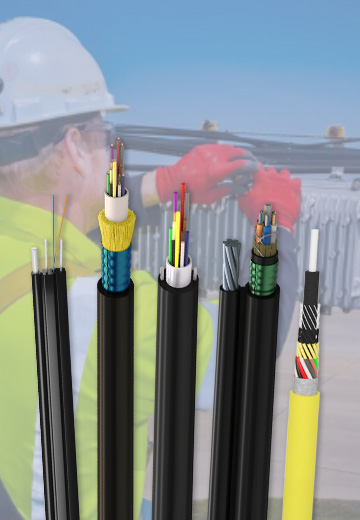 Fiber Optic Cable
 Fiber Optic Tools
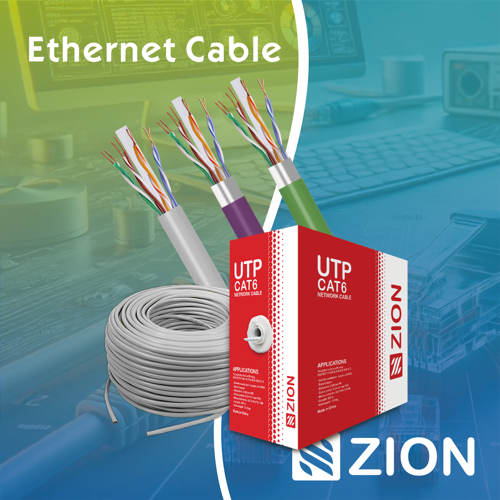 Ethernet Cable
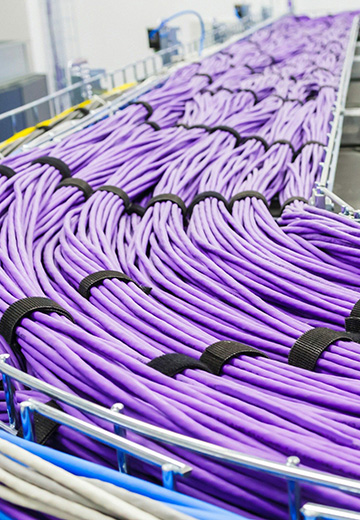 Coaxial Cable
 Fire & Security Cable
 Voice, Audio & Video
 Power & Control Cable