Quick Answer: What Does an IEC 60228 Conductor Class Mean?
IEC 60228 classifies conductors used in insulated cables. Class 1 covers solid conductors, Class 2 covers stranded conductors generally associated with fixed installations, and Classes 5 and 6 cover flexible copper conductors, with Class 6 more flexible than Class 5. The class helps define conductor construction and maximum resistance requirements; it does not certify the complete cable for drag chains, torsion, oil, temperature, or a specific machine.
For purchasing, treat the class as one line in the specification rather than the finished-cable verdict. A useful request identifies the required conductor class and nominal area, then separately states electrical load, movement, bend, shielding, environment, termination, and documentation requirements.
What Classes 1, 2, 5, and 6 Tell a Cable Buyer
The four classes support consistent conductor specification, but each description has a boundary. The comparison below is a selection aid, not a substitute for the normative tables and clauses in the purchased standard.
| IEC 60228 class | Broad interpretation | What it does not establish |
|---|---|---|
| Class 1 | Solid conductor. | Suitability for a flexible cable or repeated movement. |
| Class 2 | Stranded conductor generally used for fixed installation. | Continuous-flex, torsion, or cable-carrier performance. |
| Class 5 | Flexible copper conductor. | A verified dynamic bend radius or motion cycle life. |
| Class 6 | Flexible copper conductor that is more flexible than Class 5. | Unlimited flexibility, torsion life, or automatic superiority in every application. |
The IEC currently lists IEC 60228:2023 for conductors of insulated cables. Obtain the edition required by the contract or market and use its official requirements when declaring compliance.
Why Nominal Cross-Sectional Area Is Not a Diameter Calculation
Nominal cross-sectional area is a standardized electrical size. It should not be approved by measuring the finished conductor diameter or by calculating the visible copper area from a casual strand measurement. Compaction, strand geometry, material, manufacturing tolerances, and the applicable standard requirements affect the comparison.
The standardized size used to identify and compare the conductor.
A key electrical requirement that must be checked under the applicable conditions.
Useful design information, but strand count alone does not establish equivalence.
When reviewing a proposed equivalent, compare conductor material, class, nominal area, maximum DC resistance, strand construction, and test conditions. Then confirm that the conductor fits the intended terminal and that the complete cable still meets the electrical and mechanical requirements.
How to Read a Flexible Control Cable Datasheet
Start with the exact model and size, because a family page may cover multiple constructions. Locate the conductor material, IEC 60228 class, nominal cross-sectional area, and stated resistance data. Then continue through the finished-cable information instead of stopping at the conductor line.
| Datasheet field | What to verify | Purchasing question |
|---|---|---|
| Conductor | Material, class, nominal area, construction, and resistance. | Does the exact size meet the required conductor specification? |
| Core design | Core or pair count, identification, lay, fillers, and insulation. | Does it match the circuit and termination plan? |
| Electrical rating | Rated voltage and any applicable test information. | Is the rating suitable for the circuit and governing requirements? |
| Shield and jacket | Screen construction, coverage evidence, jacket material, and environment. | Does the complete construction address EMC and exposure conditions? |
| Mechanical data | Cable diameter, static/dynamic bend radius, movement limits, and temperature. | Is the exact cable verified for the actual route and duty? |
| Standards | Edition, scope, model/size coverage, and report or declaration. | Does the evidence apply to the product being purchased? |
Conductor Flexibility Is Not Complete-Cable Flexibility
A flexible conductor can be built into many different cables. Insulation, fillers, core lay, shielding, braid, armor, jacket, overall diameter, and manufacturing design all affect how the completed cable bends and survives movement. Termination design can also become the practical limit even when the conductor itself is flexible.
For occasional routing and installation, a flexible conductor may simplify handling. Continuous motion requires separate evidence for the complete cable and its intended motion profile. Ask for the relevant bend radius, cycle target, travel, speed, acceleration, torsion, temperature, cable-carrier arrangement, and installation rules for the exact construction.
Selection rule: use IEC 60228 class to specify and compare the conductor; use product-specific finished-cable data to approve the application.
Common IEC 60228 Selection Mistakes
- Calling every Class 5 cable a drag-chain cable. A flexible conductor does not establish cable-carrier cycle life.
- Treating Class 6 as automatically better. The application, termination, complete construction, cost, and verified performance determine the useful choice.
- Approving equivalence from strand count. Strand count without nominal area, material, resistance, and test conditions is incomplete.
- Measuring outside diameter as proof of conductor area. Nominal area is a standardized electrical designation, not a simple external geometry check.
- Copying a standard reference from a family page. Confirm the exact product, size, edition, scope, and supporting document.
- Ignoring terminal compatibility. Fine-stranded conductors may require suitable terminals, preparation, and tooling defined by the equipment and connection system.
Use IEC 60228 Data to Build a ZION Cable Shortlist
Start with circuit and installation requirements, then compare cable families. ZION's Flex Control Cable category and Flex Control Cable / Data Cable product list can support an initial review of LiYY, LiYCY, LiYY TP, LiYCY TP, YY, CY, and SY families. Family membership alone does not confirm the conductor class or every electrical, mechanical, environmental, or approval requirement for a specific SKU.
| Selection question | How to evaluate a candidate |
|---|---|
| Is shielding required? | Confirm signal sensitivity, screen or braid construction, termination method, and grounding plan. |
| Is the cable moving? | Separate installation flexibility from repeated motion and request verified limits for the exact construction. |
| Is mechanical protection required? | Distinguish abrasion and impact protection from EMC shielding and conductor flexibility. |
| Are named standards required? | Request model- and size-specific reports or declarations and confirm their edition and scope. |
| Are machine-side terminations involved? | Review interface, overmold, sealing, and environmental needs; relevant options may also appear under Sensor & Actuator Cables. |
Information Needed for Cable Selection and Supplier Review
A complete technical schedule lets the supplier distinguish conductor-class requirements from complete-cable performance. Include unknown items as open questions instead of assigning unsupported values.
- Application, circuit function, and machine or device model
- Required IEC 60228 class, nominal area, and conductor material
- Rated voltage, operating current, route length, and voltage-drop criteria
- Core or pair count, identification, shielding, and grounding method
- Fixed, occasional-flex, continuous-flex, or torsional movement
- Static and dynamic bend requirements, travel, speed, and acceleration
- Temperature, oil, coolant, chemicals, abrasion, and ingress exposure
- Terminal type, connector, gland, ferrule, and tooling requirements
- Applicable standard edition, certification, test, and documentation needs
- Quantity, destination, drawing, existing datasheet, and sample requirements
The Control Cable product category provides a starting point for family review. Final selection should be based on the exact model and size documentation plus the relevant equipment and project requirements.
Frequently Asked Questions
Is IEC 60228 Class 6 always better than Class 5?
No. The correct choice depends on the application, termination, complete cable construction, cost, and verified performance. A more flexible conductor class does not automatically make the finished cable suitable for every motion duty.
Does IEC 60228 Class 5 mean a cable is suitable for drag chains?
No. Class 5 describes a flexible conductor. Drag-chain suitability requires product-specific evidence for the complete cable, including cycle life, bend radius, speed, acceleration, travel, and installation conditions.
Does IEC 60228 define the bend radius of a finished control cable?
It does not provide one universal bend radius for every finished control cable. Use the exact cable manufacturer's static and dynamic bend-radius data for the intended installation.
Can strand count alone prove that two conductors are equivalent?
No. Compare the applicable conductor class, nominal area, conductor material, maximum DC resistance, strand construction, test conditions, termination fit, and the complete cable requirements.



 Fiber Optic Cable
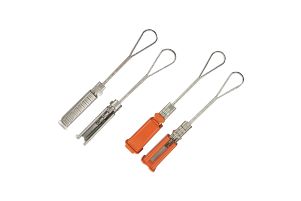 Fiber Optic Tools
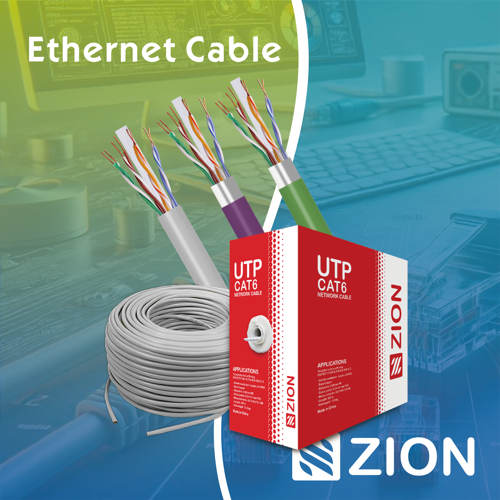 Ethernet Cable
 Coaxial Cable
 Fire & Security Cable
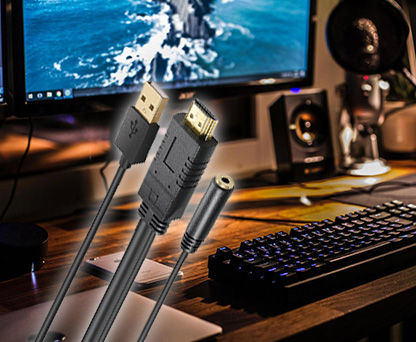 Voice, Audio & Video
 Power & Control Cable