Turn a quoted lead time into a delivery plan
A fiber optic cable lead time may describe manufacturing only, or it may include material sourcing, testing and packing. It rarely answers every question about arrival at the installation site. Ask the supplier to identify the start condition: order acknowledgment, payment receipt, drawing approval or a combination of these events. Record the date on which every start condition is satisfied.

Separate a requested delivery date from a supplier-confirmed commitment. A quotation issued before the cable design is frozen should carry assumptions that can be reviewed when the design changes. Ask how long the quotation and capacity reservation remain valid, and whether the planned production slot is actually allocated to your order.
| Milestone | Evidence to request | Planning question |
|---|---|---|
| Technical release | Approved datasheet, drawing revision and drum schedule | Are any specifications or route lengths still open? |
| Material and production readiness | Written status of critical inputs and planned production window | What dependency could move this window? |
| Factory completion | Testing, packing and document completion dates | Does completion mean ready for inspection or ready to dispatch? |
| Dispatch and transport | Shipment booking and agreed delivery responsibilities | Who owns each handover and the last-mile movement? |
| Site receipt | Receiving appointment and unloading arrangements | Can the site receive and store the supplied drums? |
Some activities can run in parallel, but only where their prerequisites are satisfied. Track the dependent activities that determine the arrival date rather than simply adding every duration. Place contingency against identifiable risks, such as unresolved approvals or a limited site access window; do not conceal it inside an unexplained delivery estimate.
Freeze the specifications that affect installation
A shorter quoted lead time is useful only if the cable fits the installation. The fiber category, fiber count and cable construction should be tied to the network design and route conditions. Compare the proposed cable with the approved specification line by line, including attributes that may not appear in a short commercial description.
| Specification group | Information to freeze | Risk if omitted |
|---|---|---|
| Optical design | Fiber category, count, operating wavelengths and agreed optical performance | An apparently similar cable may not meet the link design. |
| Cable construction | Loose-tube or other specified design, strength members, armor and water-blocking requirements | Handling, bonding or environmental requirements may change. |
| Installation limits | Outside diameter, pulling load, loaded and installed bend radius | Ducts, pulling equipment or routing space may be unsuitable. |
| Environment | Installation, storage and operating temperatures; UV, moisture and required fire performance | A jacket description alone may not establish suitability. |
| Supply format | Drum lengths, length tolerance, markings, end protection and drum identification | Extra joints, unusable offcuts or receiving errors may result. |
Use the cable-specific installation limits rather than a universal bend-radius multiplier. Corning’s duct installation procedure distinguishes limits during pulling from those after installation and directs installers to the relevant cable specification. Include those values in the approved submittal so procurement and field crews use the same basis.
For projects combining cable and termination hardware, review the optical cabling and connectivity components together. A change in cable diameter or construction may affect closures, glands, panels and preparation tools even when the optical fiber itself remains acceptable.
Make substitutions a controlled engineering decision
Supply constraints can make an alternative attractive, but the purchasing team should not treat a matching fiber count as proof of equivalence. Ask for a deviation schedule showing the specified value, proposed value, reason for the change and supporting document. Identify whether the change affects accessories, installation practices, inspection or the system design.
- Keep required performance and installation conditions separate from preferences such as packaging format. This helps identify changes that can be reviewed quickly.
- Assign an engineering reviewer and an approval deadline before the supplier commits to the alternative. Record acceptance against a specific drawing and datasheet revision.
- Require the supplier to show both the revised lead time and any downstream effects, including different jointing materials, drum sizes or test requirements.
- Update the purchase order, packing instructions and site material list after approval. Retain the original requirement and the approved deviation for traceability.
For example, replacing a long continuous drum with several shorter drums may improve availability while increasing joint locations and installation work. Evaluate the whole route plan before accepting the change. Conversely, a different drum packing arrangement may be manageable if cable lengths, handling limits and identification remain aligned with the installation method. Neither outcome should be assumed from the price sheet alone.
Plan phased cable delivery around installable sections
Phased cable delivery works best when a shipment enables a defined section of work. Group drums by route segment, installation sequence and receiving location. If a crew needs cable, closures, glands and labeling materials together, track those dependencies as one work package even when they come from different suppliers.

Specify which partial shipments are acceptable and whether the supplier may split a drum length. A partial quantity is not automatically a useful delivery: a short length can leave a critical pull incomplete. Keep a shipment-level register that links purchase-order lines, drum IDs, nominal lengths, measured lengths where supplied, site destinations and release documents.
Agree how the remaining quantity will be reported after each dispatch. Distinguish material manufactured, material accepted, material dispatched and material received; these are different statuses. Include freight and handling consequences when comparing a single delivery with several releases. Site storage capacity, unloading equipment and cable-end protection should also be considered before accelerating a shipment.
An illustrative sequence might release the access route first, then the equipment-area links and finally the agreed spares. The sequence is a planning example, not a standard schedule: the actual priorities should follow construction readiness, dependencies and the project’s commissioning path.
Send an RFQ that makes supplier responses comparable
A complete fiber cable RFQ reduces the number of assumptions suppliers need to make. Send a revision-controlled package and ask suppliers to identify every exception in one place. Put required arrival windows beside the relevant quantities rather than describing the whole project as urgent.
| RFQ attachment | What it should contain |
|---|---|
| Cable schedule | Item number, approved specification, quantity, route length and requested drum lengths |
| Installation brief | Duct, aerial or other route conditions; pulling limits; site handling constraints |
| Delivery matrix | Destination, first required date, subsequent windows and permitted split shipments |
| Quality package | Required tests, report format, traceability, inspection points and document review period |
| Commercial response sheet | Quoted scope, exclusions, validity, delivery basis, named place and payment-linked start conditions |
| Deviation register | Each alternative, its technical evidence, price effect and schedule effect |
Require the response to state what is included in the price and lead time. Compare an offered factory completion date with another factory completion date, and compare an on-site estimate only after transport assumptions are aligned. Review exceptions before ranking offers: the cheapest compliant quantity can be more useful than a larger quantity that requires unplanned redesign.
Use an exception register through shipment release
Fiber cable supply planning continues after the order is placed. Agree a reporting cadence and ask for updates against the same milestones each time. Each open exception should state its owner, next action, decision deadline and impact on the affected delivery. This makes an early warning actionable.
Before shipment, reconcile the approved revision, actual drum list, required test records, packing list and destination labels. Hold an affected item when a material discrepancy remains unresolved, and identify whether unaffected items can be released separately. After receipt, compare drum IDs and quantities with the shipment register and record transport damage or missing documents before the material moves into the installation workflow.
The useful procurement outcome is a cable package that can be received, identified and installed in the intended sequence. Clear specifications and explicit handovers make schedule recovery decisions easier when availability changes.
Frequently asked questions
What should a fiber optic cable lead time include?
Ask the supplier to define the start condition and state whether material sourcing, production, testing, packing and transport are included. Track factory readiness and required site arrival separately.
Can a substitute cable be accepted to shorten delivery?
Yes, when the responsible engineering reviewer approves the documented differences against optical, environmental, mechanical and installation requirements. Update the purchase order and approved technical documents before release.
When is phased cable delivery useful?
It is useful when each release supports an installable route section and the required accessories, receiving arrangements and documentation are ready. Splitting quantities without considering drum lengths can create extra work.
Prepare a cable procurement package
Send the cable schedule, route conditions, approved specifications, required drum lengths, delivery destinations and installation windows to discuss your project requirements.



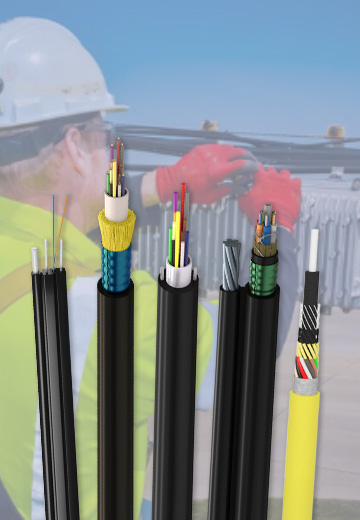 Fiber Optic Cable
 Fiber Optic Tools
 Ethernet Cable
 Coaxial Cable
 Fire & Security Cable
 Voice, Audio & Video
 Power & Control Cable