Is this cable Tier III compliant?
Does the proposed cable and installed cable system satisfy the specified circuit function, fire-performance requirement, electrical characteristics, route, listing, and documentation rules for this project?
1. Start With the Project Code Basis, Not the Cable Catalogue
Before selecting a cable construction, confirm the governing documents:
- Project country, city, and site jurisdiction
- Applicable building, fire, and electrical codes
- Fire alarm and life-safety design basis
- Authority having jurisdiction (AHJ) requirements
- Approved fire alarm system manufacturer and model
- Consultant specifications and cable schedule
- Required third-party listing, approval, or certification
- Required fire-resistance or circuit-integrity test method
- Required reaction-to-fire classification
- Data center owner standards and insurance requirements
North American projects may reference NFPA 72, the NEC, UL-listed cable types, or a listed fire-resistive cable system. UK, Middle East, and international projects may specify combinations of BS, EN, or IEC methods. EU projects may also require a declared CPR reaction-to-fire class and supporting Declaration of Performance.
Do not replace the stated project basis with a “similar” standard without written consultant approval. Fire tests use different specimens, temperatures, mechanical actions, water exposure, durations, failure criteria, and system configurations. A pass under one test is not automatic evidence of compliance with another.
2. Identify the Exact Circuit Function
“Fire alarm cable” is a product family, not a complete specification. The cable must first be matched to the circuit it serves.

Typical circuits in a data center campus may include:
- Signaling line circuits between the fire alarm control panel, addressable devices, and interface modules
- Initiating device circuits for conventional detectors or contacts
- Notification appliance circuits for sounders, strobes, or other alarm devices
- Voice evacuation and emergency communication circuits
- Interfaces to smoke control, dampers, elevators, access control, emergency power, or suppression systems
- Aspirating smoke detection sampling-unit communications and control connections
- Monitoring and control circuits for pre-action sprinkler or clean-agent systems
- Network links between fire alarm panels or buildings
For each circuit, confirm voltage, current, conductor count, conductor size, maximum loop resistance, capacitance, inductance, shielding, topology, maximum distance, and termination method. The approved fire alarm equipment manufacturer's installation instructions remain essential because an electrically unsuitable cable may cause communication errors or excessive voltage drop even when its fire performance is acceptable.
3. Define the Required Level of Circuit Integrity
The project fire strategy should identify which circuits must continue operating during a fire and for how long. The answer may vary between detection, notification, voice evacuation, smoke control, suppression interfaces, and inter-building links.
Ask the consultant to state:
- Which circuits require continued operation during fire
- Required survival duration
- Required fire exposure and temperature
- Whether mechanical shock is included
- Whether water spray or hose-stream exposure is included
- Whether the requirement applies to the cable alone or to a complete installed cable system
- Required support, fixing, conduit, tray, joint, gland, and termination arrangement
- Required route separation or fire-rated enclosure
A cable test certificate does not automatically qualify every installed configuration. Supports, fixings, joints, conduits, penetrations, and terminations can be part of the approved solution. Procurement teams should therefore verify the complete tested or listed system when the specification calls for pathway survivability or a fire-resistive cable system.
4. Match the Correct Fire Test Standard
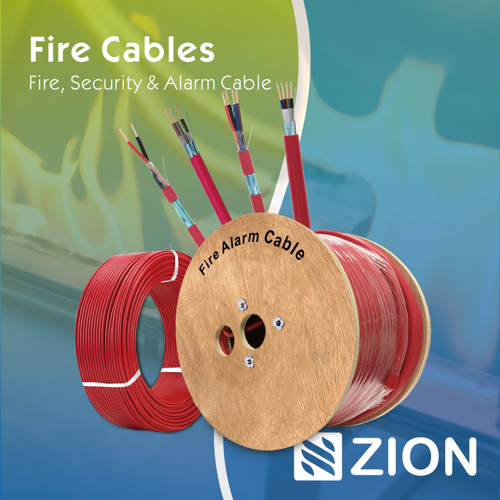
The following standards are frequently seen in international fire-performance cable specifications, but their scopes are not interchangeable.
| Standard | What the official scope indicates | Procurement implication |
|---|---|---|
| IEC 60331-1:2018 | Circuit-integrity test under fire and mechanical shock at a temperature of at least 830°C for cables above 20 mm overall diameter and rated up to 0.6/1.0 kV. The IEC page directs smaller cables to IEC 60331-2. | Quote the exact part, cable diameter, test duration, and report. “IEC 60331” alone is incomplete. |
| BS EN 50200:2015 | Test method for unprotected small cables with intrinsic fire resistance used in emergency circuits for alarm, lighting, and communication. It covers cables up to 600/1,000 V, including below 80 V. | Confirm the required classification, duration, cable size limits, and whether any additional water-spray test is specified. |
| BS 6387:2013 | Test method for cables required to maintain circuit integrity under fire conditions, for cables up to 600/1,000 V and no more than 20 mm overall diameter, subject to the construction limits in its scope. | Require the full claimed category and certificate/report; do not accept “fire resistant” as a substitute. |
| UL 2196 | Evaluates fire-resistive power, instrumentation, control, and data cables for circuit integrity under standard fire exposure and an associated hose-stream test. | Verify the active listing and the exact cable/system configuration in UL Product iQ or the project-approved listing documentation. |
Important specification rule
Write the complete standard reference and performance requirement in the RFQ. Avoid vague lines such as:
- “Fireproof cable”
- “Fire alarm cable, IEC standard”
- “BS cable”
- “Tier III approved cable”
- “LSZH fire-resistant cable”
Each phrase leaves critical performance details undefined.
5. Separate Four Different Cable Claims
Cable tenders often mix terms that describe different properties.
LSZH / LSOH
Low-smoke, zero-halogen compounds are selected to reduce smoke and corrosive or halogen-containing gas emissions under the specified tests. LSZH does not by itself prove that a circuit will continue operating during fire.
Flame retardant or reaction to fire
These classifications address how a cable contributes to fire growth, flame spread, heat release, smoke, flaming droplets, or acidity under specified methods. They do not automatically demonstrate circuit integrity.
Fire resistant or circuit integrity
This describes the cable's ability to maintain a defined electrical or data function for a stated time under a specified fire test. The standard, test conditions, duration, and installation system must be stated.
Shielded
A metallic screen helps control electromagnetic interference when correctly designed, bonded, and grounded. Shielding is an electrical-performance feature, not proof of fire resistance or LSZH performance.
For EU construction projects, the CPR establishes a harmonized framework for declaring construction-product performance. Procurement should request the declared cable Euroclass, Declaration of Performance, CE-marking information, notified-body details where applicable, and traceable product identification. The Euroclass required for a specific building remains a national or project decision; “LSZH” alone is not a CPR class.
6. Specify the Electrical Construction
Once the circuit and standard are clear, define the cable construction. A complete schedule should include:

- Number of cores or pairs
- Conductor material: normally plain or tinned annealed copper as specified
- Solid or stranded conductor
- Conductor cross-sectional area or AWG size
- Pair twisting, if required
- Individual or overall screen
- Screen type, coverage, and drain wire
- Insulation material
- Fire barrier, such as mica-based construction, where required by the approved design
- Inner sheath, armour, or mechanical protection if required
- Outer sheath material
- Rated voltage and temperature
- Minimum bending radius
- Maximum pulling tension
- Overall diameter and weight
- Core identification and sheath color
- Meter marking, project marking, reel length, and packaging
Do not choose the smallest conductor only to reduce price. Voltage drop, loop resistance, device current, route length, starting current, termination size, and manufacturer limits must be checked first.
7. Decide Whether Shielding Is Required
Data centers contain UPS systems, switchgear, generators, variable-frequency drives, busways, transformers, and dense power distribution. These can create an electrically noisy environment.
Shielded fire alarm cable may be appropriate where required by the fire alarm manufacturer, consultant, circuit design, or EMC risk assessment. However, specifying a screen without a bonding plan can create installation problems.
The submittal should state:
- Which circuits require shielding
- Screen construction and drain wire
- Where the screen is bonded
- Whether grounding is at one end or according to the equipment manufacturer's instructions
- Separation from power circuits
- Permitted tray, conduit, and crossing arrangements
- Continuity requirements through joints and terminations
Never assume every fire alarm circuit should use the same shielded cable. Match the cable to the approved system design.
8. Check Routing, Separation, and Mechanical Protection
Tier III's concurrent-maintainability objective should encourage careful coordination, but it does not automatically create a specific fire alarm cable route.

For the actual project, verify:
- Whether life-safety pathways must be separated from normal power, high-current circuits, or other services
- Whether redundant circuits require physically diverse routes
- Whether a single tray, room, riser, or fire compartment creates a common point of failure
- Whether cable routes remain accessible during planned maintenance
- Fire-rated wall and floor penetration details
- Approved firestopping system
- Cable support type and spacing
- Metallic or non-metallic conduit requirements
- Indoor, outdoor, UV, moisture, oil, rodent, or chemical exposure
- Armour or mechanical-impact protection
- Minimum bend radius and pulling limits
- Segregation at panels, cabinets, and junction boxes
Where a listed or tested cable system is required, substitute supports, clips, conduits, glands, or splices only after approval. The installed pathway must remain consistent with the evidence used for compliance.
9. Demand Traceable Compliance Documents
A tender-ready compliance pack should contain more than a datasheet.
Request, as applicable:
- Product datasheet with construction and electrical values
- Current third-party certificate or listing
- Test report or report summary linked to the exact cable construction
- Declaration of Performance for CPR-covered products
- CE or other required conformity documentation
- Quality-management certificates
- Factory inspection or production-control evidence where required
- Cable marking sample
- Reel or batch traceability format
- Drum schedule and packing list format
- Certificate of conformity
- Routine test report
- Country-of-origin documentation
- Approved deviations list
For UL-certified products, UL's Wire and Cable Application Guide explains that the UL label on the coil, reel, flange, or box is the means of identifying cable covered by UL certification and follow-up services; surface printing alone should not be treated as sufficient evidence. This is a useful anti-counterfeit and receiving-inspection check.
10. Add Inspection and Commissioning Requirements
The purchase specification should define what will be checked before, during, and after installation.
Before shipment
- Verify conductor size and resistance
- Confirm insulation and sheath dimensions
- Check overall diameter
- Review printing and traceability
- Confirm reel lengths and packaging
- Match certificates to the offered part number and construction
On receipt
- Inspect reels, seals, labels, and visible damage
- Match batch numbers to shipping and compliance documents
- Confirm cable marking at practical intervals
- Record storage conditions
During installation
- Control bend radius and pulling tension
- Maintain route and circuit separation
- Use approved supports, glands, joints, and firestopping
- Protect the sheath from crushing and abrasion
- Follow the shield bonding plan
During commissioning
- Perform continuity, insulation, loop-resistance, and functional tests as required
- Verify device communication and voltage at the worst-case load
- Record as-built routes and cable identifiers
- Retain test results in the handover file
Common Procurement Mistakes
- Treating Tier III as a cable certification. Tier III is a data center infrastructure performance classification, not a fire alarm cable standard.
- Using LSZH as a synonym for fire resistant. Low smoke and low halogen emission do not prove continued circuit operation.
- Writing only “IEC 60331.” The applicable part, cable diameter, test conditions, and duration must be clear.
- Accepting a certificate for a different construction. Conductor size, core count, insulation, screen, fire barrier, sheath, and diameter should match the offered cable.
- Ignoring voltage drop and system limits. Fire performance cannot compensate for an electrically unsuitable cable.
- Specifying a shield without a grounding plan. Poor screen termination can undermine EMC performance.
- Approving the cable but not the installed system. Supports, joints, conduit, glands, and firestopping may affect compliance.
- Using one cable type for every life-safety and security circuit. Fire alarm, voice alarm, suppression interfaces, BMS, access control, and CCTV can have different electrical and regulatory needs.
How ZION Can Support the Project
ZION can use the completed cable schedule to align the proposed construction with the project requirement, including conductor configuration, screened or unscreened options, fire-resistant designs, LSZH sheath options, project printing, reel lengths, packaging, and compliance documentation.
The same project may also require adjacent ZION product families such as BMS and RS-485 cable, access-control cable, CCTV cable, industrial control cable, structured copper cabling, indoor and outdoor fibre cable, patch panels, ODFs, and data center connectivity accessories.
Final product selection should be approved by the project consultant, authority having jurisdiction, and system manufacturer. Where the specification requires a listed or tested cable system, the proposed cable, accessories, installation method, and certification scope must be reviewed together.
Conclusion
The safest way to buy fire alarm cable for a Tier III data center is to translate the project fire strategy into a complete cable schedule.
Start with the circuit function and local code. State the exact fire test and duration. Separate circuit integrity from LSZH and reaction-to-fire claims. Confirm electrical performance, shielding, routing, installation system, certificates, and batch traceability. Then compare suppliers against the same documented requirement.
This process reduces technical deviations, prevents certificate mismatches, and gives the contractor, consultant, distributor, and manufacturer a common basis for approval.
Related ZION Resources
Use this ZION resource when the project needs a matching product family or supporting cable selection context.
Use this ZION resource when the project needs a matching product family or supporting cable selection context.
Use this ZION resource when the project needs a matching product family or supporting cable selection context.
Use this ZION resource when the project needs a matching product family or supporting cable selection context.
FAQ
Is there a universal Tier III fire alarm cable?
No. Tier III describes data center infrastructure performance criteria, not a cable certification. The cable requirement comes from the project fire strategy, code basis, AHJ and approved system design.
Does LSZH mean a fire alarm cable is fire resistant?
No. LSZH addresses smoke and halogen-related behavior under specified tests. Circuit integrity or fire resistance requires its own standard, duration and evidence.
What information should be included in a fire alarm cable RFQ?
Include circuit function, voltage, current, route length, conductor size, shielding, required fire test, classification or duration, reaction-to-fire class, route environment, listing or certificate requirement and reel details.



 Fiber Optic Cable
 Fiber Optic Tools
 Ethernet Cable
 Coaxial Cable
 Fire & Security Cable
 Voice, Audio & Video
 Power & Control Cable