BIG Trends of Optical Fiber Communication in 2025–2030 AI computing, higher-speed Ethernet, next-generation PON, mobile xHaul, resilient submarine routes and intelligent network operations are reshaping how optical infrastructure is planned. |
Between 2025 and 2030, optical fiber communication will be driven less by a single regional construction boom and more by several connected requirements: AI data-center traffic, cloud interconnection, faster access networks, denser mobile transport, international route resilience, lower energy per bit and more automated operations. Fiber remains the physical foundation, but project decisions are moving from “fiber or copper” toward fiber type, lane architecture, connector density, loss budget, route diversity and lifecycle manageability.
Planning priority: capacity growth alone should not determine the cable design. Engineers and buyers also need to evaluate latency, optical reach, bend control, connector topology, repair strategy, energy use and the ability to migrate without replacing the entire passive infrastructure.
■ 1. AI Data Centers Become a Primary Optical-Network Driver
Large AI training and inference workloads move substantial data between accelerators, racks, buildings and geographically distributed computing sites. This creates demand for high-capacity links with predictable latency, low packet loss, fast restoration and flexible bandwidth allocation. The optical layer is consequently expanding across three related domains: intra-data-center networking, data-center interconnection and access between users or edge sites and computing facilities.
The practical cabling effect is higher density and tighter loss margins. Permanent links must be designed around the actual optical module interface rather than Ethernet speed alone. A 400G or 800G port may use duplex single-mode, parallel single-mode, parallel multimode or wavelength-multiplexed optics, and each option changes the connector, fiber count, polarity and test plan. ZION’s 400G and 800G MPO cabling selection guide maps these interfaces to trunks, patch cords, harnesses and cassettes.
■ 2. 800G Deployment Expands While 1.6T Moves Through Standardization
The transition from 400G to 800G is now influencing data-center and transport architectures, while 1.6 Tb/s Ethernet is progressing through the IEEE P802.3dj standards process. The key trend is not only a higher port number: faster links increase sensitivity to channel loss, connector cleanliness, lane mapping, return loss and thermal constraints.
Pluggable coherent optics continue to bring transport functions closer to routers and switches. At the same time, the industry is developing linear pluggable optics, co-packaged optics and related architectures to improve electrical reach and energy efficiency at very high interface rates. These approaches will coexist because reach, serviceability, interoperability, power and cost requirements differ by application.
Record the exact transceiver family and media-dependent interface before selecting a trunk.
Confirm MPO format, active fiber count, polarity, gender and end-face requirement.
Calculate the full insertion-loss budget, including every mated pair and cassette.
Keep migration paths explicit; 400G and 800G interfaces do not all reuse the same passive topology.
■ 3. PON Evolves Beyond 10G While Coexistence Remains Essential
GPON and 10G-class PON systems will continue serving large installed networks, while 25G and 50G PON move further into interoperability testing and deployment planning. The Broadband Forum’s 2025 plugfest included 50G-PON testing, showing that the next access generation is moving from specification toward multi-vendor operational readiness.
For network owners, the central issue is coexistence. New wavelengths and higher-rate systems often need to share an optical distribution network with existing subscribers. Split ratio, feeder distance, connector loss, aging margin, wavelength coexistence components and outside-plant records therefore become more important than the headline downstream rate.
The passive layer must also extend safely into buildings and homes. Bend-insensitive fiber, controlled connector inspection and appropriate indoor jacket performance support reliable last-drop installation. Current FTTH drop cable and drop patch-cord options cover several flat, round and self-supporting access constructions.
■ 4. Fiber Moves Deeper into Mobile, Edge and Enterprise Networks
5G Standalone, 5G-Advanced and future IMT-2030 services increase the importance of fiber in fronthaul, midhaul and backhaul. More radio sites, edge-computing locations and synchronized services require scalable capacity and consistent timing. Fiber deployment will therefore continue beyond traditional backbone routes into campuses, factories, transportation networks, distributed base stations and edge facilities.
This expansion does not imply one universal cable. Aerial routes may favor ADSS or other self-supporting structures; ducts may need compact loose-tube or micro-cable designs; buildings require the applicable fire and smoke performance; and constrained terminals may justify G.657 bend-insensitive fiber. The ZION optical fiber cable product group organizes options for aerial, duct, direct-buried, building, FTTH and distributed base-station routes.
■ 5. Submarine Capacity Growth Is Matched by a Resilience Focus
Submarine cables carry more than 99% of international data flows. ITU reported that the global system included more than 500 operational cable systems spanning over 1.4 million kilometers in 2025. Cloud services, AI and international data-center interconnection are increasing capacity demand, while new routes aim to improve coverage and diversity.
Capacity is only part of the planning task. Route concentration, landing-station exposure, repair lead time, terrestrial backhaul diversity and physical hazards affect service continuity. From 2025 to 2030, network design will place greater value on geographic diversity, protection switching, accurate route records and coordinated cable-protection practices rather than relying only on nominal system capacity.
■ 6. Optical Networks Become More Programmable and Intelligent
Software-defined control, ROADMs, optical circuit switching and telemetry are making wavelength resources more dynamic. Instead of treating the optical layer as fixed plumbing, operators can increasingly monitor performance, provision capacity and restore services through coordinated management systems.
AI will support planning, anomaly detection, fault localization and energy management, but reliable automation depends on accurate inventory and trustworthy telemetry. Poorly documented fiber routes, inconsistent connector records or missing loss data cannot be corrected by software alone. Digital operations therefore increase the value of disciplined passive-infrastructure documentation.
Distributed fiber-optic sensing is another emerging capability. Existing fiber can support monitoring applications by analyzing changes in backscattered light, subject to the sensing method, cable route and system design. By 2030, sensing, communication and network operations are expected to become more closely integrated in selected transport, access and infrastructure-monitoring applications.
■ 7. Energy Efficiency and Lifecycle Design Influence Procurement
As traffic grows, energy per transmitted bit becomes a major engineering concern. Optical transport can move large capacity efficiently, but total network energy also depends on transceivers, switching architecture, cooling, amplification, idle operation and restoration design. Future optical networks are expected to combine higher capacity with energy-aware control and more efficient physical-layer technologies.
Procurement decisions will increasingly consider the complete lifecycle: whether the passive plant can support future optics, how easily fibers can be tested and repaired, whether connectors remain accessible, and whether route records survive staff and vendor changes. Oversizing every component is not a substitute for a documented migration plan.
Specify application, distance, fiber count, interface and future migration target.
Confirm installation environment, cable structure, bend conditions and fire requirements.
Define connector type, polarity, inspection method and insertion-loss acceptance.
Plan spare capacity, route diversity, restoration access and labeling.
Request the test records and delivery documentation needed for long-term asset management.
■ Frequently Asked Questions
What will drive optical fiber communication growth through 2030?
The main drivers are AI and cloud data centers, 800G and emerging 1.6T interfaces, higher-speed PON, mobile and edge transport, international bandwidth, network resilience and the need to reduce energy per bit.
Will 1.6T replace 800G immediately?
No. 800G deployment and 1.6T development will overlap. Adoption depends on standards completion, switch silicon, optical-module availability, power, cooling, reach and application economics.
Does higher PON speed require replacing every outside-plant cable?
Not necessarily. Existing fiber and splitters may remain usable when the optical distribution network meets the new system’s wavelength, loss, reach and coexistence requirements. The installed ODN must be audited before migration.
Which fiber type is best for future networks?
There is no universal answer. OS2 single-mode fiber is common for longer-reach and campus or inter-building links; OM4 and other multimode grades remain relevant for supported short-reach data-center optics; G.657 categories add bend performance for compact access routes. The selected transceiver and cable environment determine the final choice.
What information is needed before ordering optical cable?
Provide the network application, optical interface, distance, fiber count, cable route, installation method, environmental conditions, jacket and fire requirements, connector plan, test criteria, reel length and project documentation requirements.



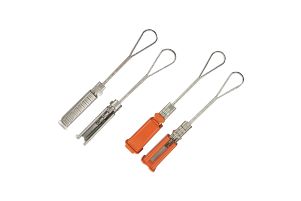 Fiber Optic Tools

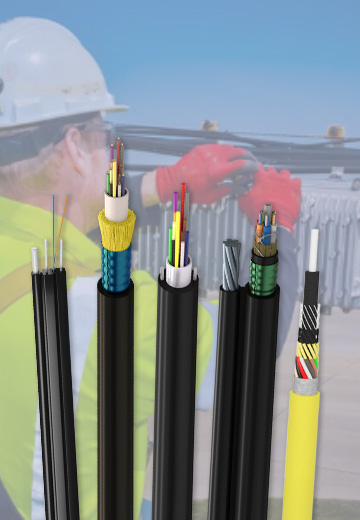 Fiber Optic CableAccess and backbone
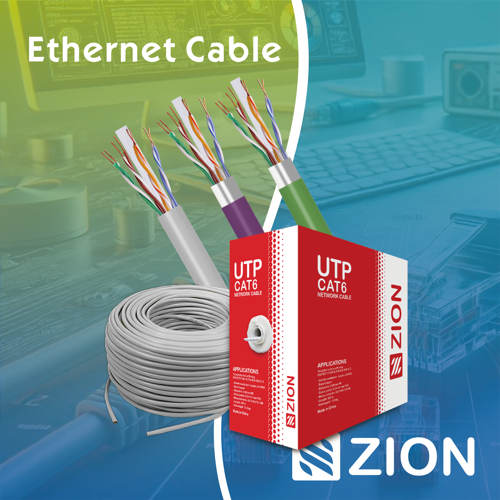 Ethernet CableCat5e to Cat8
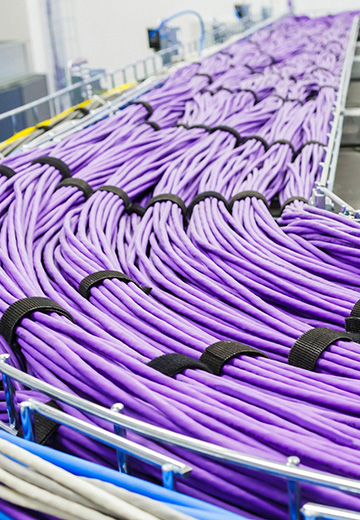 Coaxial CableRF and video signal
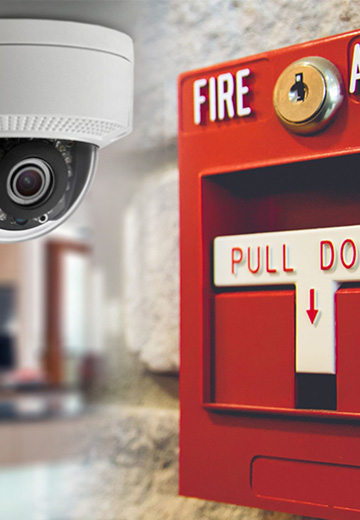 Fire, Security & AlarmSafety systems
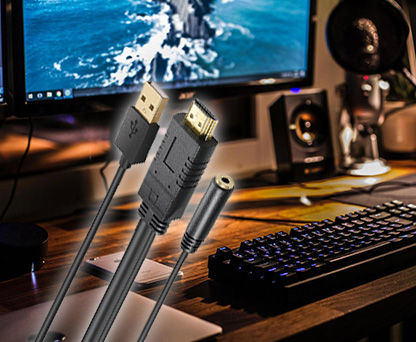 Voice, Audio & VideoSignal cabling
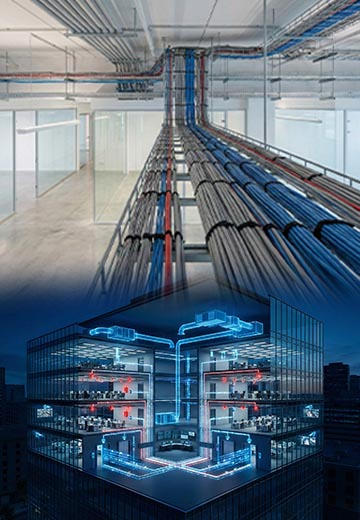 Power & Control CableEnergy and control
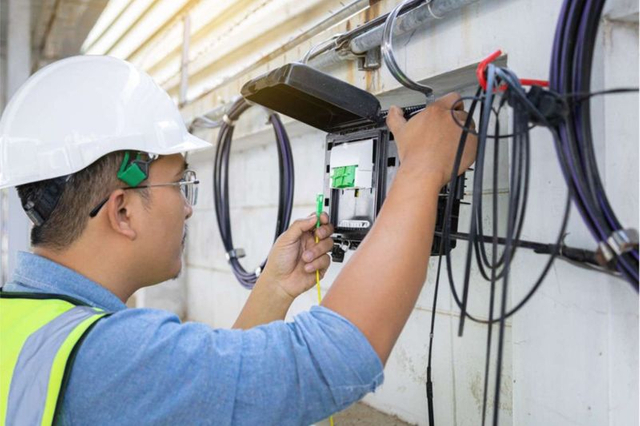 Telecom & ISP NetworksFTTH, PON, ODN
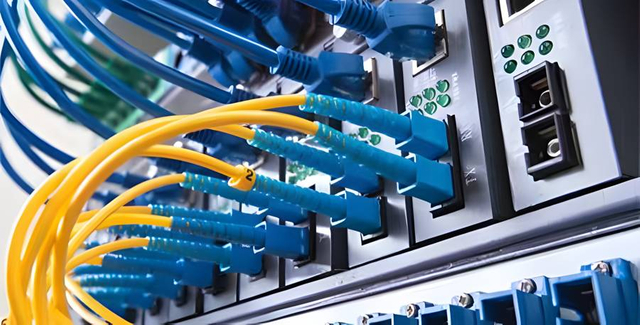 Data Center InfrastructureServer room cabling
 Building Low-Voltage SystemsBMS, AV, weak current
 Security & Fire ProtectionAlarm, CCTV, access
 Industrial Automation CablePLC, RS485, fieldbus
 Energy & Power InfrastructureSolar, battery, power