For years, data-center location decisions were often discussed in terms of proximity to users, carrier hotels, tax incentives, land, and construction costs. Those factors still matter. But AI and high-density computing are changing the order of operations. Before a developer can finalize server architecture, cooling, or cabling, it must determine whether the site can receive enough power, soon enough, with an acceptable level of resilience.
The International Energy Agency projects that global electricity consumption by data centers could roughly double to about 945 TWh by 2030. It also highlights a timing mismatch: a data center can become operational in two to three years, while major energy infrastructure commonly requires longer planning and construction cycles.1 Power availability is therefore moving upstream in the development process.
That shift creates a new opportunity for energy companies, data-center developers, EPC contractors, network operators, and cabling suppliers - but only if power and connectivity are planned together.
Why Energy Sites Are Entering the Data-Center Map
Suitable power-generation sites can offer several advantages that are difficult to reproduce on a conventional greenfield technology campus.

Existing or nearby high-voltage grid connections, substations, switchyards, and rights of way can shorten early feasibility work.
Large parcels, access roads, heavy-construction logistics, and established utility corridors can support phased campus buildout.
An energy-site owner may understand long-term power contracts, direct supply structures, and generation-market risk.
Some sites may include water, cooling-related infrastructure, transformers, or power corridors that deserve early assessment.
This is no longer only a theoretical model. In July 2026, Uniper said it had identified more than ten company-owned sites with suitable infrastructure for data-center development along European data hubs. Three projects were already at an advanced development stage, and the company had completed an initial project in the United Kingdom.2
In the United States, the former Homer City coal-generating site in Pennsylvania is being redeveloped as a 3,200-acre energy campus intended to support AI and high-performance computing data centers. The project describes plans for up to 4.4 GW of power and identifies Kiewit Power Constructors as the EPC contractor.3
These examples show why the boundary between an energy asset and a digital-infrastructure asset is becoming less distinct. An energy company may contribute land, grid access, generation, power-purchase structures, or direct energy supply. A data-center developer may contribute the powered shell, compute, cooling, security, and network requirements. Between them sits a large infrastructure supply chain.
Power-Ready Does Not Automatically Mean Data-Center-Ready
A former or operating power site can have strong electrical attributes and still fail as a data-center location.

Developers must also evaluate permitting, environmental remediation, water, flood and weather exposure, noise, construction access, labor, security, and community impact. The power source itself must be assessed for cost, reliability, carbon intensity, scalability, and delivery schedule. Existing equipment may be unsuitable, unavailable, or too expensive to repurpose.
Connectivity is another decisive constraint. A campus with abundant electricity but only one practical telecom route has a structural weakness. Two services do not provide true diversity if they share the same duct, bridge, right of way, aggregation facility, or upstream carrier dependency. Data Center Dynamics notes that circuits traversing the same geography or relying on the same supporting infrastructure are not genuinely independent.4
| Readiness layer | What to evaluate | Why it matters |
|---|---|---|
| Power readiness | Available capacity, time to energization, voltage level, generation mix, backup strategy, and expansion path. | Determines whether the data-center phase can be powered on the required schedule. |
| Civil readiness | Land, permits, remediation, roads, drainage, security perimeter, and underground utility corridors. | Controls whether power, fiber, building access, and construction work can coexist without avoidable rework. |
| Fiber readiness | Carrier availability, physically diverse routes, entrance facilities, duct capacity, MMR strategy, and campus interconnect. | Protects network resilience and determines the external and campus cabling architecture. |
| Operational readiness | Cooling, maintainability, emergency response, spares, monitoring, documentation, and future phasing. | Ensures the facility can be operated and expanded after the first powered phase goes live. |
Uptime Institute's data-center design curriculum treats power, cooling, connectivity, space, and bandwidth as interdependent parts of end-to-end design rather than isolated workstreams.5 That is the correct lens for energy-led data-center development.
Fiber Entrance and Route Diversity Must Be Planned Early
The fiber plan should begin while the site master plan is still flexible - not after the buildings, roads, substations, and security boundaries have been fixed.

Early network planning should answer practical questions: Which long-haul and metro carriers are genuinely present near the site? Where are the nearest carrier points of presence and interconnection locations? Can the campus obtain two or more physically separated routes from different directions? Do the routes avoid shared bridges, tunnels, utility corridors, and flood zones?
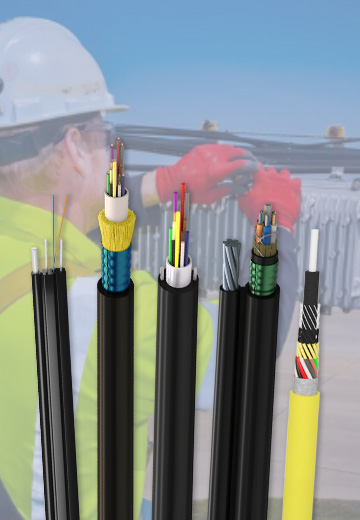
The same planning should define where outside-plant fiber enters the security perimeter and each data hall, how many entrance facilities and meet-me rooms are required, and what duct-bank capacity is needed for the first phase and future expansion. Campus DCI may require high-count OS2 cable, blown microcable, armored cable, or another construction depending on distance, route conditions, and installation constraints.
These decisions affect civil drawings, trenching, duct banks, building penetrations, fire stopping, cable pathways, room layouts, and procurement lead times. Leaving them until the final bill of materials can create avoidable rework.
Corning's guidance on data-center cabling emphasizes that high-fiber-count trunks and preterminated systems require careful pathway and length planning. Its outside-plant-to-meet-me-room guidance also distinguishes between field-installable and preterminated approaches depending on route conditions, fiber counts, speed, and flexibility.67
Where Cabling Suppliers Can Add Value Before the BOM
If a cabling supplier first sees a project after the final BOM has been frozen, many of the most valuable decisions have already been made. At that stage, the supplier may only be asked to match an existing specification and quote a price.
By participating earlier - during site validation, concept design, basis-of-design development, or design-assist - the supplier can help the developer and EPC team reduce technical uncertainty. Useful early contributions may include:
- A proposed outside-plant-to-meet-me-room fiber architecture.
- Route-specific recommendations for duct, direct-buried, armored, or air-blown cable.
- High-fiber-count OS2 options for carrier entrance and campus DCI.
- Entrance-room, ODF, splice-closure, cassette, and patching concepts.
- MPO/MTP and LC migration options for data-hall connectivity.
- Cable-diameter, bend-radius, pulling-tension, and pathway-fill checks.
- Phase-one capacity plus reserved pathways for future halls.
- Factory pretermination versus field-splicing trade-offs.
- Fire-performance, LSZH, CPR, and local code considerations where applicable.
- Inspection, test documentation, labeling, packaging, drum, and delivery planning.
This does not mean a manufacturer should control the design. It means the manufacturer should provide verified engineering inputs early enough for the consulting engineer, developer, EPC contractor, network operator, and installer to make better decisions.
Early-Stage Procurement Sequence for Energy-Led Data Centers
A better project sequence treats power, route diversity, and cabling architecture as connected decisions rather than separate procurement packages.

- Confirm realistic power capacity and energization schedule.
- Validate carrier presence and physically diverse terrestrial routes.
- Reserve external rights of way, campus corridors, and building entrances.
- Define phasing assumptions for data halls and future compute density.
- Establish the outside-plant, DCI, meet-me-room, and data-hall connectivity architecture.
- Compare installation methods and create a preliminary material schedule.
- Invite qualified cabling and connectivity suppliers to provide design-assist input.
- Freeze the specification and BOM only after pathway, installation, testing, and expansion assumptions have been validated.
This sequence can reduce late substitutions, pathway conflicts, inaccurate cable lengths, undersized duct banks, unnecessary splice points, and products that are technically compliant but difficult to install.
Signals Cabling Suppliers Should Monitor
The sales signal may appear long before a data-center operator publishes a procurement notice. Suppliers should monitor power-sector and infrastructure-market activity that indicates future data-center demand.
Watch power-company statements, retired power-station redevelopment plans, direct-power proposals, and behind-the-meter generation concepts.
Track new substations, grid-connection agreements, large-load applications, environmental filings, and planning applications.
Look for EPC, MEP consultant, ICT/DCI designer, outside-plant contractor, and structured-cabling installer involvement.
Monitor long-haul, metro, and industrial-corridor fiber builds near generation sites and energy campuses.
Each confirmed energy-site signal can be converted into an account map: site owner, energy partner, data-center developer, EPC contractor, MEP consultant, ICT/DCI designer, carrier, outside-plant contractor, structured-cabling installer, and potential product packages. That is where a power-sector announcement becomes a data-center sales opportunity.
Related ZION Reading
The following ZION pages are closely related to this topic and can be used as internal reading paths where they fit the final website structure:
- AI Data Centers Are Reserving Fiber Capacity Years Ahead
- Why Power Availability Should Be Confirmed Before the Data Center Cabling BOM
- Secure Fiber and Copper Cabling Checklist for Mission-Critical Data Centers
Sources and Reference URLs
The external references below support the market, power, site-development, network-diversity, and cabling-planning context used in this article.
- International Energy Agency, Energy Demand from AI, Energy and AI.
- Uniper, Billions to Be Invested in the Energy System Transformation, July 17, 2026.
- Homer City Redevelopment, Project Overview.
- Data Center Dynamics, Why Network Diversity Is the Strongest Defense Against Data Center Connectivity Failure, April 24, 2026.
- Uptime Institute, Certified Data Center Design Professional (CDCDP).
- Corning, The Data Center Evolution: How to Overcome Data Center Cabling Challenges.
- Corning, Meet-Me-Room to the Outside Plant Data Center Solutions.
FAQ
Why are power plants being considered for data center development?
Power plants, former generation sites, and energy campuses can offer land, grid infrastructure, utility corridors, access roads, and power-market expertise that are difficult to reproduce on a conventional greenfield campus.
Does strong power access make a site data-center-ready?
No. The site must also be evaluated for permitting, remediation, water, civil access, flood and weather exposure, security, operational resilience, and physically diverse fiber connectivity.
Why should fiber route diversity be planned early?
Fiber entrances, duct banks, rights of way, meet-me rooms, splice points, and building penetrations affect the site master plan. Waiting until the final bill of materials can create route conflicts and late construction rework.
Where can a cabling supplier add value before the final BOM?
A cabling supplier can provide design-assist input on outside-plant fiber architecture, OS2 cable options, ODF and patching concepts, pretermination versus splicing, cable diameter, bend radius, pathway fill, labeling, testing, and staged delivery.
Conclusion
The next data-center campus may be selected because a power company already controls the land, grid relationship, and energy infrastructure needed to make the project viable. But dependable electricity alone does not make a site digitally ready.
Fiber entrance, physically diverse terrestrial routes, campus interconnect, meet-me-room design, pathway capacity, and future expansion must be evaluated while the site plan is still being shaped. Cabling suppliers that contribute verified engineering input before the final BOM is frozen can help reduce project risk and position themselves for the later procurement phase.
Power readiness and fiber readiness are becoming part of the same infrastructure decision.



 Fiber Optic Cable
 Fiber Optic Tools
 Ethernet Cable
 Coaxial Cable
 Fire & Security Cable
 Voice, Audio & Video
 Power & Control Cable