Operators remain the main investors behind mobile internet infrastructure. GSMA and Kearney reported that mobile network operators account for 85% of global mobile internet connectivity infrastructure investment, with annual infrastructure investment excluding devices reaching USD 127 billion and MNOs contributing USD 109 billion. Source: GSMA press release, 2025.
At the same time, fiber deployment remains active and cost-sensitive. The Fiber Broadband Association reported that 2025 was a record year for North American FTTH deployment, with U.S. fiber passing more than 60% of primary households and total FTTH passings approaching 100 million homes. Source: Fiber Broadband Association, 2025 North American FTTH Deployment and Market Update.
For telecom contractors, the message is clear: winning the RFQ is no longer just about quoting a cable price. The supplier must understand the network layer, the buyer role, the documentation package, and the project delivery rhythm.
FTTH, Metro, Backhaul, And Enterprise Networks Are Different Buying Scenarios
A contractor may use the same word, "fiber," across several project types, but operators and project owners do not buy these networks in the same way.

FTTH projects focus on last-mile reach, drop cable, distribution fiber, splitter points, closures, terminal boxes, and fast field installation across many small sites.
Metro builds connect central offices, POPs, aggregation nodes, business districts, and edge facilities, making cable count, route protection, duct compatibility, ODF capacity, patching layout, and labeling discipline important.
Backhaul routes connect access nodes, mobile sites, ISP facilities, data centers, and operator core locations, often requiring higher fiber counts, stronger mechanical protection, OTDR testing, and verified route records.
Enterprise projects may involve structured cabling, LAN backbone, campus fiber, building entrance cable, data room patch panels, racks, cabinets, and labeling.
BICSI positions its Telecommunications Distribution Methods Manual as a flagship manual that covers outside plant cabling and related telecommunications distribution practices. Source: BICSI technical publications.
The practical point: before quoting, contractors should identify whether the RFQ is access, metro, backhaul, enterprise, or a hybrid project. The product list, packaging, certification documents, and delivery schedule should follow that network scenario.
Distributor, Contractor, And Operator Play Different Procurement Roles
In telecom infrastructure projects, the buyer name on the RFQ does not always reveal the real decision chain. The operator usually controls technical standards, approved vendor lists, route design, acceptance rules, and sometimes the final bill of materials. Operators may not purchase every item directly, but their specifications shape what can be installed.

The contractor converts operator requirements into project execution. Contractors care about cable handling, reel size, drum labeling, splice closure compatibility, delivery timing, documentation completeness, and whether the supplier can support urgent site changes.
The distributor or local stockist helps bridge time and logistics. They may support multiple contractors, keep standard fiber cable and patching items in local inventory, and split bulk orders into staged deliveries.
| Buyer Role | Main Concern | Supplier Response |
|---|---|---|
| Operator | Technical compliance, approved vendor list, acceptance rules, long-term reliability. | Provide compliance documents, test reports, approvals, and stable supply capability. |
| Contractor | Installation practicality, delivery timing, package labeling, site changes. | Support reel planning, closure compatibility, project lots, labels, and fast replenishment. |
| Distributor | Stock clarity, repeatable SKUs, carton markings, order splitting. | Use clear SKUs, stable packaging, local stock planning, MOQ clarity, and traceable shipments. |
Fiber Cable, ODF, Closure, And Patching Must Work As One System
Telecom RFQs often list fiber cable, ODF, closures, pigtails, patch cords, adapters, splitters, and accessories as separate line items. In the field, they behave as one system.

For an FTTH route, the cable must match the closure capacity, the splice tray layout, the splitter plan, and the final drop connection. For metro and backhaul routes, the cable structure must support duct, aerial, direct-buried, or armored conditions, while the ODF and patching system must support clear port mapping and maintenance access.
Items to check before confirming a BOM
- Fiber type: G.652.D, G.657.A1/A2, multimode, or project-specific requirement.
- Cable environment: outdoor duct, aerial, direct buried, indoor/outdoor, riser, LSZH, CPR, armored, or air-blown micro cable.
- Fiber count: current design plus reserve fibers for maintenance and expansion.
- Closure compatibility: cable diameter, sealing method, splice tray capacity, splitter tray, and re-entry frequency.
- ODF and patching: rack size, adapter type, LC/SC requirement, pigtail color code, cassette or tray design.
- Testing and acceptance: insertion loss, return loss, OTDR trace, end-face inspection, and link documentation.
Corning's recommended fiber optic test guidelines note that OTDR traces can be used for cable acceptance, splice and connector loss, documentation, troubleshooting, fault location, optical return loss, and length measurement. Source: Corning Recommended Fiber Optic Test Guidelines.
Vendor Approval Documents Are Part Of The Product
When operators refocus on core infrastructure, vendor approval becomes stricter. The supplier is not only selling material; it is selling a documentation package that helps the contractor pass review.
Company profile, manufacturing capability, relevant certifications, warranty statement, traceability method, and allowed project reference information.
Datasheets for cable, ODF, closure, patch cord, pigtail, adapter, splitter, cable construction drawings, and material declarations.
ISO 9001, ISO 14001, ISO 45001, CE, RoHS, CPR, project-specific certificates, type test reports, and routine test reports where required.
Packing list template, reel label template, carton label template, and project lot format matched to contractor or operator review needs.
Project specifications commonly require product data review, compliance checks, testing, and acceptance documents. For example, the University of Arkansas telecommunications infrastructure criteria describe review and approval of product specifications for compliance with contract documents, observation of installations, and system function testing. Source: University of Arkansas Criteria for Telecommunication Infrastructure, 2024.
If the RFQ deadline is close, missing documents can lose the order even when the price is competitive.
Project Labeling Reduces Installation And Maintenance Risk
Labeling is often treated as a small detail until the first maintenance issue appears. In telecom infrastructure, poor labeling creates splice errors, port mapping confusion, delayed acceptance, and higher troubleshooting cost.

Project labeling should cover cable reel number and route segment, fiber count and fiber type, near-end and far-end site names, ODF rack, tray, and port mapping, closure ID, splice tray ID, splitter position, route direction, patch cord length, connector type, and destination.
Brookhaven National Laboratory's communications infrastructure specifications provide detailed fiber enclosure labeling rules, including near-end and far-end information and components such as building, floor, room, rack, rack unit, and port number. Source: BNL Communications Infrastructure Specifications, 2025.
The University of Arkansas criteria also require racks, cabinets, and panels to be labeled with permanent material and state that proposed labeling should be submitted for approval. Source: University of Arkansas Criteria for Telecommunication Infrastructure, 2024.
For contractors, a supplier that can pre-label reels, cartons, ODF accessories, and patching kits by site or route section can save field time and reduce rework.
Local Stock And Staged Delivery Are Becoming More Important
Fiber deployment is active, but cost pressure is rising. The Fiber Broadband Association reported that deployment costs increased again in 2025, driven mainly by labor, materials, permitting delays, and make-ready work. It also reported median 2025 deployment costs of USD 18 per foot for underground builds and USD 8 per foot for aerial builds, with variation by terrain, density, and construction method. Source: Fiber Broadband Association, 2025 Fiber Deployment Cost Annual Report.
When construction cost is under pressure, material delivery mistakes become expensive. Contractors need suppliers that understand staged delivery.
- Ship standard stock items quickly for urgent site work.
- Split large project orders by route, city, site, or construction phase.
- Keep emergency quantities of patch cords, pigtails, adapters, closures, and ODF accessories.
- Align reel lengths with route sections to reduce cutting waste.
- Provide packing marks that match the contractor's installation plan.
- Support partial delivery without losing document traceability.
For import-heavy markets, local distribution is not only about inventory. It is also about risk control. A local stockist can reduce lead time, support urgent replacements, consolidate accessories, and help contractors avoid installation delays caused by one missing item.
Telecom Project RFQ Checklist
Before submitting a telecom infrastructure RFQ, contractors and distributors should prepare a structured checklist that covers network scope, product BOM, documents, logistics, and commercial risk.
| Checklist Area | What To Confirm | Why It Matters |
|---|---|---|
| Network Scope | FTTH, metro, backhaul, enterprise, or mixed project; aerial, duct, direct buried, indoor, data room, campus, or building backbone route. | The network scenario affects cable construction, ODF capacity, closure design, installation method, and delivery planning. |
| Product BOM | Fiber cable type, fiber count, sheath, armor, ODF size, adapter type, closure capacity, patch cords, pigtails, splitters, labels, and accessories. | Separate line items must still match as one installable system in the field. |
| Documents | Datasheets, certificates, type test report, routine test report, construction drawing, packing list, label template, warranty statement, OTDR and insertion loss test format. | Incomplete submittals can delay technical approval and project acceptance. |
| Logistics | Delivery date, staged delivery plan, reel length, drum size, site-by-site packing marks, local stock, spare quantity, Incoterms, customs documents, and final destination. | Delivery errors create site delays, extra handling, and traceability issues. |
| Commercial Risk | Buyer role, technical approver, goods receiver, acceptance signer, payer, warranty terms, penalties, and delay clauses. | The quotation should reflect the actual decision chain and project obligations. |
RTD's Division 27 specifications state that as-built documents and final test results should be submitted for project closeout, including electronic formats and test equipment output reports. Source: RTD Division 27 Specifications.
Conclusion
When operators return attention to core network infrastructure, telecom contractors need suppliers that can do more than quote fiber cable. They need a partner that understands FTTH, metro, backhaul, and enterprise network differences; can match cable, ODF, closures, and patching as one system; can provide vendor approval documents; can support labeling discipline; and can deliver locally or in stages without breaking traceability.
In telecom projects, price wins attention, but documentation, labeling, and delivery discipline win acceptance.
FAQ
What should telecom contractors confirm before quoting a fiber infrastructure RFQ?
They should confirm the network scope, route environment, fiber type, fiber count, ODF and closure requirements, patching method, documentation package, labeling rules, delivery schedule, and who approves the technical submittal.
Why are ODF, closures, patch cords, and fiber cable treated as one system?
They interact in the field. Cable diameter, splice tray capacity, splitter layout, adapter type, port mapping, patch cord length, and test records all affect installation quality and acceptance.
How does staged delivery help telecom projects?
Staged delivery lets contractors receive materials by route, site, city, or construction phase. It can reduce storage pressure, prevent missing accessories from delaying work, and keep packing marks aligned with the installation plan.
What documents are commonly needed for vendor approval?
Common documents include company profile, manufacturing capability, product datasheets, compliance certificates, test reports, cable construction drawings, material declarations, packing templates, label templates, warranty statement, and traceability method.



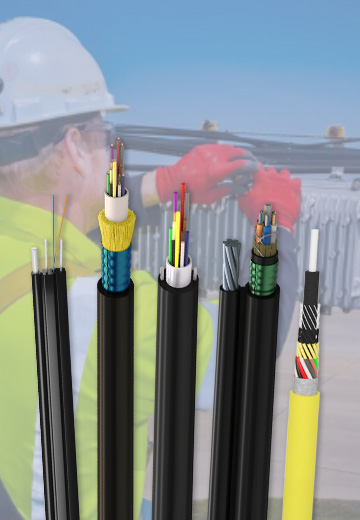 Fiber Optic Cable
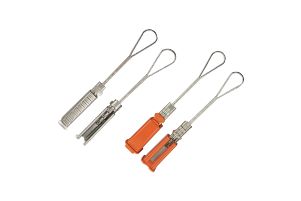 Fiber Optic Tools
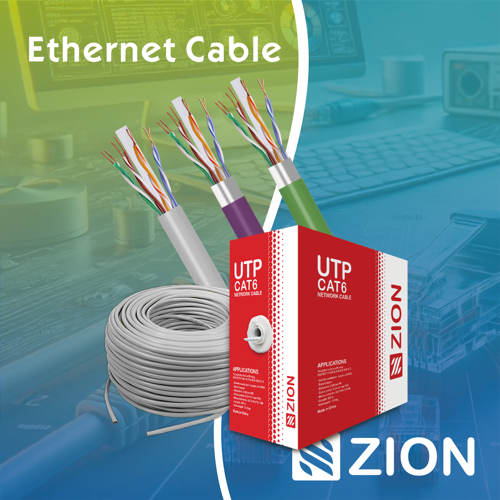 Ethernet Cable
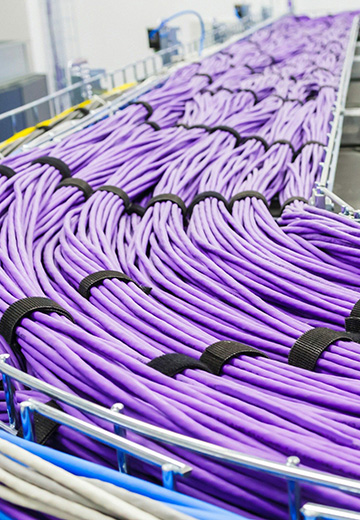 Coaxial Cable
 Fire & Security Cable
 Voice, Audio & Video
 Power & Control Cable