Satellite broadband is often described as a way to bypass terrestrial infrastructure. That description is useful for explaining coverage, but incomplete for designing a working network.
A satellite can bridge hundreds or thousands of kilometres between a remote site and a gateway footprint. It cannot, by itself, replace the fiber links, points of presence, distribution frames, patch cords, LAN cabling, power systems, test records, and maintenance processes that carry traffic before and after the radio link.
The practical lesson is simple: satellite access and terrestrial cabling are complementary layers. The satellite solves the difficult geographic span. Fiber and structured cabling turn that span into a manageable service for operators, enterprises, schools, clinics, farms, mines, and rural communities.
Satellite Access and Terrestrial Networks Have Different Jobs
Satellite access is best treated as one segment of an end-to-end IP network, not as the whole network.
The space segment normally provides the radio path between a user terminal or hub and a satellite. Depending on the architecture, traffic may then reach a gateway earth station, an operator interconnection point, or another satellite before entering terrestrial infrastructure. From there, routers, optical transport, metro or regional backhaul, Internet transit, local peering, and data-centre systems carry the traffic toward its destination.
At the remote end, the satellite terminal usually hands traffic to a local router, firewall, switch, Wi-Fi system, private LTE/5G network, or building distribution network. Copper and fiber cabling then connect users, access points, cameras, servers, telephones, and operational systems.

| Network layer | Primary role | Typical physical infrastructure |
|---|---|---|
| Satellite access | Cross long or difficult geographic spans | Satellite, antenna, modem, outdoor unit, RF or hybrid cable |
| Gateway and regional backhaul | Aggregate traffic and connect the satellite system to terrestrial networks | High-count fiber, ducts, ODFs, splice closures, optical transport equipment |
| ISP core and local POP | Routing, peering, security, caching, subscriber control, service handoff | Core routers, switches, racks, fiber panels, patch cords, power and grounding |
| Campus and enterprise distribution | Carry service between buildings and technical rooms | Outdoor fiber, indoor fiber, copper backbone, closures, termination boxes |
| Horizontal LAN | Connect local devices and wireless access points | Category copper, fiber, patch panels, outlets, PoE switches, equipment cords |
ITU-R has explicitly identified satellite systems as capable of complementing and interworking with terrestrial connectivity, including backhaul to towers, access points, homes, and offices.4 That is the right engineering model for procurement: define every layer and every handoff.
Ground Stations Still Need Regional Backhaul
A gateway earth station concentrates large volumes of traffic. Once the radio signal is received and converted into network traffic, that capacity must move toward an ISP core, Internet exchange, cloud on-ramp, content cache, or data centre. This makes regional terrestrial backhaul a critical part of satellite service quality.
Fiber is commonly preferred where traffic volumes, route length, upgradeability, electromagnetic exposure, or latency requirements justify it. Microwave links may remain useful where trenching is impractical, and hybrid routes can improve resilience. The physical design should be based on required capacity, growth, route availability, restoration time, and local construction constraints rather than on a single transport technology.

For a gateway or regional hub, the fiber scope may include:
- Diverse outside-plant routes where commercially and physically possible.
- Single-mode fiber sized for initial wavelengths plus future growth.
- Armored, duct, aerial, direct-buried, or all-dielectric cable selected for the route environment.
- Building-entry closures, transition boxes, and fire-rated indoor cable after the point of entry.
- ODF capacity for working fibers, protection fibers, dark fibers, monitoring, and maintenance access.
- Optical power budgets that include fiber attenuation, splices, connectors, splitters, and engineering margin.
- OTDR baselines and insertion-loss results for every commissioned link.
The GSMA describes backhaul as the connection between mobile base stations and the core mobile network, while its backhaul research notes continued dependence on fiber and terrestrial wireless technologies.56 The same operational principle applies to satellite gateways: access capacity has little value if the terrestrial path behind it is undersized or fragile.
ISP Core Networks and Local POPs Complete the Service
Satellite coverage may reach a remote region, but users still need local network functions. An ISP core or local point of presence can provide routing, traffic engineering, subscriber authentication, network security, DNS, content caching, lawful functions where required, and interconnection with other operators.
A local POP can also reduce unnecessary transport. Frequently requested content can be served from a cache, local traffic can remain local through peering, and enterprise services can be handed off closer to the customer. These functions do not remove satellite delay, but they can reduce avoidable upstream traffic and improve service consistency.
The passive infrastructure inside a POP deserves the same attention as the active equipment:
- Rack elevations and clear ownership of each rack unit.
- Separate ODF and copper patching fields with readable labeling.
- Defined connector type and polish across the project.
- Bend-radius control, vertical and horizontal cable management, and protected patch-cord routing.
- Clearly separated carrier, core, distribution, management, and customer handoff ports.
- Earthing, bonding, surge protection, environmental monitoring, and backup power.
- Spare rack space, ODF ports, fibers, switch ports, and power capacity for growth.
The Outdoor-to-Indoor Fiber Transition Is a Design Boundary
Outdoor fiber cable is selected to survive moisture, ultraviolet exposure, temperature cycles, crushing, rodents, wind loading, or direct burial. Indoor cable is selected for building fire performance, routing, flexibility, and termination. One cable construction does not automatically satisfy both environments or local building codes.
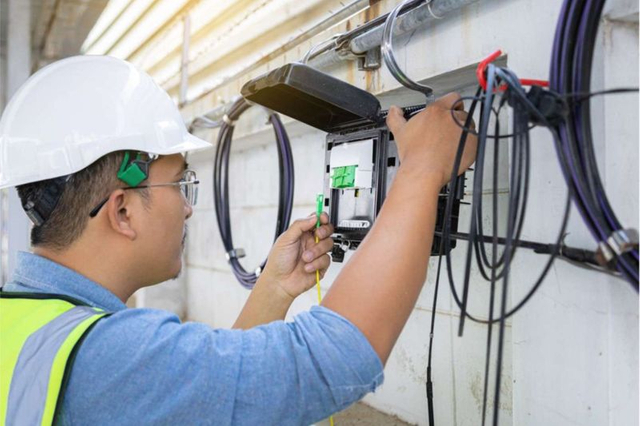
The transition point should be designed, not improvised. A typical arrangement includes an outside-plant cable entering through a sealed duct, bonding or grounding of metallic elements where applicable, a building-entry closure or termination enclosure, splicing to an indoor-rated cable, and routing to the ODF through protected containment.

Important RFQ details include:
- Cable construction for each route section and the applicable installation method.
- Maximum permitted length of outdoor cable inside the building.
- Fire-performance requirement for the indoor section under local regulations.
- Water blocking, UV resistance, armor, termite or rodent protection where relevant.
- Minimum bend radius and pulling tension during and after installation.
- Entry sealing against water, dust, insects, and gas migration.
- Separation from power cables and coordination with lightning protection.
- Required slack storage at chambers, poles, closures, and equipment rooms.
This boundary is particularly important in hot, dusty, humid, coastal, flood-prone, or high-UV locations. Environmental assumptions should appear in the RFQ so bidders quote the correct cable and enclosure ratings.
ODFs, Closures, and Patching Make the Network Operable
Passive components are sometimes treated as minor accessories. In operation, they determine whether technicians can identify, isolate, test, restore, and expand the network without creating new faults.
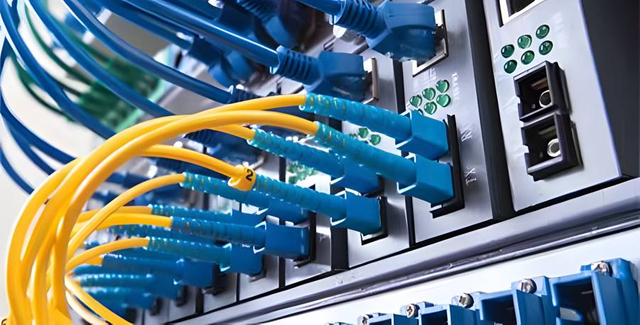
An ODF provides a controlled interface between incoming cable fibers, pigtails, adapters, patch cords, and active equipment.
Closures protect splices and organize fibers in outside plant, building entries, branches, and repairs.
Patch cords should be standardized by connector, polish, fiber type, jacket rating, color coding, length and labeling.
Port changes should be controlled, inspected, cleaned, labeled and recorded so the physical network remains traceable.
Optical Distribution Frames
An ODF provides a controlled interface between incoming cable fibers, pigtails, adapters, patch cords, and active equipment. Selection should consider fiber count, rack format, splice capacity, connector type, front or rear access, cable entry, bend-radius protection, labeling, and room for expansion.
Do not specify only a port count. Specify whether the frame is supplied loaded or unloaded, adapter and pigtail type, splice trays, sleeves, patch cords, cable-management accessories, mounting hardware, labels, and grounding kit where required.
Fiber Closures
Closures protect splices and organize fibers in outside plant, building entries, branches, and repairs. The correct type depends on installation in a manhole, handhole, pole, wall, aerial span, duct, or direct-buried route.
The RFQ should define sealing method, ingress rating, cable-entry range, mid-span access, splice capacity, tray arrangement, splitter accommodation if needed, re-entry cycles, mounting accessories, and environmental performance. For rural networks, re-enterable closures and standardized tray systems can significantly simplify restoration.
Patch Cords and Patching Policy
Patch cords are active elements in day-to-day network changes even though they are passive products. Standardize connector types, polish, fiber type, jacket rating, color coding, length increments, labeling, and inspection requirements. Mixing APC and UPC connectors, or repeatedly using contaminated end faces, can create avoidable loss and reflectance problems.
A patching policy should define who may make changes, how changes are recorded, when connectors are inspected and cleaned, and how abandoned cords are removed. Accurate port records are as important as the physical patch cord.
Enterprise and Campus LAN Cabling Remains Essential
At a school, clinic, government office, hotel, farm, mine, factory, or community Internet centre, the satellite terminal is normally only the WAN edge. Users and systems still depend on the local area network.
Outdoor single-mode fiber is suitable for links between buildings, long campus distances, high-bandwidth aggregation, and electrically isolated pathways. Category copper remains practical for horizontal runs to work areas, phones, cameras, and Wi-Fi access points, especially when Power over Ethernet is required. Indoor fiber may be used for risers, high-capacity distribution, secure zones, or long links beyond balanced-copper channel limits.
The cabling design should align with a recognized generic cabling framework. ISO/IEC 11801-1 defines common requirements for multi-vendor customer-premises cabling, while ISO/IEC 11801-2 covers cabling within and between office buildings and ISO/IEC 11801-6 addresses distributed building services on single- or multi-building premises.789 The ANSI/TIA-568 family is another widely used reference for commercial-building telecommunications cabling.10
For campus RFQs, define:
- Building count, floor plans, equipment-room locations, and pathway constraints.
- Backbone fiber type, fiber count, termination method, and spare capacity.
- Copper category, shielding requirement, conductor construction, jacket rating, and PoE application.
- Maximum permanent-link and channel lengths under the selected standard.
- Patch panels, outlets, faceplates, consolidation points, cords, and labeling system.
- Wi-Fi access-point density, PoE class, camera locations, and future device allowances.
- Separation, bonding, grounding, surge protection, and lightning-risk controls.
- Certification test limits and the native electronic test files to be delivered.
Satellite bandwidth should also influence LAN policy. Local caching, traffic prioritization, guest access controls, software-update scheduling, and application visibility can protect expensive or contention-sensitive upstream capacity.
Maintenance Depends on Spares, Tools, and Records
Remote networks often take longer to reach, so a small missing part can extend an outage by days. The maintenance package should be designed during procurement, not after the first failure.

Recommended Spare Categories
- Matching fiber cable lengths for representative route types.
- Compatible closures, splice trays, seals, cable-entry kits, and mounting hardware.
- ODF adapters, pigtails, splice sleeves, patch cords, and blanking plates.
- Pre-terminated or field-terminated copper links, jacks, patch panels, and equipment cords.
- Satellite-terminal power supplies, injectors, modems, approved RF assemblies, and mounting parts where contractually available.
- SFP or SFP+ optics matched to the link budget and active equipment.
- Cleaning consumables, inspection tips, labels, heat-shrink markers, and approved sealing materials.
Test Equipment and Acceptance Records
At minimum, fiber work commonly requires visual inspection and cleaning tools, an optical power meter and light source, and an OTDR appropriate to the fiber and wavelengths. Copper links should be certified with a calibrated field tester against the specified permanent-link or channel limit. ITU-T G.650.3 covers testing of installed single-mode fiber links and recommends bidirectional OTDR measurements at at least two wavelengths.11 ITU guidance also identifies the OTDR as a standard tool for locating fiber faults.12
The handover package should include:
- Approved design drawings and final as-built drawings.
- Geographic route files and coordinates for chambers, poles, closures, and key crossings.
- Cable-drum records, fiber allocation, splice diagrams, ODF schedules, and port maps.
- Fiber insertion-loss and OTDR traces in PDF plus native instrument format.
- Copper certification reports in PDF plus native tester format.
- Equipment inventory with manufacturer, model, serial number, firmware, and warranty status.
- Labeling convention, photos of completed work, and rack elevations.
- Preventive-maintenance schedule, fault-escalation matrix, and restoration procedure.
- Spare-parts inventory, reorder levels, storage conditions, and shelf-life notes.
- Training records and contact details for local and regional support.
Project RFQ Checklist
The ITU procurement guide for last-mile connectivity recommends defining scope, locations, stakeholders, schedule, budget, technical requirements, KPIs, bidding procedures, and regulatory or contractual requirements.13 The following checklist adapts that logic to hybrid satellite-and-terrestrial projects.
| RFQ section | Information the buyer should provide | Response required from bidder |
|---|---|---|
| Service objective | Sites, user groups, applications, availability target, growth period | Proposed architecture and service assumptions |
| Site data | Coordinates, terrain, climate, access, security, grid condition | Site survey method and exceptions register |
| Satellite segment | Orbit/service type, licensed provider constraints, terminal ownership | Capacity, contention, latency assumptions, antenna/modem scope, SLA |
| Gateway/backhaul | Handoff location, target capacity, route constraints, diversity objective | Fiber/microwave design, link budget, route drawing, protection method |
| ISP/POP | Core interconnection, IP plan, routing, peering, security, rack and power limits | Active equipment, ODF/patching, power, cooling, monitoring, expansion plan |
| Outside plant | Aerial/duct/buried sections, spans, crossings, local hazards | Cable construction, fiber count, installation hardware, closures, slack plan |
| Building entry | Entry route, room location, local fire and building requirements | Transition enclosure, indoor cable, sealing, grounding, containment |
| ODF and patching | Rack format, connector policy, labeling convention | Loaded bill of materials, capacities, accessories, patch-cord schedule |
| Campus LAN | Buildings, outlets, APs, cameras, PoE loads, pathways | Backbone and horizontal design, standards compliance, certification plan |
| Environmental | Temperature, humidity, dust, salt, UV, flooding, lightning, rodents | Product ratings, protection measures, derating and warranty conditions |
| Power | Grid profile, autonomy target, generator/solar availability | Load schedule, UPS/battery design, surge protection, grounding |
| Testing | Required standards, wavelengths, reference method, pass/fail limits | Inspection and test plan, calibration certificates, sample reports |
| Documentation | File formats, naming, GIS/CAD requirements, language | Handover index, document schedule, native test-data commitment |
| Spares | Restoration target, logistics time, local storage | Recommended quantities, pricing, shelf life, replenishment lead time |
| Training | Technician skill level, locations, language | Course outline, practical exercises, materials, competency checks |
| Support | SLA, escalation levels, remote access policy | Response/restoration times, support locations, exclusions |
| Commercial | Incoterms, currency, taxes, warranty, delivery milestones | Itemized pricing, lead times, validity, deviations, lifecycle costs |
| Compliance | Permits, spectrum, import rules, local content, HSE | Compliance matrix, certificates, licenses, responsibilities |
Bidder Deliverables That Should Be Mandatory
- A compliance matrix answering every RFQ clause.
- A complete bill of materials with manufacturer and part number.
- Network topology, fiber schematics, rack elevations, and pathway drawings.
- Link budgets for satellite, optical, and wireless backhaul segments as applicable.
- Power-load and autonomy calculations.
- Installation method statements and an inspection and test plan.
- Project schedule with survey, permits, logistics, installation, testing, and acceptance milestones.
- List of exclusions, assumptions, substitutions, and standards deviations.
- Warranty, support, training, spare-parts, and end-of-life policy.
- Sample handover dossier and native test-report files.
Conclusion
Satellite broadband can make remote connectivity feasible where a terrestrial access build is too slow, expensive, or geographically difficult. But the satellite link does not eliminate terrestrial engineering. It changes where terrestrial infrastructure begins and how much of it is required.
Successful projects specify the complete service chain: satellite terminal, gateway, regional backhaul, ISP core, local POP, building entry, ODF, closure, patching, campus backbone, horizontal LAN, power, monitoring, test records, and spares. When these layers are procured as one operational system, satellite capacity can become a durable local service rather than an isolated Internet terminal.
FAQ
Does satellite broadband remove the need for fiber?
No. Satellite broadband can solve a difficult geographic span, but the gateway, regional backhaul, POP, campus backbone and local LAN still need terrestrial infrastructure.
Where is fiber most important in a satellite broadband project?
Fiber is especially important for gateway backhaul, ISP or POP interconnection, building entry, campus distribution and high-capacity links between technical rooms.
Why should ODFs and closures be specified in the RFQ?
ODFs and closures determine how technicians splice, patch, test, restore and expand the network. They should be specified by capacity, connector type, sealing, access method, labeling and accessories.
What test records should be delivered after installation?
The handover package should include fiber insertion-loss results, OTDR traces, copper certification reports, as-built drawings, splice diagrams, ODF schedules and native instrument files.
Cited References
The following resources provide background on satellite connectivity, backhaul, structured cabling and installed fiber testing. Project-specific designs should still be confirmed against local regulations, operator requirements and site conditions.
- ITU: Regulatory Perspectives for Satellite Communications to Connect Underserved Communities
- ITU: Assessment of Last-Mile Connectivity Interventions in Uganda
- GSMA: The Mobile Economy Sub-Saharan Africa 2024
- ITU-R Report M.2460-0: Key Elements for Integration of Satellite Systems into Next Generation Access Technologies
- GSMA: Driving the Digital Revolution with Improved Mobile Coverage
- GSMA: Mobile Backhaul Options
- ISO/IEC 11801-1:2017: Generic Cabling for Customer Premises, General Requirements
- ISO/IEC 11801-2:2017: Generic Cabling for Office Premises
- ISO/IEC 11801-6:2017: Distributed Building Services
- TIA: TIA-568 Commercial Building Telecommunications Cabling Standards
- ITU-T G.650.3: Test Methods for Installed Single-Mode Optical Fibre Cable Links
- ITU-T L.300/L.25: Optical Fibre Cable Network Maintenance
- ITU: Guide for Procuring Last-Mile Connectivity Data Networks



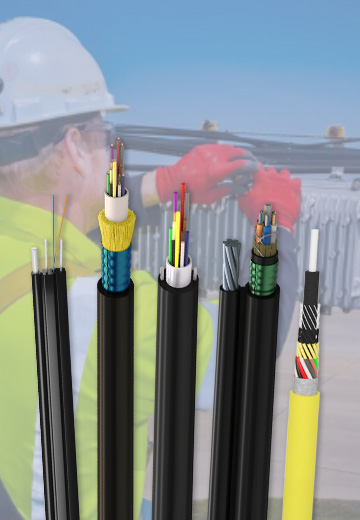 Fiber Optic Cable
 Fiber Optic Tools
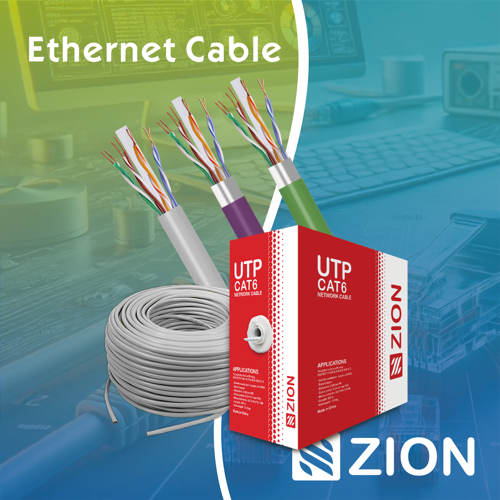 Ethernet Cable
 Coaxial Cable
 Fire & Security Cable
 Voice, Audio & Video
 Power & Control Cable