Please Select Product Type Please Select Product Type
  • Fiber Optic Cables
    • Optical Fibers

        No classification

    • Outdoor Fiber Optic Cables
      • ADSS cable
        • ADSS Single jacket
          • ADSS 80M Single Sheath
          • ADSS 100M Single Sheath
          • ADSS 120M Single Sheath
        • ADSS Double sheath

            No classification

      • OPGW

          No classification

      • Duct Fiber Optic Cable

          No classification

      • Direct Buried Fiber Optic Cable

          No classification

      • Air Blown Micro Cable

          No classification

    • FTTH Cables & Assemblies
      • FTTH Drop Cable

          No classification

      • FTTH Drop Patch Cord

          No classification

    • Indoor Fiber Optic Cables
      • Building Cabling Fiber

          No classification

      • Fire-Resistant Fiber Cable

          No classification

    • Fiber Connectivity
      • Fiber Patch Cable
        • LC Fiber Patch Cable
          • LC to LC Fiber Patch Cord
          • LC to SC Fiber Patch Cord
          • LC to FC Fiber Patch Cord
          • LC to ST Fiber Patch Cord
        • SC Fiber Patch Cable
          • SC to FC Fiber Patch Cord
          • SC to SC Fiber Patch Cord
          • SC to ST Fiber Patch Cord
        • FC Fiber Patch Cable

            No classification

        • ST Fiber Patch Cable

            No classification

        • MPO Fiber Patch Cable

            No classification

        • MU Fiber Patch Cable

            No classification

        • E2000 Fiber Patch Cord

            No classification

        • Optical Fibre Patch Cords

            No classification

        • Fiber Pigtails

            No classification

        • MTRJ Patch Cords

            No classification

        • SMA Patch Cords

            No classification

      • High-Density MPO Cabling
        • MPO Patch Cords

            No classification

        • MPO Trunk Cables

            No classification

        • MPO-LC Harness Cables

            No classification

        • MPO Fan-Out Cables

            No classification

        • MPO / MTP Loopback Modules

            No classification

        • MPO Patch Panels & Cassettes

            No classification

      • Fiber Optic Tether System
        • FPV Drone

            No classification

        • FPV Fiber Optic Spool

            No classification

        • Fiber Optic Guidance Wire

            No classification

    • Solutions by Application
      • Aerial Fiber Optic Cable

          No classification

      • Rural Network Fiber Optic Cable

          No classification

      • Space-Saving Fiber Optic Cable

          No classification

      • Distributed Base Station Fiber Optic Cable

          No classification

      • Rodent Resistant Fiber Optic Cable

          No classification

  • Fiber Optic Tools
    • Fiber Optic Installation Tools/Accessories/Fittings
      • ADSS Cable Accessories
        • ADSS Cable Guy Grips

            No classification

        • ADSS Cable Suspension Grips

            No classification

      • OPGW Cable Accessories
        • OPGW Cable Guy Grips

            No classification

        • OPGW Cable Suspension Grips

            No classification

      • Banding & Fitting Tools
        • Stainless steel strip &buckle

            No classification

        • Stainless Banding Tool

            No classification

      • Pole Mounting Supports
        • Aluminum hoop&Pole Bracket

            No classification

        • Hoop Retractor&Pole Brackets

            No classification

      • Cable Fittings
        • Fittings

            No classification

        • Immobility Clamp

            No classification

    • FTTH Fiber Optic Tools
      • FTTH Flat Drop Cable Clamps
        • FTTH stainless steel flat drop cable clamp

            No classification

        • FTTH nylon cable flat drop cable clamp

            No classification

        • FTTH combination flat drop cable clamp

            No classification

      • FTTH Installation Accessories
        • FTTH Hook

            No classification

      • FTTX ADSS Suspension & Tension Clamps
        • FTTX ADSS Suspension clamp

            No classification

        • FTTX ADSS Tension clamp

            No classification

    • Fiber Termination Tools

        No classification

    • Fiber Optic Test Tools

        No classification

    • OTDR Accessories

        No classification

    • Fiber Optic Cleaning Tools

        No classification

  • LAN/Ethernet Cable
    • CAT8

        No classification

    • CAT7 / CAT7A
      • CAT7

          No classification

      • CAT7A

          No classification

    • CAT6A
      • U/UTP

          No classification

      • U/FTP

          No classification

      • F/UTP

          No classification

      • F/FTP

          No classification

      • S/FTP

          No classification

      • CAT6A AMOUR/CST

          No classification

    • CAT6
      • U/UTP

          No classification

      • F/UTP

          No classification

      • SF/UTP

          No classification

      • Dual

          No classification

      • Armour CAT6

          No classification

    • CAT5E
      • U/UTP

          No classification

      • F/UTP

          No classification

      • SF/UTP

          No classification

      • Dual

          No classification

    • Copper Patch Cord Cable
      • CAT5E

          No classification

      • CAT6

          No classification

      • CAT6A

          No classification

      • CAT7

          No classification

      • CAT7A

          No classification

      • CAT8

          No classification

      • Special type

          No classification

    • Ethernet Plenum Cable

        No classification

    • Network Cable

        No classification

    • Copper Trunk Cable

        No classification

    • Direct-Burial Outdoor Ethernet Cables

        No classification

    • Ethernet Installation Accessories & Tools

        No classification

  • Coaxial Cable
    • Low Loss Cable

        No classification

    • RF Corrugated Coax Cable
      • 1/4"

          No classification

      • 3/8"

          No classification

      • 1/2"

          No classification

      • 7/8"

          No classification

      • 1 1/4"

          No classification

      • 1 5/8"

          No classification

    • Radiating Leaky Coaxial Cable

        No classification

    • RG MIL-C-17 Cable

        No classification

    • PTFE-FEP Coaxial Cable

        No classification

    • D-FB Coax Cable
      • D-FB cable

          No classification

      • Connectors for D-FB cable

          No classification

      • Grounding Kit, Clamp, Weatherproof for D-FB cable

          No classification

    • 75 ohm Coaxial Cable
      • RG6 coax cable
        • RG6 S

            No classification

        • RG6 Tri

            No classification

        • RG6 Q

            No classification

        • RG6 Dual

            No classification

      • RG59 coax cable
        • RG59 S

            No classification

        • RG59 Tri

            No classification

        • RG59 Q

            No classification

      • RG11
        • RG11 S

            No classification

        • RG11 Tri

            No classification

        • RG11 Q

            No classification

      • SAT coax cable

          No classification

      • HD coaxial cable

          No classification

      • VHF Leaky Feeder Cable

          No classification

      • Trunk cable/Hardline cable
        • PS

            No classification

        • QR

            No classification

      • CT coax cable

          No classification

      • KX coax cable

          No classification

      • VATC coax cable

          No classification

      • PK75 coax cable

          No classification

    • Plenum Coaxial Cable

        No classification

    • EN 50117 Coaxial Cable
      • Broadband double shield SA Class A++ >105dB

          No classification

      • Broadband Triple shield SA Class A++ >105dB

          No classification

      • Digital Drop shield SA Class A+>95dB

          No classification

      • Digital Drop shield SA Class A>85dB

          No classification

    • Coaxial Jumper Cables
      • 1/2" Super Flex Jumper Cable

          No classification

      • 1/2" Feeder Jumper Cable

          No classification

      • 3/8" Super Flex Jumper Cable

          No classification

      • 1/4" Super Flex Jumper Cable

          No classification

      • RG141 Jumper Cable

          No classification

      • RG142 Jumer Cable

          No classification

      • RG58 Jumper Cable

          No classification

    • 50 Ohm Coaxial Cable

        No classification

    • Semi-Flexible Series Cable

        No classification

  • Fire, Security & Alarm Cable
    • Fire Cables

        No classification

    • Fire Resistance Cable
      • EN 50200 PH30 Fire-Resistant Cable

          No classification

      • EN 50200 PH120 Fire-Resistant Cable

          No classification

      • JB-Fire Alarm Cable

          No classification

      • BS 6387 CWZ Fire-Resistant Cable

          No classification

      • BS 7629-1 Fire-Resistant Fire Alarm Cable

          No classification

      • FRLS & FRFH
        • FRLS & FRFH Unshielded

            No classification

        • FRLS & FRFH Shielded

            No classification

      • Silicon Insulation

          No classification

    • Fire Alarm Cable
      • UL Fire alarm cable-MENA

          No classification

      • UL 1424 FPL Unshielded

          No classification

      • UL 1424 FPLR Unshielded

          No classification

      • UL 1424 FPLP Unshielded

          No classification

      • UL 1424 FPL Shielded

          No classification

      • UL 1424 FPLR Shielded

          No classification

      • UL 1424 FPLP Shielded

          No classification

      • UL 1424 Solid
        • UL 1424 Solid S

            No classification

        • UL 1424 Solid U

            No classification

      • UL 1424 Stranded
        • UL 1424 Stranded U

            No classification

        • UL 1424 Stranded S

            No classification

      • UL Standard

          No classification

    • CCTV Surveillance Cable
      • Siamese Ethernet Cable

          No classification

      • Siamese Coaxial Cable
        • RG59+2c

            No classification

        • RG6+2c

            No classification

        • Other

            No classification

      • KVK CCTV Cable
        • КВК-В-1,5

            No classification

        • КВК-В-2Э

            No classification

        • КВК-П-1,5

            No classification

        • КВК-П-2Э

            No classification

      • Custom CCTV Combined Cable
        • HD

            No classification

        • PTZ

            No classification

        • RG59

            No classification

        • MENA

            No classification

      • RG6 CCTV

          No classification

      • RG59 CCTV

          No classification

      • RG11 CCTV

          No classification

      • PK75 CCTV
        • Паракс РК 75-2-110

            No classification

        • Паракс РК 75-2-111

            No classification

        • Паракс РК 75-2-122

            No classification

        • Паракс РК 75-2-13M

            No classification

        • Паракс РК 75-2-310

            No classification

        • Паракс РК 75-2-311

            No classification

        • Паракс РК 75-3-313 нг(А)

            No classification

        • Паракс РК 75-3-314 нг(А)

            No classification

        • Паракс РК 75-3-315 нг(А)

            No classification

        • Паракс РК 75-3-316 нг(А)

            No classification

        • Паракс РК 75-3-32

            No classification

        • Паракс РК 75-3-322

            No classification

      • JIS C CCTV

          No classification

      • MINI CCTV

          No classification

      • Other

          No classification

    • Burglar Alarm cable
      • Alarm, signal cable

          No classification

      • Mylar Pair Cable

          No classification

      • Solid Cond. global alarm cable

          No classification

      • Stranded Cond.unshielded global alarm cable

          No classification

      • Stranded Cond.shielded global alarm cable

          No classification

      • UL Standard security,sound, alarm cable

          No classification

      • General Purpose

          No classification

    • Access Control Cable

        No classification

    • Fire Alarm System
      • Cables De Alarma Incendio

          No classification

      • Cabos De Alarme De IncÊndio

          No classification

    • Lutron Cables

        No classification

    • Plenum Security Cables

        No classification

  • Voice, Audio & Video Cable
    • Flat Telephone Cable

        No classification

    • Circular Audio Speaker Cable

        No classification

    • Circular Shielded Audio Cable

        No classification

    • Multicore Circular Speaker Cable

        No classification

    • Parallel Speaker Cable

        No classification

    • Media Composite Cable

        No classification

    • Coax Jumper Cable/F Type Cable

        No classification

    • Audio Speaker Cable

        No classification

    • Audio XLR Cable

        No classification

    • HDMI
      • HDMI Cable

          No classification

      • HDMI Extender

          No classification

    • DisplayPort Cable

        No classification

    • DVI Cable

        No classification

    • VGA Cable

        No classification

    • Adaptors

        No classification

  • Universal Serial Bus
    • USB C Cable

        No classification

    • USB C Converter

        No classification

    • USB Cable

        No classification

    • USB Hub

        No classification

    • USB to Serial Cable

        No classification

    • USB Bluetooth/Network/Sound Adapter

        No classification

  • Control Cable
    • Fieldbus Cable

        No classification

    • Industrial Ethernet Cable

        No classification

    • PROFINET Cable

        No classification

    • Marine LAN Cable

        No classification

    • Flexible Control Cable

        No classification

    • Chain Cable

        No classification

    • SERVO Motor Cables

        No classification

    • Robotics Cables

        No classification

  • Power & Control Cable
    • Solar Cable
      • H1Z2Z2-1 Single

          No classification

      • H1Z2Z2-1 Twin

          No classification

      • UL4703

          No classification

      • TUV 2 pfG 2642/01.22

          No classification

      • Material

          No classification

      • Solar Connectors

          No classification

    • Battery Cable

        No classification

    • General Power Cable

        No classification

    • KNX Cable

        No classification

    • LV Armoured Cable SWA & AWA

        No classification

    • Automotive cable
      • American Standard
        • American Standard Battery Wire

            No classification

        • American Standard Primary Wire

            No classification

        • American Standard-More Type Wire

            No classification

      • Germany Standard

          No classification

      • Japanese Standard

          No classification

    • High Temperature Cable
      • Silicone 180℃ cable

          No classification

      • Silicone 200℃ cable

          No classification

      • Silicone 450℃ cable

          No classification

    • Flex Control Cable
      • LIYY Series Control Cables

          No classification

      • LiYCY Series Control Cables

          No classification

      • Unshielded Control Cables

          No classification

      • Shielded Control Cables

          No classification

      • Steel Wire Braid Control Cables

          No classification

    • Sensor & Actuator Cables

        No classification

    • RS485/232 Cable

        No classification

    • Hook Up wire

        No classification

  • other
    • Cable Materials
      • CCA WIRE

          No classification

      • CCAM WIRE

          No classification

      • Aluminum Foil

          No classification

      • Al-Mg alloy wire

          No classification

      • CCS WIRE

          No classification

      • Enameled aluminum wire(EAL)

          No classification

      • Enameled copper clad aluminum wire (ECCA)

          No classification

      • Enameled copper wire(EC)

          No classification

      • TCCA WIRE

          No classification

      • TCCAM WIRE

          No classification

      • Galvanized Steel Wire

          No classification

      • Stranded Wire

          No classification

  • Cabling Accessories
    • Feeder Cable Clamp

        No classification

Please select

    Please select superior classification

Please select

    Please select superior classification

Please select

    Please select superior classification

Please select

    Please select superior classification

Fiber Optic Cables


Outdoor Fiber Engineering & Procurement Guide

Duct vs Direct-Buried Fiber Cable: Selection, Construction and Applications

Compare duct and direct-buried fiber cable by route protection, armor, water blocking, jacket, mechanical load and application. Use the product families, visible FAQs and RFQ checklist below to turn field conditions into a clear cable specification.

1) Duct Cable vs Direct-Buried Fiber Cable

The central duct vs direct buried fiber cable decision is how much protection the route supplies and how much protection must be built into the cable. Duct cable is pulled or blown into a conduit that provides the primary mechanical barrier. A direct buried fiber cable contacts the soil without continuous conduit protection and normally needs higher crush resistance, effective longitudinal water blocking, a durable sheath system and a verified rodent or impact barrier where those hazards exist.

Selection pointDuct cableDirect-buried cable
InstallationPulled or blown through an underground conduit.Placed in a trench or installed by a suitable direct-burial method.
Mechanical protectionThe conduit supplies much of the external barrier; pulling, bending and moisture remain cable requirements.The cable construction must address soil pressure, stones, tools, handling and local rodent risk.
Armor optionsNon-armored, APL or PSP depending on route hazards.PSP, APL, steel wire, FRP tape, glass yarn or double-sheath options may be considered.
Water controlImportant where conduits may flood, hold condensation or have damaged seals.Longitudinal water blocking and a suitable outer sheath are core specification items.
MaintenanceCable can often be replaced while the duct remains serviceable.Repair normally requires excavation, so route records and reserve length matter.

Practical rule: Never approve a cable from its marketing label alone. Confirm tensile load, crush resistance, minimum bend radius, water-penetration performance, temperature range, sheath material and permitted installation method on the exact offered model data sheet.

2) How to Select Outdoor Fiber Cable

Start with verified route conditions, then choose construction features that address those conditions. Armor, water blocking and jacket material should each solve a named project risk.

Route and installation loadsRecord duct size, pulling length, bends, soil, burial method, span, wind, ice, temperature and installation equipment.
Water and environmentIdentify flooding, condensation, drainage, UV, chemicals, rodents, lightning and temperature limits.
Optical and mechanical valuesSpecify fiber type and count, attenuation, tensile and crush limits, bend radius, cable diameter and drum length.

Armor should answer a defined hazard

Steel tape armored fiber can provide strong radial crush and penetration resistance. PSP is relevant where direct soil contact, stones, accidental impact or severe rodent pressure are credible risks. APL provides a metallic moisture barrier with lower weight. Where electrical isolation, lightning exposure or metal restrictions matter, an all-dielectric construction with FRP, CSM or glass yarn may be preferable.

Water blocking should be verified at cable level

A wet duct fiber cable should have a suitable outdoor sheath and verified longitudinal water blocking. A water blocking fiber cable may use swellable yarns or tapes, thixotropic gel, or a semi-dry combination. The buyer should specify the applicable water-penetration test and acceptance criteria instead of relying on the word “waterproof.”

PE, LSZH and TPU solve different jacket requirements

Black PE is a common choice for long-term outdoor moisture and UV exposure. LSZH is used where smoke and corrosive halogen gases must be limited, particularly in occupied or enclosed areas; the exact grade still needs verification for outdoor exposure. TPU is relevant where flexibility and abrasion resistance are required for industrial movement or repeated handling.

3) Cable Families and Referenced ZION Products

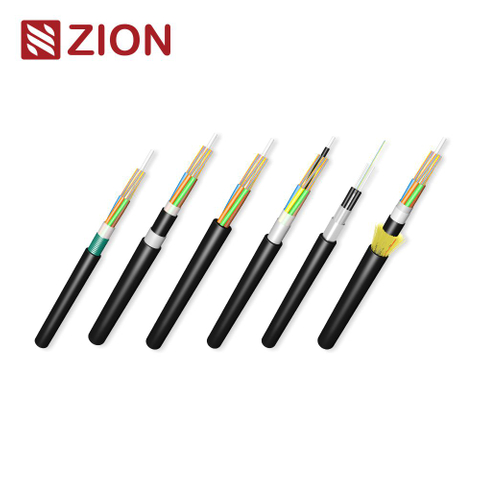
Uni-tube cables are compact and practical for drop, access and shorter routes. Stranded loose-tube cables distribute fibers across multiple tubes and are commonly considered for higher fiber counts, longer routes and more demanding environments. The links and product descriptions below come from the supplied source material; confirm the exact offered construction and ratings before approval.

Uni-tube armored outdoor fiber optic cable construction

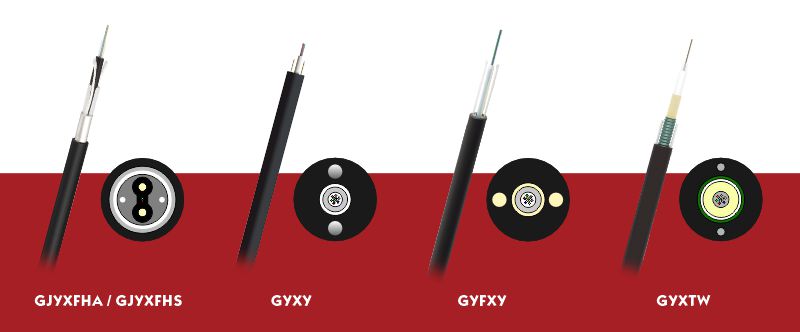
Uni-tube armored cables

Compact central-tube constructions using APL, PSP, steel wires or FRP rods for FTTH, aerial and duct routes.

GJYXFHA/GJYXFHS · GYXY · GYFXY · GYXTW

Stranded loose-tube armored fiber cable product family

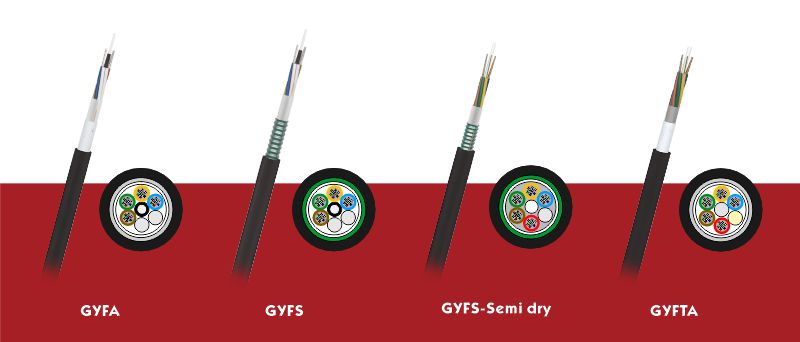
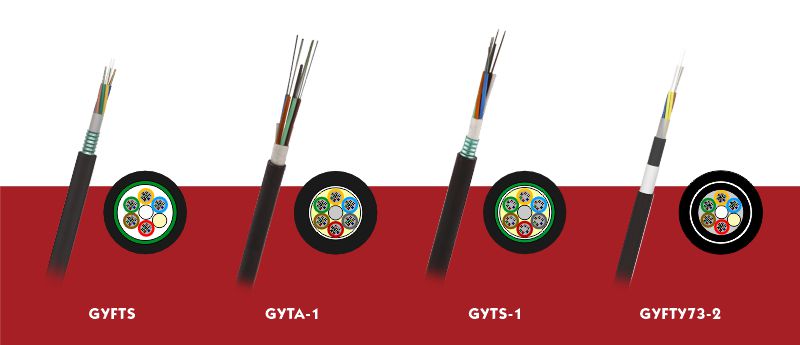
Stranded loose-tube armored cables

Multiple loose tubes around a central strength member, with APL, PSP or FRP protection for selected duct and direct-buried routes.

GYFA · GYFS · GYFS Semi-dry · GYFTA · GYFTS · GYTA-1 · GYTS-1 · GYFTY73-2

Armored stranded loose-tube fiber optic cable details

Armor selection

APL and PSP address different moisture, weight and mechanical requirements. Compare the exact product construction against the measured route hazards.

Stranded loose-tube non-armored fiber optic cable

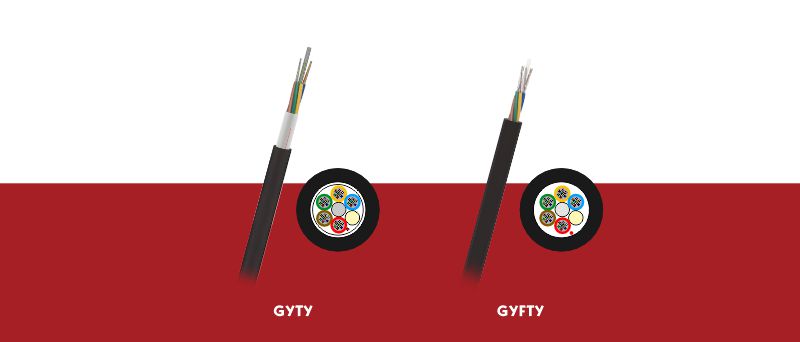
Stranded loose-tube non-armored cables

Lightweight PE-sheathed options for protected aerial or duct routes where metallic armor is not required.

GYFTY · GYTY

All-dielectric stranded loose-tube fiber optic cable

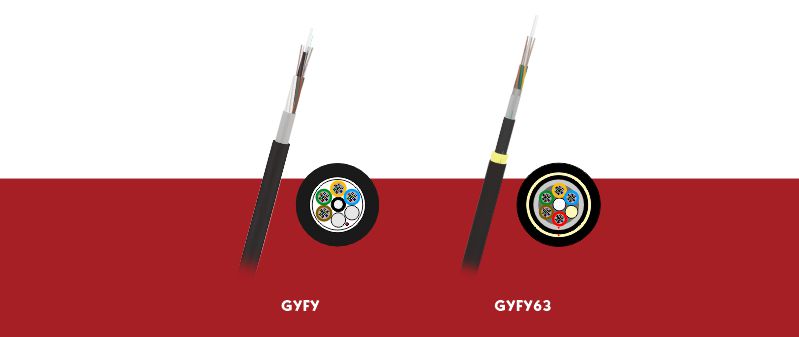
All-dielectric stranded loose-tube cables

GFRP, CSM and glass-yarn designs for projects requiring electrical isolation or non-metallic construction.

GYFY · GYFY63 · GYFY Semi-dry

4) Application-Specific Fiber Cable Guidance

Railway communication

A railway fiber optic cable should be selected for the actual duct, trough, aerial or direct-buried route, including vibration, crush, rodents, traction-power proximity, outdoor water and any station or tunnel fire requirements.

Oil and gas facilities

An oil gas fiber cable may need a jacket compatible with hydrocarbons, chemicals, UV and temperature, plus mechanical protection and the project’s fire, grounding and hazardous-area documentation.

Rural broadband

A rural broadband fiber cable should balance route cost, long drum lengths, repair access and rodent protection across aerial, duct and direct-buried segments.

High-wind aerial routes

A high wind aerial fiber cable must be evaluated by span length, sag, tension, wind and ice loads, temperature, allowable fiber strain and hardware compatibility.

Repeated movement

A repeated bending fiber cable needs bend-insensitive fiber and a flexible construction verified for the required dynamic bend radius, cycle count, torsion, speed and travel.

High-density routes

A space saving fiber cable can use compact subunits, ribbon or rollable-ribbon fiber to increase fiber count while reducing cable diameter, duct occupancy and termination space.

5) Frequently Asked Questions

Use these answers as a selection starting point. Final approval should be based on the exact route, offered cable data sheet and applicable project requirements.

What is the difference between duct and direct-buried fiber cable?

Duct cable relies on a conduit for much of its external mechanical protection and is optimized for pulling or blowing. Direct-buried cable contacts the soil and normally needs stronger crush, impact, water and rodent protection.

Can duct cable be directly buried?

Only when the manufacturer explicitly permits direct burial for that exact construction and its crush, impact, water-blocking, sheath and rodent performance meet the route specification.

When is steel-tape armor required?

Consider steel-tape armor when the route assessment identifies high radial crush, penetration, accidental tool damage or severe rodent pressure. Where electrical isolation or lightning exposure dominates, evaluate an all-dielectric alternative.

What cable is suitable for rodent-prone areas?

Select a verified rodent resistant fiber cable using PSP, FRP tape, glass yarn or another supported barrier, often with a double sheath. Match protection to the local species and severity; the word “armored” alone does not prove rodent resistance.

How do I select fiber cable for wet ducts?

Use a suitable outdoor PE sheath and longitudinal water blocking, then check water-penetration performance, duct drainage and entry seals. Choose gel-filled, semi-dry or dry-core construction according to exposure and splicing practice.

What water-blocking material should outdoor fiber cable use?

Water-swellable yarns or tapes provide clean preparation, gel provides continuous filling, and semi-dry designs combine gel in the tubes with dry materials around them. Verify the completed cable against the specified water-penetration test.

What is the difference between dry-core and gel-filled fiber cable?

In a dry core vs gel filled fiber comparison, dry-core cable uses swellable materials and is cleaner to prepare. Gel-filled cable uses filling compound around fibers or tubes for moisture control but requires more cleaning. Semi-dry construction combines aspects of both.

What cable is suitable for railway communication?

Choose according to the railway authority and exact route. Check vibration, crush, rodents, water, lightning or traction-power proximity, and any station or tunnel flame and smoke requirements.

What cable is suitable for oil and gas facilities?

Select a cable compatible with the site’s hydrocarbons, chemicals, UV, temperature and mechanical exposure. Occupied or enclosed areas may add LSZH or flame requirements, while hazardous sites require the project’s documentation and installation rules.

What cable is suitable for rural broadband deployment?

Use a route-based mix: a verified aerial design for pole spans, compact duct cable where conduit exists, and an armored or supported all-dielectric construction for direct burial. Long drum lengths can reduce joints.

How do I select aerial fiber cable for high-wind areas?

Provide span, ruling span, wind speed, ice load, temperature and clearance inputs. Verify calculated sag, maximum tension, allowable fiber strain, cable diameter and compatible suspension or dead-end hardware.

What cable jacket is suitable for UV exposure?

Black UV-stabilized outdoor PE is a common choice for continuous sunlight. An UV resistant fiber cable may also use an outdoor-rated LSZH or TPU compound when its data sheet confirms the required weathering and temperature performance.

What is the difference between PE, LSZH and TPU fiber jackets?

For PE vs LSZH vs TPU fiber, PE favors outdoor moisture and UV durability, LSZH limits smoke and corrosive halogen gases during fire, and TPU favors flexibility and abrasion resistance. No single material is best for every route.

What fiber cable can withstand repeated bending?

Use a dynamic or flex-rated construction with bend-insensitive fiber and suitable strength members and jacket. Specify minimum dynamic bend radius, cycle count, torsion, speed and travel conditions rather than requesting “flexible cable” alone.

What is a space-saving high-density fiber cable?

It is a compact mini-tube, ribbon or rollable-ribbon design that places more fibers in a smaller diameter. Compare fiber count, outer diameter, duct fill, mass, pulling load, access method and splicing system.

6) RFQ Checklist

A useful RFQ links each requested construction feature to measurable route, installation and delivery information.

  • Route and installationDuct, direct burial, aerial, tunnel or mixed route; route length, bends, span, installation method and equipment.

  • EnvironmentWater, UV, rodents, chemicals, temperature, soil, lightning, wind, ice and mechanical hazards.

  • Optical constructionFiber type, fiber count, attenuation limit, color code, loose-tube or ribbon arrangement and access method.

  • Mechanical limitsInstallation and operating tension, crush, impact, bend radius, cable diameter, mass and allowable fiber strain.

  • Materials and protectionArmor, strength member, water blocking, outer jacket, non-metallic requirement and required environmental performance.

  • Tests and deliveryApplicable standards, test method and report, quantity, drum length, marking, packaging, destination and delivery date.


CONTACT US
Professional OEM - Zion Communication
picture1

Request a Quote​​​​​​​
Contact Us