Cat7 Ethernet Cables – High-Speed, Shielded Networking for 10G and Beyond
Author: Michael Publish Time: 12-08-2025 Origin: Site
■ Understanding Cat7 Cables: Top-Class Networking for the Needs of the Present Age
The advancing progress of the internet, which continually demands higher transfer speeds and efficiency, is also affecting the need for better cabling solutions in all areas of life, including commercial, industrial, and household sectors. Category 7 (Cat7) cables feature unique characteristics that appeal to those who require low latency, seamless data streaming, data confidentiality, and energy efficiency.
■ What Is A Cat7 Cable?
A Cat7 cable is a shielded, twisted-pair (STP) cable used in Ethernet networks with data rates ranging from 1 Gbps to 10 Gbps and beyond. It has been built to the ISO/IEC 11801:2002 Class F specification and remains backward compatible with Cat6, Cat5e, and their respective hardware. This is accompanied by protection as well as performance features, making it an ideal choice for application in environments where reliability is a must.
■ Applications of Cat7 Cables
The Cat7 cables are a perfect fit for a variety of applications:
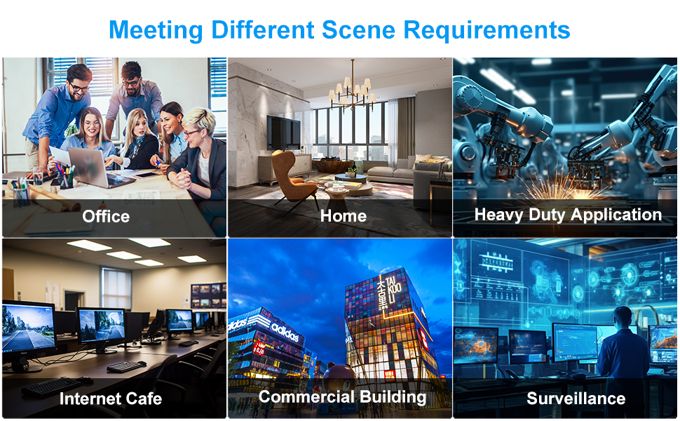
Ethernet connections: The beauty of this is that the patch cables used are LAN cables, which connect the modem, hubs, switches, and all the other devices in the network.
Industrial environments: Allowing the harshest environments of the likes of chemical, humidity, UV radiation, and extreme temperatures to be managed.
Home networks: In terms of gaming setups, amplification of home theaters and smart home systems, as lower interference and high bandwidth are necessities.
■ Technical Features and Specifications
High Transmission Speeds
Cat7 cables have been designed up to 10 Gigabit Ethernet for a 100 m (328 ft) length. Their maximum performance in lab conditions achieved speeds of 40 Gbps over 50 m and 100 Gbps over 15 m. Cat5e (100 MHz) and Cat6 (250 MHz) cables have maximum operation frequencies of 600 MHz.
Shielded Construction
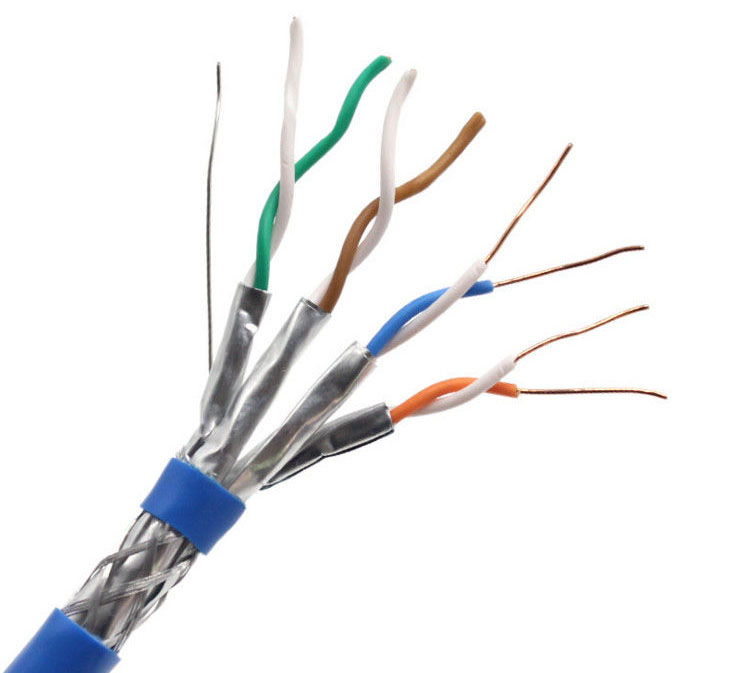
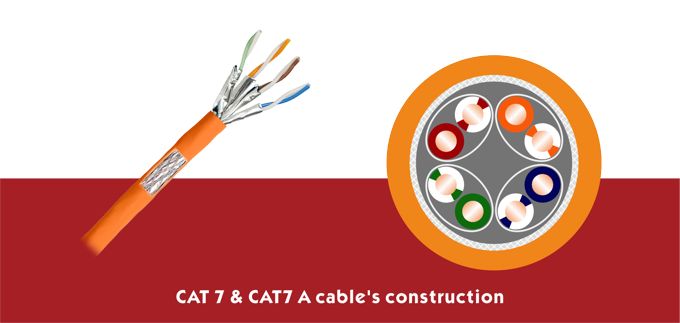
The cable construction is a pothole cable design, featuring four individual shielded twisted pairs, all of which are combined by a shielding outer layer. This shielding suppresses the crosstalk and electromagnetic interference (EMI). It is completely shielded, and as a result, it can transmit data at high speeds without any drops or slowdowns.
■ Types of Cat7 Cables
The configuration of the Cat7 cables is altered due to their ability to adapt to various demands:
Cat7a (Augmented) – Amplified to support the 1000 MHz frequency at even greater performance to provide an enriching experience.
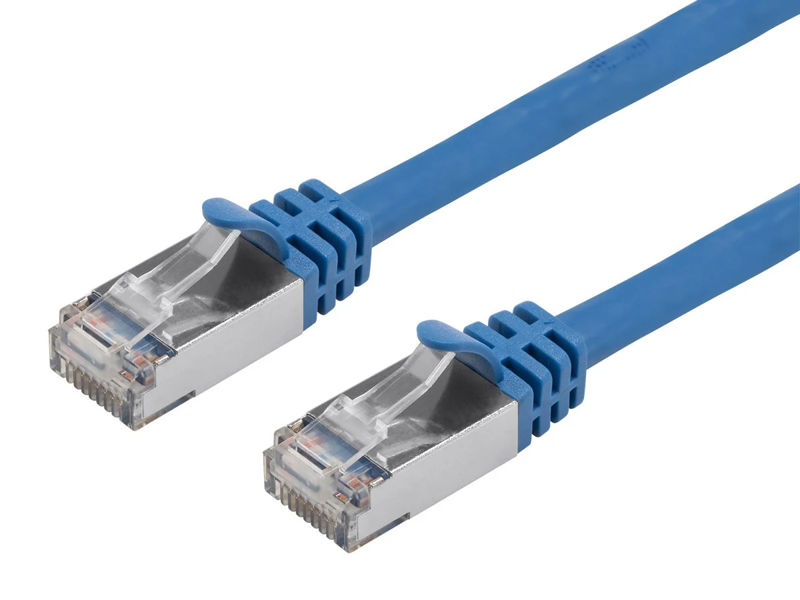
RJ45 Cat7 – With a standard RJ45 connector, the cable is perfect for any networking device. You just need to plug it in.
UTP (Unshielded Twisted Pair) – the type that has no internal shielding and relies on the outer covering for protection.
F/UTP (Foiled/Unshielded Twisted Pair) – A Foil shield is installed under the jacket with no individual pair shielding.
STP (Shielded Twisted Pair) / FTP (Foiled Twisted Pair) – Both STP and FTP employ additional shielding around each pair of wires for greater interference protection.
SFTP/SSTP – Ensures high EMI resistance with maximum protection via both individual pair shielding and foil shielding for the whole construction.
■ Cat6 vs. Cat7: Key Differences
Although Cat6 and Cat7 both consist of four twisted pairs and support speeds of 10 Gbps for 100 m, their differences can be quickly noticeable:
Shielding – Cat7 utilizes double-layer shielding that links each pair within the cable and the cable as a whole, whereas Cat6 typically doesn't have any shielding or uses tape that is merely more flexible.
Performance: Cat7 operates on a broader frequency range, enabling the transmission of very high data rates over short distances. This brings it into the pool of ideal network installations that call for the uncertain future.
■ Common Questions About Cat7 Cables
What do UTP, SFTP, FTP, STP, and SSTP mean?
The first three letters indicate the shielding level - whether the cable is shielded or unshielded (SSTP - fully shielded design) for maximum protection.
What about at home? Is it possible to use Cat7?
Nevertheless, this is a worthy concern in terms of getting more modern houses integrated with smart facilities, ultra-high-resolution videos, and gaming.
Is it backward compatible with the older Cat standards?
Yes, it is applicable to both past Cat standards and RJ45 connectors.
What is the speed of the short runs that the user could experience?
Provided all conditions are met, Cat7 can deliver speeds of 35-40 Gbps, sometimes even over a maximum distance, although actual numbers may differ slightly.
■ Final Thoughts
The Cat7 cables offer the following advantages: high-speed performance, enhanced by superior shielding, and the potential for long-term reliability. Cat7 cables ensure speed and stability, which are vital for the applications that need them in areas like businesses, IT data centers, and modern home technology. While it may be a high-end technology for casual use, it should be viewed as a forward-thinking investment for networks whose primary hosting demand requires top performance.
Contact us for more information

michael@zion-communication.com
+86 13757188184