What is CAT 6A Ethernet Cable? A Complete Guide for 10-Gigabit CAT 6A-capable Ethernet cabling.
Author: Michael Publish Time: 15-04-2025 Origin: Site
What Is CAT 6A Ethernet Cable? Complete 10G Cabling Guide Understand Category 6A performance, shielding options, 10GBASE-T reach, PoE considerations, connectors, installation and field certification before specifying a cabling system. |
CAT 6A, or Category 6A, is a balanced four-pair copper cabling category specified to 500 MHz. A compliant Category 6A channel is designed to support 10GBASE-T Ethernet over a standard 100 m channel, subject to correct components, installation and testing. The “A” means augmented: compared with Category 6, Category 6A adds transmission-performance requirements that include improved control of alien crosstalk from nearby cables.
CAT 6A is available in unshielded and screened constructions. It is therefore inaccurate to treat every CAT 6A cable as shielded or to assume that shielding alone makes a link Category 6A. Cable, connecting hardware, patch cords, installation practices and the completed link must all meet the selected standard and test limit.
■ CAT 6A Performance at a Glance
| Characteristic | Category 6A | What it means for a project |
| Specified frequency | Up to 500 MHz | Twice the 250 MHz category specification of Category 6; frequency rating is not the same as network bit rate. |
| Primary Ethernet application | 10GBASE-T | Designed for 10 Gb/s operation over a compliant 100 m structured-cabling channel. |
| Balanced impedance | Nominal 100 Ω | Use compatible Category 6A cable, jacks, plugs, patch panels and cords throughout the channel. |
| Alien crosstalk | Included in the category's performance requirements | Cable design, bundle layout, termination quality and screening strategy all influence installed performance. |
Channel performance matters: a reel marked CAT 6A does not by itself guarantee a CAT 6A channel. Connecting hardware, patch cords, topology, workmanship and the selected field-test limit must also be appropriate. |
■ CAT 6 vs CAT 6A
Both categories can carry lower-speed BASE-T Ethernet applications when the channel and equipment are compatible. The practical difference is that Category 6A was developed for predictable 10GBASE-T operation across the full 100 m channel, while Category 6 installations may support 10GBASE-T only over shorter or specifically qualified channels.
| Selection factor | CAT 6 | CAT 6A |
| Specified frequency | 250 MHz | 500 MHz |
| 10GBASE-T planning | Distance and alien-crosstalk conditions must be evaluated | Specified for 100 m 10GBASE-T channels |
| Physical planning | Typically smaller cable diameter | Often larger; tray fill, bend radius and termination space should be checked |
■ Where CAT 6A Is Commonly Used
Category 6A is most useful where a project needs a full-length 10GBASE-T design, long service life, high-density wireless access points or substantial Power over Ethernet loads. Typical deployments include:
Data centers and equipment rooms: server, storage, management and switch access links where 10GBASE-T and flexible patching are required.
Office, campus, healthcare and education networks: horizontal cabling intended to support multiple generations of active equipment.
Wi-Fi access points: multigigabit uplinks and PoE, subject to the access point, switch and cabling design.
IP cameras, access control and building systems: data and power delivered over the same balanced-copper channel.
Industrial premises: only when the selected construction, connectors, pathway and environmental ratings fit the site conditions.
■ CAT 6A Shielding Types and Construction
The ISO/IEC-style designation has two parts separated by a slash. The first part describes the overall cable screen; the second describes screening around the individual twisted pairs. “U” means unscreened, “F” means foil and “S” means braid.
| Construction | Screening arrangement | Selection considerations |
| U/UTP CAT 6A | No overall screen and no pair screens | Uses cable geometry and pair balance to control crosstalk; termination is simpler, but pathway separation and bundle design still matter. |
| F/UTP | Overall foil; pairs are individually unscreened | Provides an overall screen; requires compatible shielded hardware and a correctly designed bonding path. |
| U/FTP CAT 6A | No overall screen; each pair has foil screening | Helps isolate pairs and can reduce cable diameter compared with some other screened designs; termination method remains important. |
| F/FTP | Overall foil plus foil around each pair | Multiple screens support noise control but add termination steps and require appropriate shield continuity. |
| S/FTP | Overall braid plus foil around each pair | A robust screened construction for demanding environments, balanced against diameter, flexibility, cost and installation effort. |
Armor is separate from signal screening. Corrugated steel tape, steel wire or another armor may provide mechanical protection, but armor does not replace the cable's U/UTP, F/UTP, U/FTP, F/FTP or S/FTP designation. Outdoor, duct and direct-burial suitability also require explicit product ratings; a PE jacket or armored appearance alone is not sufficient evidence.


■ PoE, Conductor and Thermal Considerations
CAT 6A can be used with Power over Ethernet, but the category name is not a PoE power rating. Temperature rise depends on conductor material and size, DC resistance, resistance unbalance, bundle size, ambient temperature, pathway ventilation, connection quality and the power delivered by the PSE.
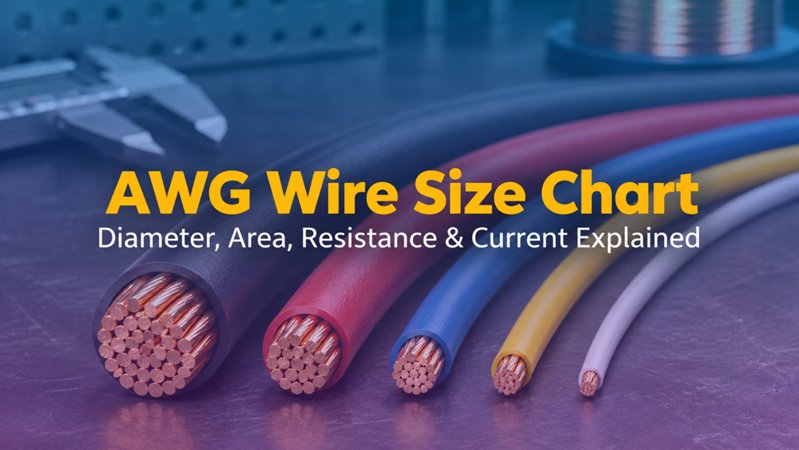
Use the conductor material and gauge specified by the project; verify whether horizontal cable is solid and patch cable is stranded.
Check DC loop resistance and pair-to-pair resistance unbalance where the PoE design requires it.
Apply bundle-size and ambient-temperature guidance from the applicable cabling standard and product documentation.
Do not assume that a shield automatically solves thermal or PoE performance issues.
■ Connectors, Patch Panels and Termination
Category 6A channels commonly use eight-position modular plugs and jacks, often called RJ45 in commercial usage. The cable and connector must be compatible in category, shielding, conductor type, conductor diameter and overall cable diameter. A CAT 6 jack on CAT 6A cable does not create a CAT 6A link.
For screened systems, maintain the termination method and bonding continuity defined by the system design. For all constructions, preserve pair twist as close to the contact point as the hardware instructions require, avoid jacket damage and respect the cable's bend radius and pulling tension.

■ Jacket Ratings and Installation Environment
Transmission category, fire rating, material description and environmental rating answer different questions. In North American projects, CMP, CMR and CM identify installation-use and flame/smoke classifications for plenum, riser and general-purpose locations. LSZH describes low-smoke, halogen-free material performance under the applicable specification; it is not automatically equivalent to CMP or CMR.
Outdoor, sunlight-resistant, wet-location, oil-resistant and direct-burial claims must appear in the product's verified markings or technical documentation. Select the jacket and rating for the actual pathway, local code and project specification rather than choosing by color or material name alone.
■ Standards and Product Certification
Common reference documents include ANSI/TIA-568.2-E for balanced twisted-pair cabling and components, ISO/IEC 11801 for generic cabling, and application-specific building, industrial or data-center cabling standards. The correct edition and regional requirements should be stated in the project specification.
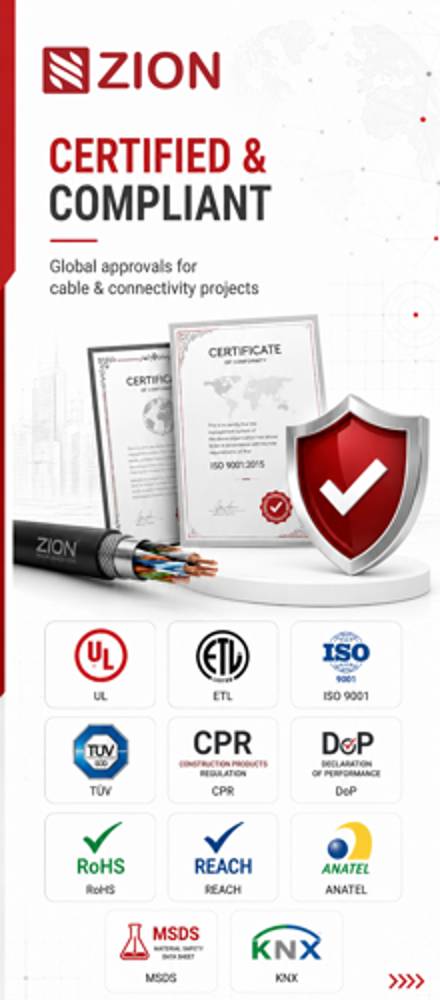
Certification is product-specific. UL, ETL, CPR, CE, RoHS, REACH, DELTA and ISO 9001 do not describe the same scope, and one model's report does not automatically apply to an entire CAT 6A range. Check the exact model number, certificate or listing, applicable standard, market and validity before ordering. |
■ Testing a CAT 6A Installation
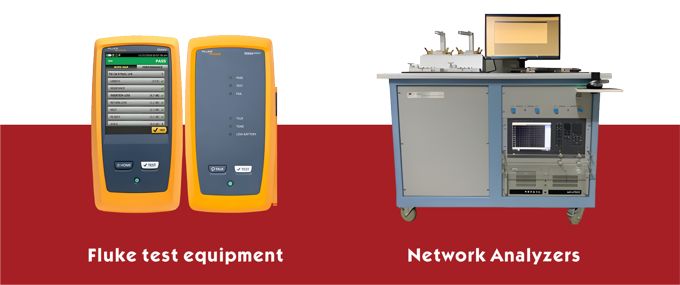
Factory cable testing, field certification and network throughput testing are different activities. A production analyzer can verify bulk-cable transmission properties, while field certification evaluates the installed permanent link or channel against a selected limit. A network traffic test does not replace cabling certification.
Select the correct test configuration: permanent link, channel, modular plug terminated link or patch cord as applicable.
Use matching adapters and limits: a Category 6 limit does not certify a Category 6A installation.
Review the complete result set: wire map, length, insertion loss, return loss, NEXT, power-sum parameters, ACR-F and other parameters required by the selected standard.
Address alien crosstalk where required: the sampling or test method depends on the cabling design, standard and project acceptance plan.
Retain reports: record cable identifiers, tester calibration status, test limit, adapter type, results and corrective actions.
■ CAT 6A Procurement Checklist
A useful request for quotation should define the installation and evidence required, not only “CAT 6A cable.” Include:
System scope: bulk horizontal cable, patch cord, complete channel or component supply.
Construction: U/UTP, F/UTP, U/FTP, F/FTP or S/FTP; solid or stranded conductor; conductor material and gauge.
Environment: indoor pathway, plenum/riser, outdoor, wet location, sunlight, oil, temperature, armor or direct burial.
PoE conditions: PSE class, device load, bundle size, pathway and ambient temperature.
Mechanical data: cable diameter, minimum bend radius, pulling tension, reel length and packaging.
Applicable standards: exact TIA, ISO/IEC, EN or project specification and required edition.
Evidence: datasheet, third-party listing/certificate, transmission test report, factory inspection and field-certification requirements.
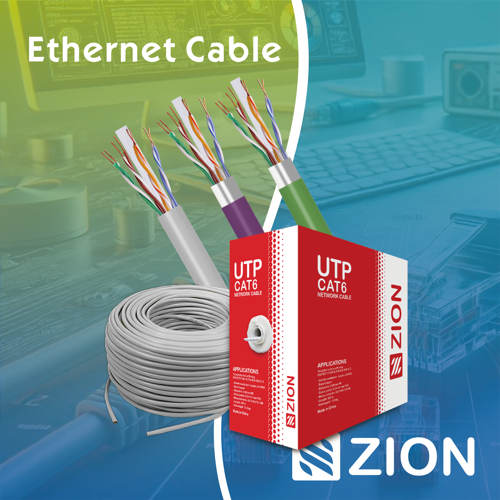
ZION's current CAT 6A Ethernet cable range includes unshielded, foil-screened, pair-screened and armored constructions that can be reviewed against the project's technical and environmental requirements.
■ Frequently Asked Questions
Does CAT 6A always mean shielded cable?
No. U/UTP Category 6A is unshielded. Category performance can be achieved with unshielded or screened designs when the cable, connecting hardware and installed channel meet the applicable requirements.
Can CAT 6A support 10 Gigabit Ethernet at 100 meters?
Yes. Category 6A is specified for 10GBASE-T over a compliant 100 m structured-cabling channel. The complete channel—not only the horizontal cable—must meet the applicable performance limits.
Is CAT 6A suitable for PoE?
Yes, when the cable, connectors, bundle size, ambient temperature and installation method are suitable for the intended PoE load. The Category 6A label alone does not establish a power or temperature rating.
Can I terminate CAT 6A cable with CAT 6 jacks?
The connection may function at a lower category, but it should not be represented or certified as a Category 6A link. Use connecting hardware rated for Category 6A and compatible with the cable construction.
What test should be requested after installation?
Specify field certification using the correct Category 6A permanent-link or channel limit and matching adapters. The project should also define labeling, report format, calibration evidence and the treatment of marginal or failed results.
■ Conclusion
CAT 6A is the established balanced-copper choice for full-length 10GBASE-T structured cabling. A successful design requires more than the category name: select the correct screening construction, conductor, jacket and environmental rating; coordinate PoE and bonding requirements; use compatible Category 6A connectivity; and certify the installed permanent link or channel to the intended standard.



 Fiber Optic Tools
Products 6 families
Solutions 6 markets
Resources Tools & docs
Certificate
Certification and compliance references for project review, qualification and purchasing documentation.
 Fiber Optic CableAccess and backbone
 Ethernet CableCat5e to Cat8
 Coaxial CableRF and video signal
 Fire, Security & AlarmSafety systems
 Voice, Audio & VideoSignal cabling
 Power & Control CableEnergy and control
Fiber optic cable systems
Outdoor, indoor, FTTH and distribution cable lines for access networks, backbone routes and campus deployments.
 Telecom & ISP NetworksFTTH, PON, ODN
 Data Center InfrastructureServer room cabling
 Building Low-Voltage SystemsBMS, AV, weak current
 Security & Fire ProtectionAlarm, CCTV, access
 Industrial Automation CablePLC, RS485, fieldbus
 Energy & Power InfrastructureSolar, battery, power
Telecom & ISP Networks
For FTTH / PON access, outdoor fiber deployment, aerial routes, duct routes, direct burial routes, rural broadband and ODN planning.
Tools
Use calculators and planning tools for conduit capacity, PoE voltage drop and fiber optic link loss budget work.