What is the GYFXT fiber optic cable?
Author: James Xu Publish Time: 25-09-2018 Origin: https://www.zion-communication.com/
What Is GYFXT Fiber Optic Cable? GYFXT is a compact central loose-tube outdoor fiber optic cable. Its typical structure includes a central loose tube, water-blocking materials, strength members, and a polyethylene jacket. Buyers should confirm the detailed construction and performance ratings on the product datasheet before ordering.
A typical GYFXT cable uses a single PBT loose tube, water-blocking material, two FRP rods, and a PE jacket. Cable configurations may vary by manufacturer and project requirement, so the product datasheet should clearly identify the strength members, armor, sheath, intended application, and mechanical ratings.
GYFXT Cable Structure
The structure drawing depicts a compact unitube cable. Optical fibers are grouped inside one central loose tube, which is surrounded by a water-blocking layer. Two round FRP elements are positioned on opposite sides of the tube, and a black polyethylene jacket completes the cable.

Central loose tube: holds the fibers and isolates them from part of the installation strain and temperature movement.
Water-blocking system: limits longitudinal water migration; the actual gel, tape, yarn, or filling arrangement must be confirmed on the offered datasheet.
Two FRP rods: provide tensile reinforcement in the structure drawing and create a non-metallic strength-member option.
PE jacket: protects the cable from outdoor moisture and UV exposure when the selected compound and cable design are qualified for the route.
For a comparable FRP-strengthened unitube design, see ZION's GYFXY FRP-rod unitube optical fiber cable. Always compare the construction, dimensions, and performance ratings stated on the applicable datasheet.
Why the Model Code Needs Verification
Central-tube cable configurations may use FRP reinforcement, parallel steel-wire reinforcement, or PSP metallic protection. These features lead to different electrical, mechanical, installation, and grounding considerations. Buyers should confirm the required construction layer by layer rather than relying on the model code alone.
FRP rods: support an electrically non-metallic strength-member design when no metallic armor or conductor is added elsewhere.
Parallel steel wires: add metallic tensile reinforcement and may introduce bonding, grounding, separation, and lightning-protection requirements.
PSP armor: is a steel-polyethylene laminate used for moisture and mechanical protection; it is not equivalent to FRP reinforcement or an unarmored PE jacket.
Current Central-Tube Alternatives
GYFXY
Construction: central loose tube with FRP rods and PE sheath.
Selection direction: compact unitube option where non-metallic strength members are preferred.
GYXY
Construction: central loose tube with two parallel steel wires and PE sheath.
Selection direction: compact duct or supported aerial direction when metallic reinforcement is acceptable.
GYXTW
Construction: central loose tube with PSP armor, parallel steel wires, and PE sheath.
Selection direction: duct or supported aerial direction where the specified route needs metallic moisture and mechanical protection.
For a steel-wire unitube construction, review ZION's GYXY non-armored central-tube cable. Where PSP armor is required, compare the GYXTW PSP-armored central-tube cable. Final approval should be based on the offered datasheet and route requirements.
Applications and Installation Limits
Compact central-tube cables are commonly considered for outdoor access, duct, conduit, and selected aerial routes. The route must be matched to the exact cable construction rather than to a family name.
Duct and conduit: verify pulling or blowing method, allowable tension, crush resistance, bend radius, duct occupancy, water exposure, and entry sealing.
Supported aerial: verify the support method, span, sag, wind and ice load, temperature range, installation tension, and compatible hardware. A unitube cable is not automatically self-supporting.
Direct burial: confirm that the selected GYFXT construction is specifically rated for direct burial. Soil contact normally requires documented resistance to crush, impact, water, corrosion, and biological hazards.
Fiber Color Identification
GYFXT cables commonly use the conventional 12-color sequence below. For cables with more than 12 fibers or special identification requirements, confirm ring marks, binders, printed identification, and the applicable color-coding standard on the ordered product.
Blue
Orange
Green
Brown
Gray
White
Red
Black
Yellow
Violet
Pink
Aqua
What to Specify Before Ordering
Required current model and a layer-by-layer cable construction drawing.
Fiber count and fiber type, including the required ITU-T or IEC fiber specification.
Route type: duct, conduit, supported aerial, tray, or another protected pathway.
Drum length, installation method, pulling equipment, allowable splice points, and access conditions.
Short- and long-term tensile and crush ratings, impact resistance, bend radius, and temperature range.
Water penetration, UV, fire-performance, chemical, rodent, corrosion, and electrical-isolation requirements.
Applicable cable standard, identification, test reports, packaging, and delivery documentation.
Frequently Asked Questions
Does GYFXT use FRP rods or steel wires?
The strength-member configuration can vary by product design. Some unitube cables use FRP rods, while others use parallel steel wires. State the required strength member explicitly in the purchasing specification and confirm it on the datasheet.
Is GYFXT an armored cable?
The model code alone does not confirm the armor construction. If metallic PSP protection is required, specify it directly and compare a documented armored central-tube model such as GYXTW.
Can a central-tube cable be installed aerially?
It may be suitable for a supported aerial route when the datasheet, span, support method, sag, tension, environmental loads, and hardware are compatible. A central-tube construction is not automatically self-supporting.



 Fiber Optic Tools
Products 6 families
Solutions 6 markets
Resources Tools & docs
Certificate
Certification and compliance references for project review, qualification and purchasing documentation.
 Fiber Optic CableAccess and backbone
 Ethernet CableCat5e to Cat8
 Coaxial CableRF and video signal
 Fire, Security & AlarmSafety systems
 Voice, Audio & VideoSignal cabling
 Power & Control CableEnergy and control
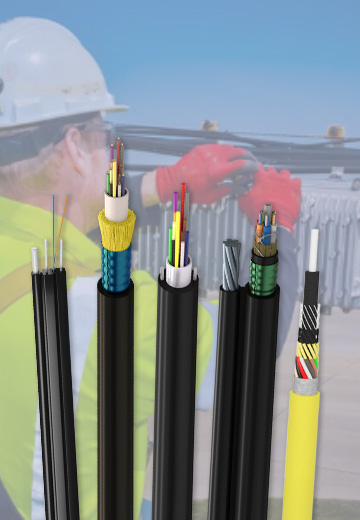
Fiber optic cable systems
Outdoor, indoor, FTTH and distribution cable lines for access networks, backbone routes and campus deployments.
 Telecom & ISP NetworksFTTH, PON, ODN
 Data Center InfrastructureServer room cabling
 Building Low-Voltage SystemsBMS, AV, weak current
 Security & Fire ProtectionAlarm, CCTV, access
 Industrial Automation CablePLC, RS485, fieldbus
 Energy & Power InfrastructureSolar, battery, power
Telecom & ISP Networks
For FTTH / PON access, outdoor fiber deployment, aerial routes, duct routes, direct burial routes, rural broadband and ODN planning.
Tools
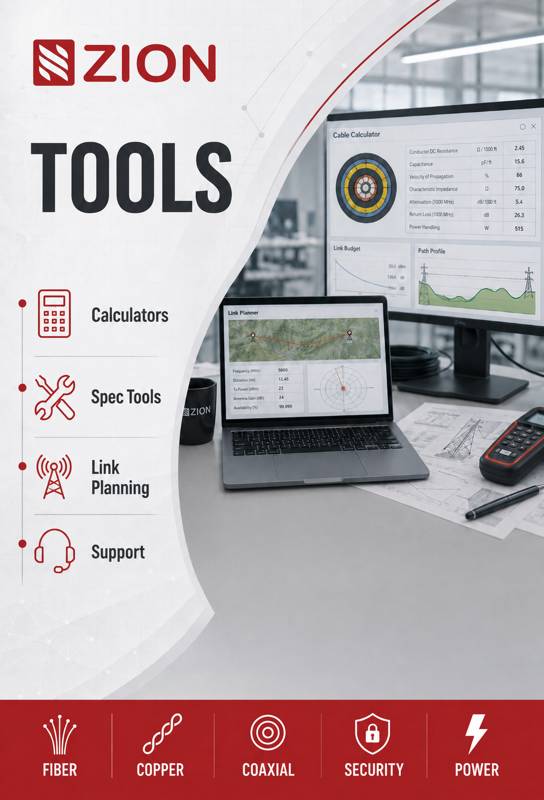
Use calculators and planning tools for conduit capacity, PoE voltage drop and fiber optic link loss budget work.