For a specification-level introduction to frequency, transmission distance, and application differences, read ZION’s Cat6 vs Cat6A comparison guide. This article focuses on total cost of ownership, recabling risk, and project investment decisions.
1. Replace “Cable Price” with “Delivered Link Cost”
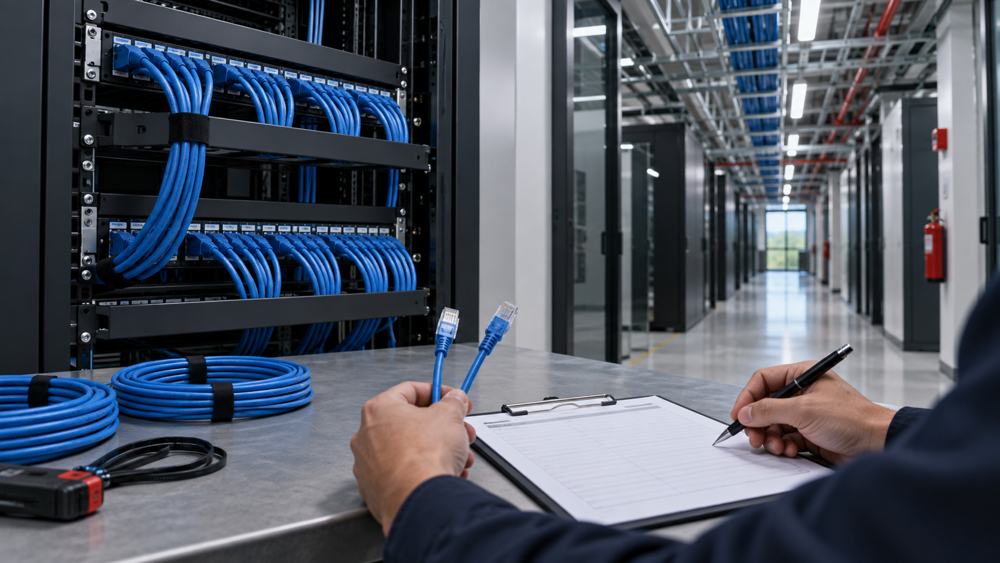
An accepted copper link normally includes more than horizontal cable. It also includes outlets, faceplates, patch panels, patch cords, labels, installation, and testing. In a CAT6A project, cable diameter, shielding construction, and termination space may also affect tray fill, rack layout, and installation time.
Delivered link cost = Horizontal cable + Outlets and faceplates + Patch panels + Patch cords
                    + Installation labor + Certification testing + Labeling and project management
Subtracting the CAT6 cable price from the CAT6A cable price does not reveal the real upgrade cost. Build two complete channel BOMs and keep cable, outlets, patch panels, and patch cords within the correct category. ZION’s CAT6/CAT6A specification generator can help buyers organize conductor, shielding, jacket, and packaging requirements.
2. Include Future Recabling in the Decision
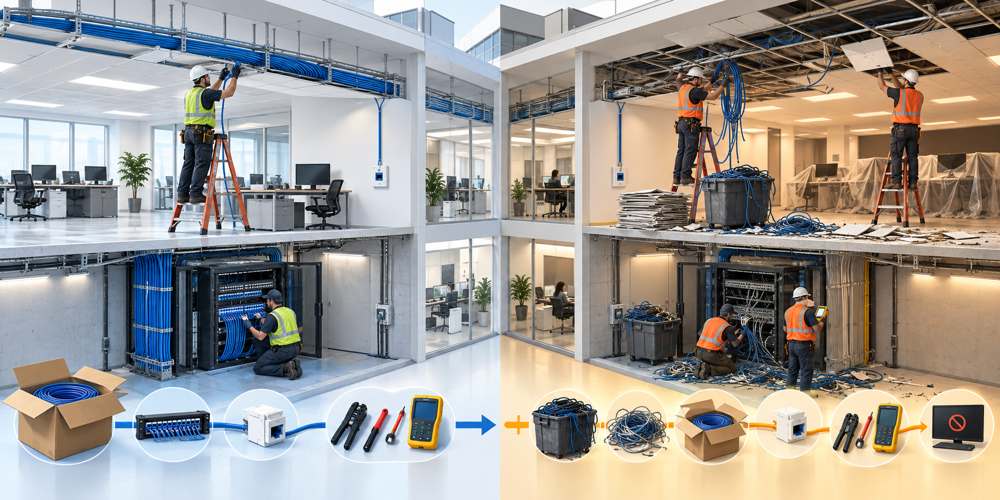
Recabling cost should include new materials, removal of the existing cable, new installation, ceiling or finish restoration, retesting, downtime, and waste disposal. Operating hotels, hospitals, schools, and offices often provide shorter work windows than new construction. If cables cross fire compartments, crowded trays, or closed ceilings, later replacement may cost substantially more than the first installation.
Future recabling cost = New materials + Existing cable removal + New cable installation
                       + Ceiling or finish restoration + Retesting + Business downtime + Waste disposal
A simplified decision indicator can turn upgrade risk into a value that the project team can discuss:
Upgrade safety margin = Expected future recabling cost × Probability of upgrade
                      - Current incremental CAT6A cost
When the result is clearly positive, choosing CAT6A upfront is more likely to be economical. This formula is not an accounting conclusion and should not create false precision. Calculate low, baseline, and high upgrade-probability scenarios so future demand, installation difficulty, and downtime risk become part of the recorded decision.
3. Which Projects Reach the CAT6A Economic Tipping Point?
CAT6A value rarely comes from one parameter. It comes from the risk margin created when several project conditions overlap. The more strongly the following conditions apply, the more likely future risk will offset the initial CAT6A premium.
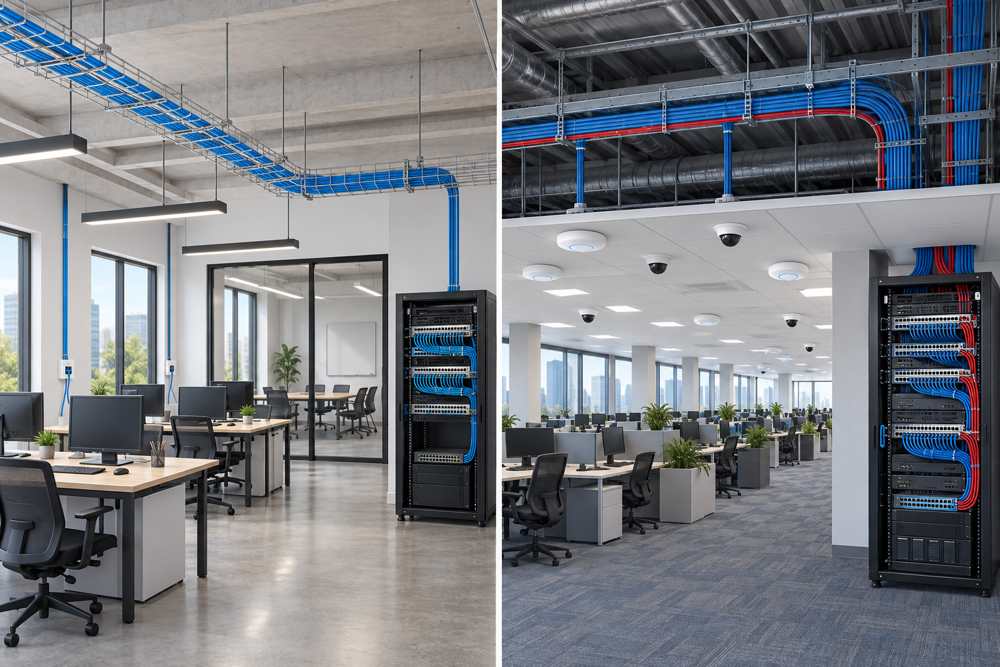
3.1 A Long Planned Service Life
If the building network is expected to remain in service for many years while wireless access points, cameras, access control devices, and building-management endpoints continue to grow, the probability of an upgrade rises. An “8–10 year” horizon is a project scenario input, not a service-life threshold defined by an industry standard. ZION’s 2026 UTP cabling guide provides further context for high-density, 10G, and next-generation wireless backhaul applications.
3.2 Many Wireless Access Points and High-Power PoE Devices
A PoE project must consider more than data rate. Check conductor material and diameter, DC resistance and resistance unbalance, bundle size, ambient temperature, connectors, and cable temperature rating. The CAT6A category name alone does not guarantee lower temperature rise; product parameters and installation conditions still need verification. See ZION’s PoE network cable selection guide.
3.3 Difficult Future Access
- Closed ceilings, finished interiors, or operating facilities;
- Vertical risers, inter-floor routes, and high-level cable trays;
- Conduits with little spare capacity or areas requiring night work;
- Data rooms, control rooms, and healthcare areas with strict continuity requirements.
3.4 A Stable 10G Copper Channel Is Required
If the contract requires a 10G copper channel up to 100 meters, design the complete channel rather than selecting cable alone. CAT6A cable needs category-matched outlets, patch panels, and patch cords, with permanent-link or channel testing defined in advance. For testing boundaries, read the CAT6A permanent link vs channel test guide.
4. When CAT6 Can Still Be a Rational Choice
Choosing CAT6 does not mean accepting low quality. CAT6 is suitable for 1G links and may support 10GBASE-T over shorter distances when link length, alien crosstalk, and installation conditions are suitable. The commonly cited 55-meter distance should not be treated as an automatic guarantee. CAT6A provides a clearer design boundary for 100-meter 10G channels and alien-crosstalk control.
The access network is mainly 1G, and future upgrade demand is defined and limited.
Links are short, trays are open, and later work would not require extensive finish removal.
PoE load and bundle density are low, with conductor and environmental conditions already checked.
Temporary offices, short leases, and phased facilities may not need extensive capacity headroom.
Record these assumptions in the design basis instead of using “limited budget” as the only justification. If contracts, equipment ports, or acceptance criteria require CAT6A, CAT6 should not be substituted.
5. A Four-Input Decision Table for Project Reviews
Network designers, low-voltage installers, procurement teams, and end-user operations staff should complete this table together. Record project facts first, then discuss their weighting and budget implications.
| Decision Input | Lower-Risk Condition | Higher-Risk Condition | Selection Impact |
|---|---|---|---|
| Service life | 3–5 years | 8–10 years or more | A longer service life increases the weight of CAT6A. |
| Future bandwidth | Clearly remains at 1G | 10G or Wi-Fi upgrade is uncertain | Uncertain upgrades increase the value of CAT6A headroom. |
| PoE density | A small number of endpoints | Dense APs, cameras, or PoE++ loads | High density requires closer review of CAT6A and conductor specifications. |
| Recabling difficulty | Open trays and easy access | Closed finishes, risers, or operating areas | Difficult recabling makes upfront capacity more valuable. |
6. Requirements to Lock Down in the RFQ
Whether the project selects CAT6 or CAT6A, the RFQ should define the complete channel, installation conditions, and acceptance boundary. Structured cabling is not simply a purchase of higher-category cable; it is a testable and maintainable system.
- Cable category and complete shielding construction;
- Solid bare-copper conductor, AWG, and jacket material;
- Permanent-link length and patch-cord length;
- Matching categories for outlets, patch panels, and patch cords;
- PoE level, bundle size, and environmental conditions;
- Permanent-link, channel, or other acceptance-test requirements;
- Packaging length, printing, labeling, and project-document requirements.
ZION’s copper structured cabling solution can help teams review the relationship among cable, patch cords, patch panels, and outlets.
7. Frequently Asked Questions
Is CAT6A always less expensive than CAT6 over the project lifecycle?
No. CAT6A usually requires more initial investment, but its added cost may be offset when the project has a long service life, a high probability of a 10G upgrade, dense PoE loads, or difficult recabling routes.
Can CAT6 support 10GBASE-T?
CAT6 may support 10GBASE-T over shorter distances when link length, alien crosstalk, and installation conditions are suitable, but 55 meters should not be treated as an automatic guarantee. A stable 100-meter 10G channel should be designed and tested as a complete CAT6A channel.
Can buyers compare cable prices alone when requesting quotations?
No. Build complete CAT6 and CAT6A channel BOMs that include horizontal cable, outlets, faceplates, patch panels, patch cords, installation labor, certification testing, labeling, and project management.
8. Conclusion
The correct unit for comparing CAT6 and CAT6A is not price per meter. It is the cost of delivering and maintaining an accepted link throughout the project lifecycle. When the service life is long, PoE density is high, a 10G upgrade is likely, or recabling is difficult, the additional CAT6A investment is more likely to be offset by avoided future risk. When requirements are stable, pathways remain accessible, and the project life is short, CAT6 may still be the more rational choice.
Before issuing the RFQ, prepare complete CAT6 and CAT6A BOMs and ask suppliers to quote against the same scope. Then combine those quotations with the expected future recabling cost to make the final decision.
References and Further Reading
- ZION: Cat6 vs Cat6A Comparison Guide
- ZION: CAT6 vs CAT6A vs CAT7 vs CAT7A for Structured Cabling
- ZION: Ethernet Cable Specification Generator
- ZION: CAT6A Permanent Link vs Channel Testing
- ZION: PoE Network Cable Selection
- Ethernet Alliance: IEEE 802.3bt PoE Power Overview
- Fluke Networks: 10GBASE-T Field Testing Requirements
Prepare Two Comparable Project BOMs
Submit link quantities, lengths, shielding construction, PoE loads, installation environment, testing boundaries, and packaging requirements so CAT6 and CAT6A solutions can be compared on the same project basis.
Request Project BOM Support