Satellite broadband is often discussed as an alternative to fiber. In real deployments, it is more accurate to treat it as one segment of a wider network. The decision is not simply satellite or fiber. It is where satellite makes sense, where fiber remains necessary, and how the two layers should be connected, tested and documented.
When Satellite Broadband Still Needs Fiber
Satellite broadband is strongest where the access route is geographically difficult: islands, rural settlements, temporary sites, offshore facilities, disaster recovery zones, mining camps, construction projects and remote enterprise branches. It can avoid a long first build across mountains, water, protected land or sparsely populated areas.
Fiber backhaul is still needed when traffic must be aggregated, transported into a terrestrial core, distributed across a campus, or protected with a lower-latency or higher-capacity path. In other words, the satellite terminal may be the access point, but the surrounding network still needs cable routes, termination frames, splicing, patching, power, grounding, monitoring and maintenance records.

| Project condition | Why satellite helps | Why fiber backhaul may still be required |
|---|---|---|
| Remote community access | Avoids an immediate long-haul access build to every village or facility. | Campus, school, clinic, tower, cabinet and POP distribution still need durable cabling. |
| Gateway earth station | Connects many remote user terminals through the satellite network. | Gateway traffic must leave the earth station through high-capacity terrestrial routes. |
| Enterprise branch or industrial site | Provides a practical WAN connection where leased lines are unavailable. | Buildings, racks, cameras, Wi-Fi APs, control rooms and security systems need structured distribution. |
| Temporary or emergency service | Can be deployed quickly when terrestrial infrastructure is damaged or absent. | If the site becomes semi-permanent, a protected fiber path improves reliability and maintenance. |
| Capacity growth | Adds reach before all terrestrial routes are completed. | Aggregated demand, local caching, data-center access and redundancy may exceed a satellite-only design. |
Gateway and POP Backhaul
The clearest fiber requirement appears at the gateway or network handoff. A gateway earth station concentrates traffic from many satellite users. That traffic then needs a route into a terrestrial backbone, data center, ISP core or content network. The exit from the gateway is usually not a small access circuit; it is a backhaul engineering problem with capacity, route diversity, latency, power and restoration requirements.
Inside an ISP POP or aggregation room, fiber is also needed for patching between routers, switches, optical transport equipment, ODFs and external routes. The rack layout should separate working links, protection links, test ports and future expansion. A poorly documented POP can turn a technically successful satellite service into a difficult network to operate.

What to define at the gateway
- Gateway location, equipment room, rack position and handoff point.
- Target capacity, oversubscription assumptions and growth period.
- Working route, protection route and restoration target.
- Fiber type, count, connector interface, polish type and patching policy.
- ODF capacity, front/rear access, cable entry direction and labeling convention.
- Testing method, report format and as-built drawing requirements.
Local Distribution After the Terminal
Many satellite broadband failures are not caused by the satellite link itself. They happen after the terminal: weak indoor cabling, unmanaged patching, poor grounding, missing labels, overloaded Wi-Fi, short patch cords used as permanent infrastructure, outdoor cable without correct UV or water protection, or a building entry that was never designed for long-term service.
Once the satellite terminal lands at a school, clinic, warehouse, field office, hotel, security site or village network, the project becomes a local distribution project. Fiber may be needed between buildings, from a tower or roof location to an equipment room, from a local cabinet to multiple access points, or from a community POP to nearby subscribers.
Campus backbone
Fiber connects buildings, technical rooms, switch cabinets and high-bandwidth service areas without forcing all traffic through short copper runs.
Outdoor distribution
Aerial, duct or buried routes require cable construction, hardware and splice closures matched to the site environment.
Indoor termination
ODFs, wall boxes, patch panels and bend-radius control keep maintenance work clean after the installation team leaves.
Service handover
Port schedules, labels, OTDR traces and loss-test results help the owner prove what was installed and repair faults later.
Capacity, Redundancy and Growth
Satellite broadband may begin as the primary access method, but demand often changes after users become connected. Schools add online learning; clinics add telemedicine; security sites add more cameras; industrial facilities add cloud monitoring; local ISPs add more subscribers. The question becomes whether the initial satellite capacity, gateway plan and local distribution system can scale without rebuilding the passive layer.
Fiber backhaul is often justified when traffic is aggregated from many users, when a site needs a lower-latency path for selected applications, when local regulators or operators require terrestrial interconnection, or when the project must support a defined restoration target. In some designs, satellite remains the backup link after fiber arrives. In others, fiber carries aggregated backhaul while satellite serves remote edges that are still uneconomical to fiberize.
Signs that a satellite-only approach may be too narrow
- The project connects many users behind one terminal or local POP.
- The site needs predictable throughput for video, backup, enterprise applications or public services.
- The network owner expects future terrestrial fiber, microwave or tower integration.
- The handover requires documented uptime, restoration, testing and asset inventory.
- The local network includes multiple buildings, outdoor cabinets or field devices.
- The gateway or aggregation node needs diverse route protection.
Passive Fiber Infrastructure Behind the Service
Fiber backhaul is not only the cable. It includes the passive system that allows the cable to be installed, accessed, tested and expanded. For satellite broadband projects, this passive layer often includes outdoor optical cable, aerial or buried route hardware, splice closures, ODFs, pigtails, adapters, patch cords, grounding or bonding where applicable, labels, pathway protection and spare materials.
ZION's optical fiber cable and fiber optic installation accessories pages are useful internal references when the RFQ moves from concept to product families. For projects that resemble access-network construction, ZION's ODN solution page can also help frame feeder, distribution and subscriber-side passive planning.

| Passive item | Role in the project | Information to confirm |
|---|---|---|
| Outdoor fiber cable | Carries backhaul, campus backbone or distribution traffic between network points. | Route type, fiber count, span or burial condition, sheath, armor, water blocking and drum plan. |
| Splice closure | Protects fiber splices, branches and slack points along the route. | Cable diameter, port count, splice capacity, tray layout, sealing method and mounting condition. |
| ODF or termination box | Creates a controlled patching and test point inside the POP, gateway shelter or equipment room. | Rack or wall format, port count, connector type, UPC/APC polish, front/rear access and labeling. |
| Pigtails and patch cords | Connect field fibers to active equipment through managed interfaces. | Fiber category, connector format, polish, length, jacket, color, loss grade and packaging. |
| Labels and records | Make future troubleshooting, expansion and audits possible. | Naming convention, port schedule, splice map, route drawing, test files and photo records. |
| Test tools and baseline files | Prove that installed links match the design and provide a maintenance baseline. | Inspection scope, insertion-loss test, OTDR wavelength, pass/fail limits and native file format. |
RFQ Checklist for Hybrid Satellite and Fiber Projects
A practical RFQ should describe the complete network path rather than only asking for a satellite terminal or a length of cable. The buyer should separate the satellite service scope, terrestrial backhaul scope, passive fiber scope, local distribution scope and maintenance scope. This reduces substitutions, missing accessories and unclear handover responsibilities.
Network scope
Site list, service objective, user groups, applications, gateway or POP handoff, local distribution points and growth period.
Route conditions
Aerial, duct, buried or indoor sections; route length; pole or chamber details; UV, water, dust, salt, lightning, rodent or traffic exposure.
Optical design
Fiber type, count, working/protection paths, connector interface, UPC/APC polish, active-equipment ports and loss budget.
Passive BOM
Cable, closures, ODF, trays, adapters, pigtails, patch cords, cable glands, labels, installation hardware, cleaning tools and spares.
Testing and acceptance
Connector inspection, continuity, insertion loss, OTDR traces, wavelengths, reference method, pass/fail rules and report format.
Operations package
As-built drawings, route files, splice maps, ODF schedules, port maps, photos, spare list, maintenance procedure and escalation contacts.
For installation planning details, ZION's fiber optic installation process guide and underground fiber installation guide are useful references when the backhaul route includes outdoor construction.
Related ZION Resources
The following ZION pages are related to the passive infrastructure topics discussed above. They are included as internal references because they fit the article topic directly.
FAQ
Does satellite broadband always remove the need for fiber backhaul?
No. Satellite broadband can replace or shorten one difficult terrestrial access segment, but gateways, POPs, campuses, buildings and high-capacity local distribution may still require fiber backhaul.
Where is fiber backhaul most likely needed in a satellite broadband project?
Fiber is commonly needed between a gateway and terrestrial core network, inside an ISP POP, between buildings on a campus, or along aggregation routes that combine many satellite-served users.
What passive products should be planned with satellite broadband fiber backhaul?
A complete passive plan should consider outdoor fiber cable, splice closures, ODFs, pigtails, adapters, patch cords, labels, pathway hardware, cleaning tools and test documentation.
What information should be sent to ZION before requesting support?
Share the site list, gateway or POP handoff, route length, installation method, fiber count, connector type, ODF capacity, environmental conditions, testing requirements and expected documentation package.
Conclusion
Satellite broadband is a powerful way to reach difficult sites, but it does not eliminate terrestrial network engineering. Fiber backhaul is still needed whenever traffic must leave a gateway, enter a POP, cross a campus, aggregate many users, support diverse routes or become part of a maintainable long-term service.
The best project approach is to define the satellite link and the fiber infrastructure together. Cable, closure, ODF, patching, test reports, labels, drawings and spares should be specified as one service chain. That is how a remote satellite link becomes a broadband network that engineers can operate, restore and expand.



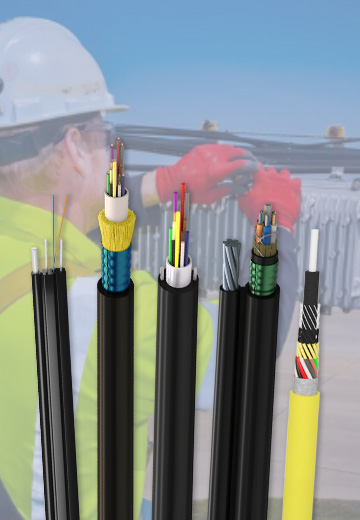 Fiber Optic Cable
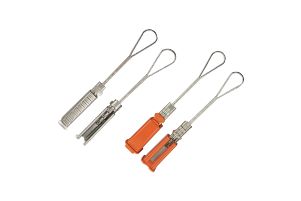 Fiber Optic Tools
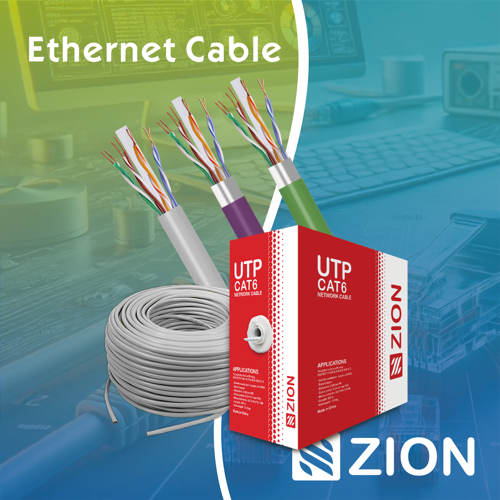 Ethernet Cable
 Coaxial Cable
 Fire & Security Cable
 Voice, Audio & Video
 Power & Control Cable