G.657A2 Bare Optical Fiber: Unlock Ultra-Stable, Long-Range FPV Drone Control
Author: James Publish Time: 05-11-2025 Origin: Site
Technical Guide
G.657.A2 Optical Fiber for FPV and UAV Data Links
Bend performance, fiber construction, link-distance limits, and procurement questions for lightweight civilian inspection, monitoring, and media systems.
G.657.A2 is a bend-insensitive single-mode optical fiber category defined by ITU-T G.657. Its tighter-bend performance can be useful in compact reels and constrained routing, but the fiber category alone does not determine the usable distance, mechanical durability, latency, or regulatory suitability of an FPV or UAV system.
Direct answer: choose G.657.A2 when bend performance and G.652.D compatibility are important, then qualify the exact coated fiber, reel, transceivers, connectors, payout behavior, and complete optical link as one system.
■ What G.657.A2 Means
G.657 covers bend-loss-insensitive single-mode fiber and cable. Category A fibers are intended to remain compatible with networks in which G.652.D fiber is specified. Within that family, G.657.A2 is associated with a minimum design bend radius of 7.5 mm. This is a design and qualification boundary, not permission to bend every finished product to that radius repeatedly under load.
Cladding diameter: 125.0 ± 0.7 µm
This is the glass cladding dimension, not the outside diameter of a coated fiber or micro-cable.
Minimum design bend radius: 7.5 mm
Use the finished product datasheet for allowable static and dynamic bend conditions.
Macro-bend loss at 1550 nm: 1 turn at 7.5 mm ≤ 0.5 dB
This is a standardized fiber test limit, not a complete reel or airborne-system performance guarantee.
Proof stress: ≥ 0.69 GPa
Additional dynamic payout, abrasion, tension, and reel tests are still required for the intended application.
■ “Bare Fiber” and 0.25 mm Are Not the Same Thing
In strict fiber terminology, bare glass consists of the core and 125 µm cladding. A product near 0.25 mm usually includes a primary polymer coating around the glass; for example, commercial G.657.A2 fibers may have a nominal coating diameter near 242 µm. A micro-cable can add further protective layers and therefore has a larger outside diameter.
This distinction matters because coating material and cable construction affect handling, abrasion resistance, stripability, temperature capability, mass, and payout reliability. The ZION G.657.A2 bend-insensitive single-mode fiber page provides a product-level reference, but a buyer should still request both the glass standard and the complete product construction instead of relying on “bare fiber” as the only description.
■ How an Optical UAV Data Link Works
An optical link uses electro-optical transceivers to convert control, telemetry, or video data into light, carry that light through single-mode fiber, and convert it back at the receiving end. The glass transmission path is immune to electromagnetic interference, but the powered electronics, connectors, software, power supply, and physical fiber path remain part of the system risk.

Simplified optical data path for an FPV or UAV platform. Final architecture depends on the selected transceivers, interfaces, power system, and operating concept.
■ What Actually Determines Usable Link Distance?
A reel marked 50.4 km describes a supply length, not a guaranteed 50.4 km operational radius. Usable distance is the shortest limit imposed by the optical, mechanical, electrical, operational, and regulatory parts of the project.
Optical link budget
Verify transmitter power, receiver sensitivity, wavelength, fiber attenuation, splice and connector losses, bend loss, and engineering margin.
Reel and payout
Verify usable fiber length, reserve, winding consistency, payout tension, snag exposure, and the effect of speed and route geometry. Available prepared-reel formats can be reviewed on the ZION G657A2 ultra-micro fiber optic spool page before confirming the required length and construction.
Airborne integration
Evaluate payload mass, drag, power consumption, mounting, vibration, and safe separation from moving parts.
Data performance
Confirm the required bitrate, interface compatibility, encoding, packet behavior, transceiver latency, and end-to-end results.
Operating authorization
Check local airspace, visual-line-of-sight or BVLOS rules, site permissions, operating procedures, and risk controls.
■ Optical Fiber and RF Serve Different System Needs
Transmission medium
Fiber: guided light in glass is not affected by EMI along the fiber. RF: radio performance depends on spectrum, antennas, interference, terrain, and regulation.
Mobility
Fiber: movement is limited by physical payout, route, drag, snag risk, and remaining fiber. RF: there is no physical data tether, but range and reliability depend on the radio environment.
Failure modes
Fiber: breakage, sharp bends, contaminated interfaces, payout faults, and electronic failure. RF: interference, blockage, multipath, antenna orientation, link-budget limits, and electronic failure.
Decision basis
Use fiber when a physical optical path fits the mission and its hazards can be controlled. Use RF when unrestricted movement and compliant spectrum operation are priorities.
■ Specification Checklist for Civilian Projects
Fiber identity: request G.657.A2 compliance, attenuation limits, mode-field diameter, proof-test level, and traceable lot documentation.
Construction: state whether the requirement is 125 µm bare glass, primary-coated fiber, buffered fiber, or a protected micro-cable; specify the actual outside diameter.
Mechanical qualification: define allowable tension, bend conditions, abrasion exposure, reel geometry, payout cycles, vibration, and acceptance tests.
Environmental qualification: verify the operating and storage temperature of the complete product. A temperature claim for one coating system must not be applied automatically to another.
Optical system: provide wavelength, interface, bitrate, connector or splice method, transceiver budget, planned length, loss margin, and required end-to-end latency.
Operational scope: identify the civilian use case, site, local flight rules, risk controls, and required permissions before deployment.
Operational note: a long fiber reel does not authorize long-range flight. Operators must comply with applicable aviation and site rules. For example, U.S. FAA Part 107 operations generally require visual line of sight unless the operator holds the applicable approval or waiver.
■ Frequently Asked Questions
Is G.657.A2 the same as G.652.D?
No. They are different ITU-T categories, but G.657 category A fiber is designed for use where G.652.D is specified. Confirm splice, connector, wavelength, and system requirements for the exact products being combined.
Does a 50.4 km spool provide a 50 km operating range?
Not by itself. Spool length is a supply parameter. Usable distance also depends on reserve fiber, route and payout behavior, mechanical integrity, the optical link budget, the complete platform, and legal operating limits.
Is an optical link completely interference-free and secure?
The glass path is immune to electromagnetic interference, but the complete link can still be affected by physical damage, poor interfaces, power or electronic faults, configuration errors, and cybersecurity issues. Security and reliability require system-level design and testing.
Can every G.657.A2 fiber operate from -40°C to +85°C?
No universal system claim should be made from the fiber category alone. Temperature limits depend on the coating, buffering or cable construction, reel, interfaces, transceivers, and the supplier's qualified product specification.
■ Discuss Your Optical Link Requirements with ZION
For a meaningful recommendation, share the required link length, optical wavelength and interface, bitrate, loss budget, fiber construction, reel constraints, environmental conditions, mechanical acceptance criteria, and civilian application. If the project also requires optical terminals or an assembled package, the available ZION FPV drone optical fiber kit configurations can help define the interfaces that need to be confirmed.




 Fiber Optic Tools
Products 6 families
Solutions 6 markets
Resources Tools & docs
Certificate
Certification and compliance references for project review, qualification and purchasing documentation.
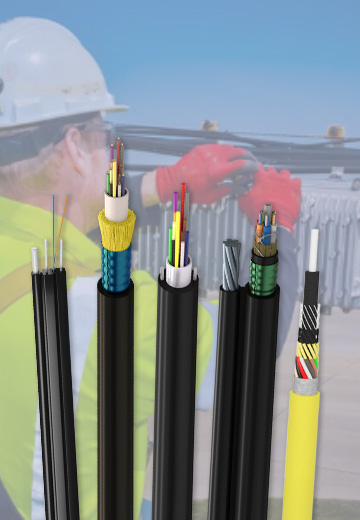 Fiber Optic CableAccess and backbone
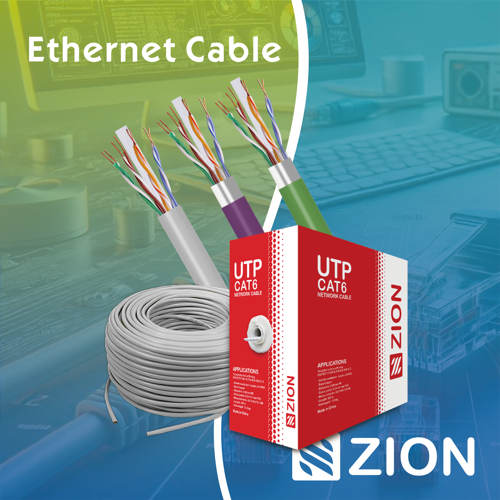 Ethernet CableCat5e to Cat8
 Coaxial CableRF and video signal
 Fire, Security & AlarmSafety systems
 Voice, Audio & VideoSignal cabling
 Power & Control CableEnergy and control
Fiber optic cable systems
Outdoor, indoor, FTTH and distribution cable lines for access networks, backbone routes and campus deployments.
 Telecom & ISP NetworksFTTH, PON, ODN
 Data Center InfrastructureServer room cabling
 Building Low-Voltage SystemsBMS, AV, weak current
 Security & Fire ProtectionAlarm, CCTV, access
 Industrial Automation CablePLC, RS485, fieldbus
 Energy & Power InfrastructureSolar, battery, power
Telecom & ISP Networks
For FTTH / PON access, outdoor fiber deployment, aerial routes, duct routes, direct burial routes, rural broadband and ODN planning.
Tools
Use calculators and planning tools for conduit capacity, PoE voltage drop and fiber optic link loss budget work.