Double Sheath ADSS Fiber Optic Cables for Aerial Networks | ZION
Double sheath ADSS cables are all-dielectric, self-supporting fiber cables built for aerial routes that need more mechanical protection than a single-jacket design. ZION offers G.652.D configurations from 6 to 72 fibers in the listed product range. Start with fiber count and tube layout, then confirm span, wind, ice, sag, jacket material and the electrical environment for the actual route.
Which Double Sheath ADSS Cable Fits Your Fiber Count?
Choose the product family that contains the required fiber count and tube layout. The six count-specific options use G.652.D fiber, a double PE jacket and aramid yarn strength members, with a 200–500 m maximum-span range under a defined 25 m/s wind and 0 mm ice condition. Treat that range as a starting point, because the final design must be recalculated for the installation area.
![6 8 12 core G.652.D double jacket ADSS fiber cable]()
1-TUBE SERIES
6 / 8 / 12 Cores G.652.D
A lower-count double-jacket option for access and distribution routes. Consider it when 6, 8 or 12 fibers are enough; confirm the exact tube configuration, span calculation and finished cable data for the order.
View Product Details →![12 16 24 core G.652.D double jacket ADSS fiber cable]()
2-TUBE SERIES
12 / 16 / 24 Cores G.652.D
A two-tube choice for small-to-medium distribution capacity. Select it when the route needs 12, 16 or 24 fibers, then confirm the count-specific construction, reel length and site load case.
View Product Details →![18 24 36 core G.652.D double jacket ADSS fiber cable]()
3-TUBE SERIES
18 / 24 / 36 Cores G.652.D
A three-tube option for routes that need up to 36 fibers. Apply the stated span and voltage values only with their defined weather condition, and request a route-specific mechanical calculation.
View Product Details →![24 32 48 core G.652.D double jacket ADSS fiber cable]()
4-TUBE SERIES
24 / 32 / 48 Cores G.652.D
A medium-count family for 24, 32 or 48 fibers. State the required double-jacket construction in the RFQ and confirm the final tube layout, cable dimensions, mechanical ratings and reel data.
View Product Details →![30 40 60 core G.652.D double jacket ADSS fiber cable]()
5-TUBE SERIES
30 / 40 / 60 Cores G.652.D
A five-tube design for higher distribution capacity. Consider it when 60 fibers are required without moving to the 72-fiber family; verify cable diameter, weight and hardware compatibility.
View Product Details →![36 48 72 core G.652.D double jacket ADSS fiber cable]()
6-TUBE SERIES
36 / 48 / 72 Cores G.652.D
The highest listed count-specific family, covering 36, 48 and 72 fibers. Use it for larger aerial distribution routes after checking structure loading, sag, tension and matching installation hardware.
View Product Details →![ZION ADSS double sheath aerial fiber cable]()
GENERAL SERIES
ADSS Double Sheath
A general double-sheath ADSS construction with loose tubes, GFRP central strength member, water-blocking material, aramid yarn and black polyethylene inner and outer sheaths. Request the exact fiber count and mechanical design.
View Product Details →How Do I Choose a Double Sheath ADSS Cable?
Start with the required fiber count, but do not order by count alone. An aerial cable is a mechanical system: span, sag, wind, ice, temperature, attachment points, route terrain, jacket material and hardware all affect the safe design.
How many fibers?
Select 6–72 fibers from the listed count-specific range and allow capacity for planned growth. The same fiber count can appear in more than one tube layout, so state both the count and preferred construction in the RFQ.
What is the real span?
Provide every support-to-support distance, not only the average. The count-specific pages describe 200–500 m designs under 25 m/s wind and 0 mm ice; different climate and terrain conditions require recalculation.
PE or anti-tracking?
PE is the jacket identified on the listed count-specific products. If the route is exposed to a higher electrical field or tracking risk, state the line voltage, attachment location and calculated space potential, then ask for the appropriate jacket option instead of assuming PE is suitable.
What loads matter?
Cable weight, wind pressure, ice accretion, temperature, sag and route geometry combine to determine tension. Supply the governing local load case and required safety criteria so the aramid yarn amount, cable diameter and mechanical ratings can be designed together.
Which hardware?
Match dead ends, suspension clamps, brackets, downlead clamps and vibration-control hardware to the final cable diameter, rated tension, span and support geometry. Do not select fittings from a generic diameter range before the cable design is fixed.
Quick Comparison of the Listed Double Sheath ADSS Options
The tube series is the fastest way to narrow the range, while the final diameter, weight, rated tensile strength, maximum allowable tension and everyday tension still depend on the selected construction and project load case.
| Series | Listed Fiber Counts | Tube Layout | Fiber / Jacket | Reference Design Condition |
|---|
| 1-tube | 6 / 8 / 12 fibers | 1 tube | G.652.D / double PE | 200–500 m at 25 m/s wind and 0 mm ice; recalculate for the route |
| 2-tube | 12 / 16 / 24 fibers | 2 tubes | G.652.D / double PE | 200–500 m at 25 m/s wind and 0 mm ice; recalculate for the route |
| 3-tube | 18 / 24 / 36 fibers | 3 tubes | G.652.D / double PE | 200–500 m at 25 m/s wind and 0 mm ice; recalculate for the route |
| 4-tube | 24 / 32 / 48 fibers | 4 tubes; confirm selected version | G.652.D / specify double PE | 200–500 m at 25 m/s wind and 0 mm ice; recalculate for the route |
| 5-tube | 30 / 40 / 60 fibers | 5 tubes | G.652.D / double PE | 200–500 m at 25 m/s wind and 0 mm ice; recalculate for the route |
| 6-tube | 36 / 48 / 72 fibers | 6 tubes | G.652.D / double PE | 200–500 m at 25 m/s wind and 0 mm ice; recalculate for the route |
| General double sheath | Confirm for selected version | Loose-tube stranded core | Confirm fiber / black PE inner and outer sheaths | Span and load case must be specified |
What Does the Double Sheath Construction Protect?
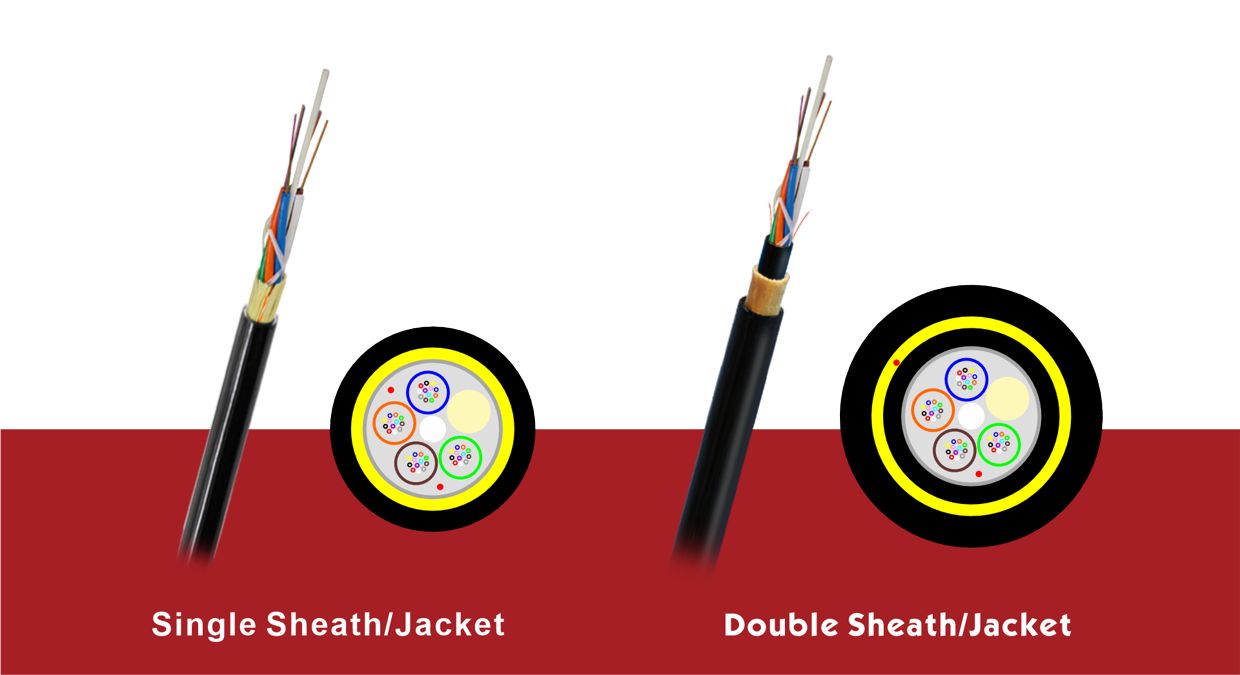
The second jacket adds a protective layer around the cable core and aramid strength system. A typical listed construction combines gel-filled loose tubes, filler elements, a GFRP central strength member, longitudinal water blocking, an inner polyethylene sheath, aramid yarn, ripcords and an outer polyethylene sheath.
Double sheath does not replace engineering checks
Extra jacket material can improve resistance to handling and environmental damage, but it also changes diameter and weight. The final design still needs confirmed optical fiber, tube layout, water blocking, jacket thickness, aramid yarn, cable mass, tensile ratings and bend limits.
Which Mechanical Ratings Should Be on the Data Sheet?
Ask for the values used in the sag-tension calculation, not only a headline span. The supplier should tie each rating to the exact cable design and stated weather load case.
RTS
Rated Tensile Strength is the calculated strength reference for the cable's load-bearing components. Confirm the value and the design method for the selected construction.
MAT
Maximum Allowable Tension is used for the governing loaded condition in the project sag-tension study. It must be checked against fiber strain and attenuation limits.
EDS
Everyday Stress describes the normal long-term tension condition and is relevant to fatigue and vibration control. Confirm the project criterion rather than applying a generic percentage.
Installation tension
The pulling plan must remain within the cable's installation limit and minimum bend radius. Include the longest span, elevation changes, pulling method and hardware in the review.
Where Are Double Sheath ADSS Cables Used?
They fit self-supporting aerial telecom and utility routes where an all-dielectric cable and added jacket protection are useful. They are not a substitute for a route-specific electrical, mechanical and hardware assessment.
![ADSS cable installed on aerial utility infrastructure]()
Utility communications
Use ADSS for communication paths on poles or towers when a non-metallic, self-supporting fiber cable is required. Confirm space potential, clearances, jacket choice and attachment hardware with the line design.
Rural aerial networks
The cable can serve long pole-to-pole access and backbone runs. Survey every span and account for exposed terrain, wind, ice, temperature and future fiber capacity before fixing the cable design.
High mechanical exposure
A double sheath is worth considering where extra abrasion and handling protection is needed. It does not automatically make the cable rodent-proof or suitable for every severe-weather condition; request the required protection explicitly.
When not to assume ADSS
Do not select this category for direct burial, duct pulling, underwater routes or installations that require a metallic messenger unless the complete cable and installation design is changed for that application.
Which Accessories Are Needed for ADSS Installation?
A complete aerial system normally needs more than the cable. Typical components include dead ends or tension clamps, suspension clamps, pole or tower brackets, downlead clamps, fiber storage units and vibration-control hardware selected for the finished cable and route.
Frequently Asked Questions
What does ADSS mean?
ADSS means All-Dielectric Self-Supporting. In plain language, it is a fiber optic cable with no metallic load-bearing element that is designed to support itself between poles or towers without a separate messenger wire.
What is the difference between single sheath and double sheath ADSS?
Double sheath ADSS adds an inner jacket beneath the aramid strength layer and outer jacket, giving the cable core additional mechanical protection. The tradeoff is more material, diameter and weight, so span and structure loading still need to be checked.
Can I select an ADSS cable from span length alone?
No. Span is only one input; wind, ice, temperature, sag, cable weight, route geometry, attachment height, electrical environment and hardware all affect the final mechanical design.
Can the listed 200–500 m design be used in an ice-loading area?
Not without recalculation. That published range is paired with a 25 m/s wind and 0 mm ice condition; an ice-loading route needs its own combined load, sag-tension and hardware assessment.
Is a double sheath ADSS cable automatically suitable near high-voltage lines?
No. The all-dielectric construction avoids metallic strength members, but jacket tracking performance and attachment location must still match the calculated electrical field and the line owner's design rules.
RFQ Checklist
You do not need to calculate the cable yourself. Provide the route and service conditions below so the supplier can return a count-specific construction, data sheet and compatible hardware recommendation.
Required fiber count, fiber type and any spare-capacity target
Every span length, route profile, elevation change and support type
Maximum wind speed, radial ice thickness and temperature range
Required sag, ground clearance and installation tension limits
Power-line voltage, attachment position, calculated space potential and jacket requirement
Required RTS, MAT, EDS, crush, bend and optical performance criteria
Reel length, installation method and compatible dead-end, suspension and downlead hardware
Applicable project standards, testing, marking, packaging and documentation
Order quantity and requested delivery destination






 Fiber Optic Cable
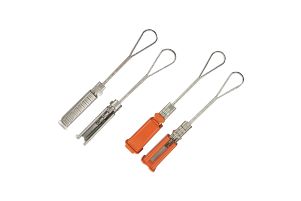 Fiber Optic Tools
 Ethernet Cable
 Coaxial Cable
 Fire & Security Cable
 Voice, Audio & Video
 Power & Control Cable