Distributed Base Station Fiber and Hybrid Power Cables
Distributed base station cables connect centralized or remote equipment to RRU, AAU, small-cell, and FTTA locations. This ZION range includes optical-only cables and hybrid optical-electrical cables for simultaneous signal and power transmission. Choose first by whether power conductors are required, then match the route, armor, sheath, fiber construction, conductor size, and system voltage to the project.
Which Distributed Base Station Cable Should I Choose?
Use the hybrid models when one cable must carry optical signals and electrical power. Use the optical-only LSZH models when power is routed separately and the priority is a compact, flexible fiber connection for wireless base station or FTTA cabling.
![GDTC8S figure-8 hybrid fiber and power cable]()
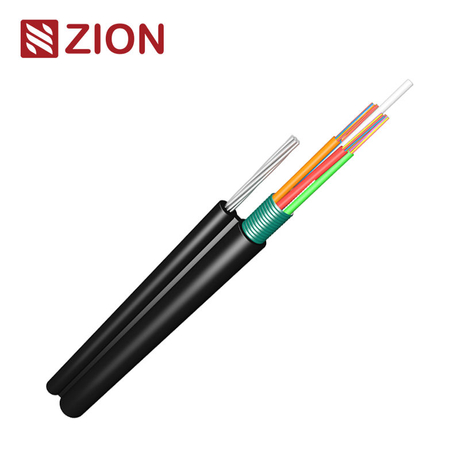
GDTC8S
Figure-8 Aerial Hybrid Cable
Loose tubes and copper conductors are stranded around a metallic strength member, with PSP armor, a steel-wire messenger, and a figure-8 PE sheath. Consider it for self-supporting aerial access routes.
View Product Details →![GDTA APL armored hybrid fiber and electrical cable]()
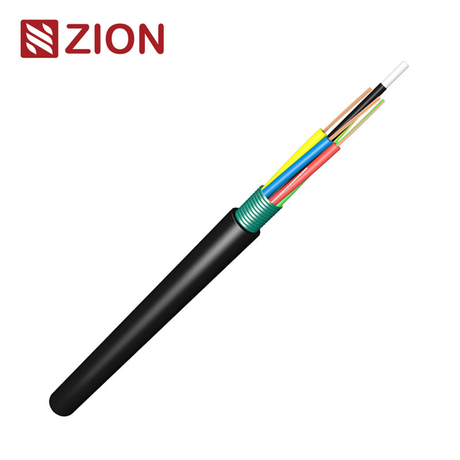
GDTA
APL-Armored Hybrid Cable
A stranded loose-tube cable combining optical fibers and copper conductors around a metallic central strength member, protected by laminated aluminum tape and a PE outer sheath.
View Product Details →![GDTS PSP armored hybrid fiber and electrical cable]()
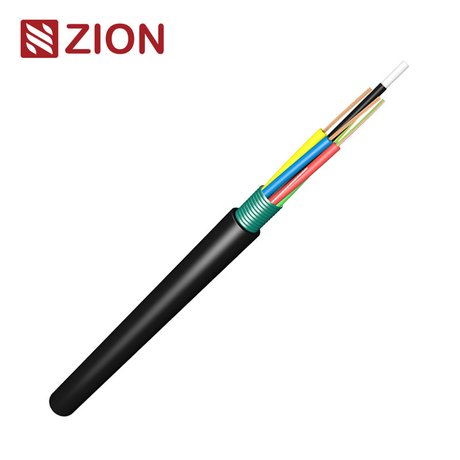
GDTS
PSP-Armored Hybrid Cable
A stranded loose-tube optical and copper design with a metallic central strength member, corrugated steel-tape armor, and a PE outer sheath. Select it when steel-tape protection is required.
View Product Details →![GDTA53 double sheath APL PSP armored hybrid cable]()
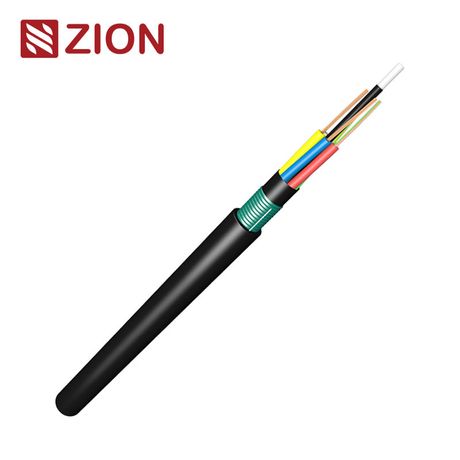
GDTA53
Double-Sheath Dual-Armor Hybrid Cable
A loose-tube fiber and copper cable with APL armor, a PE inner sheath, PSP armor, and a PE outer sheath. Consider it for buried or protected routes requiring a layered construction.
View Product Details →![GDFJAH APL armored LSZH hybrid fiber and electrical cable]()
GDFJAH
APL-Armored LSZH RRU Hybrid Cable
Tight-buffered optical sub-units and copper wires are stranded around a non-metallic central strength member, with APL armor and an LSZH outer sheath for hybrid RRU links.
View Product Details →![GJYFJH aramid yarn LSZH optical sub-unit cable]()
GJYFJH
LSZH Optical Sub-Unit Cable
Tight-buffered fibers use aramid yarn strength members and LSZH sub-unit and outer sheaths. Choose it for optical-only wireless base station cabling where power is supplied separately.
View Product Details →![GJYWFJH tight-buffered aramid LSZH FTTA cable]()
GJYWFJH
Tight-Buffered LSZH FTTA Cable
Tight-buffered fibers are reinforced with aramid yarns and covered by an LSZH sheath. It is intended for optical-only horizontal or vertical wireless base station and FTTA cabling.
View Product Details →![GJYXFH multi-core double sheath fiber optic cable]()
GJYXFH
Double-Sheath Multi-Fiber Cable
Optical fibers are reinforced by aramid yarns, an LSZH inner sheath, a second aramid layer, and an LSZH outer sheath. Consider it when an optical-only multi-fiber design needs layered protection.
View Product Details →![GDFJH steel hose hybrid optical and electrical cable]()
GDFJH
Steel-Hose LSZH RRU Hybrid Cable
Tight-buffered fibers are protected by a helical steel hose and aramid yarns, then combined with copper conductors under an LSZH outer sheath for mechanically protected hybrid RRU links.
View Product Details →How Do I Select the Right Construction?
The correct choice starts with system architecture, not the model code. Confirm whether the cable must carry power, how it will be installed, and what mechanical and fire-performance requirements apply.
Need fiber and power together?
Choose a hybrid optical-electrical model: GDTC8S, GDTA, GDTS, GDTA53, GDFJAH, or GDFJH. Confirm conductor material, cross-section, circuit voltage, current, voltage drop, protection, grounding, and equipment interfaces for the complete system.
Aerial, duct, or buried route?
Use GDTC8S for a self-supporting figure-8 aerial route. Compare GDTA and GDTS by APL versus PSP armor for duct or engineered aerial use. Consider GDTA53 when a double-sheath, dual-armor construction is specified.
Power supplied separately?
Choose an optical-only LSZH cable: GJYFJH for stranded optical sub-units, GJYWFJH for compact tight-buffered FTTA cabling, or GJYXFH for a multi-fiber double-sheath construction. Confirm fiber count, fiber type, connector or termination plan, and installation environment.
Need LSZH or metal protection?
LSZH describes smoke and halogen behavior; it does not by itself confirm a fire rating or outdoor suitability. APL, PSP, double sheaths, and steel hose address different mechanical needs. Specify the required test standard and route condition rather than selecting by material name alone.
Quick Comparison
The table separates hybrid power-and-fiber cables from optical-only RRU/FTTA cables and highlights the construction that drives selection. Electrical ratings, fiber count, cable diameter, and mechanical values must be confirmed for the selected type.
| Model | Cable Function | Fiber Construction | Protection / Sheath | Selection Direction |
|---|
| GDTC8S | Fiber + copper power | Stranded loose tubes | PSP, steel messenger, figure-8 PE | Self-supporting aerial access route |
| GDTA | Fiber + copper power | Stranded loose tubes | APL, PE outer sheath | Duct or engineered aerial route |
| GDTS | Fiber + copper power | Stranded loose tubes | PSP, PE outer sheath | Steel-tape protection for duct/aerial routes |
| GDTA53 | Fiber + copper power | Stranded loose tubes | APL + PE inner + PSP + PE outer | Layered protection for buried/protected routes |
| GDFJAH | Fiber + copper power | Tight-buffered optical sub-units | APL, LSZH inner/outer construction | Armored LSZH hybrid RRU link |
| GJYFJH | Optical only | Stranded tight-buffered sub-units | Aramid yarns, LSZH | Flexible optical sub-unit cabling |
| GJYWFJH | Optical only | Tight-buffered fibers | Aramid yarns, LSZH | Horizontal/vertical FTTA fiber cabling |
| GJYXFH | Optical only | Multi-fiber construction | Aramid layers, double LSZH sheath | Layered optical-only cable |
| GDFJH | Fiber + copper power | Steel-hose optical sub-units | Helical steel hose, aramid, LSZH | Mechanically protected hybrid RRU link |
How Does DC Remote Powering Work?
A hybrid cable can carry optical signals and DC power between centralized equipment and remote radio or access equipment. In one system example, a central office terminal converts a -48 V DC supply to a higher transmission voltage, and a remote terminal converts it to the load voltage. Those values describe the power system, not a universal cable rating; cable conductor size, insulation, voltage drop, protection, grounding, and local electrical rules must be engineered together.
Which Network Topology Fits the Deployment?
Distributed equipment may be concentrated at one remote point, spread across several branches, or arranged along a linear route. The topology determines cable branching, joint boxes, distribution boxes, remote terminals, conductor sizing, and protection coordination.
Point-to-point
Use point-to-point when one remote location contains a single RRU or a group of RRUs far from the centralized terminal. Confirm cable length, aggregate load, distribution enclosure, remote conversion equipment, and final jumpers.
![Point-to-point distributed base station topology]()
Point-to-multipoint
Use point-to-multipoint when remote devices are distributed among several locations, including indoor coverage systems. Each branch needs a defined optical path, power allocation, voltage-drop calculation, enclosure, and protection scheme.
![Point-to-multipoint distributed base station topology]()
Cascade
Use a cascade layout when several remote stations follow one direction, such as a highway, railway, or tunnel corridor. Confirm cumulative load, conductor size, intermediate branching, fault isolation, and the available voltage at the farthest node.
![Cascade distributed base station topology]()
Frequently Asked Questions
What is a distributed base station hybrid cable?
It is a cable that places optical fibers and electrical conductors under one overall construction so data and power can share the same route. The system still needs compatible terminations, voltage conversion where required, circuit protection, and project-specific electrical calculations.
What is the difference between GDTA, GDTS, and GDTA53?
The primary difference is protective construction: GDTA uses laminated aluminum tape, GDTS uses corrugated steel tape, and GDTA53 combines APL, a PE inner sheath, PSP, and a PE outer sheath. Confirm the installation route and mechanical requirement before choosing.
Do all cables in this category carry electrical power?
No. GDTC8S, GDTA, GDTS, GDTA53, GDFJAH, and GDFJH are hybrid optical-electrical cables. GJYFJH, GJYWFJH, and GJYXFH are optical-only designs for installations where power is provided separately.
Can I specify the cable from voltage alone?
No. Voltage is only one system variable. Specify load current, route length, allowable voltage drop, conductor cross-section, insulation rating, protection, grounding, fiber count and type, installation method, temperature, fire-performance requirements, and equipment interfaces.
RFQ Checklist
Provide the system and route information below so the cable construction and electrical design can be checked together.
Application: BBU/RRU, AAU, small cell, repeater, ONU, FTTA, indoor coverage, or another remote load
Topology: point-to-point, point-to-multipoint, cascade, or custom branching layout
Optical-only or hybrid fiber-and-power construction
Fiber type, fiber count, connector or termination plan, and optical performance requirements
Supply voltage, remote load voltage/current, route length, conductor size, and allowable voltage drop
Aerial, duct, buried, indoor, tower, tunnel, railway, or other installation environment
Required armor, sheath, fire test, temperature range, grounding, surge protection, and local code requirements
Quantity, reel length, packaging, marking, test reports, and project documentation



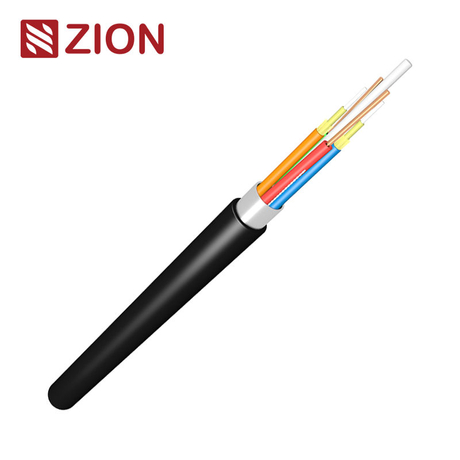
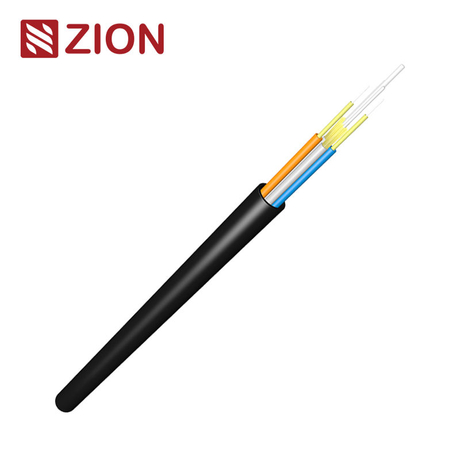
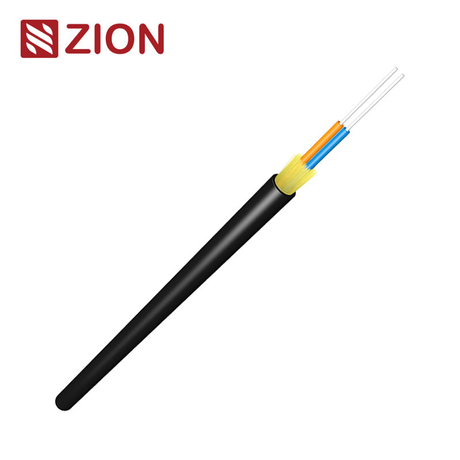
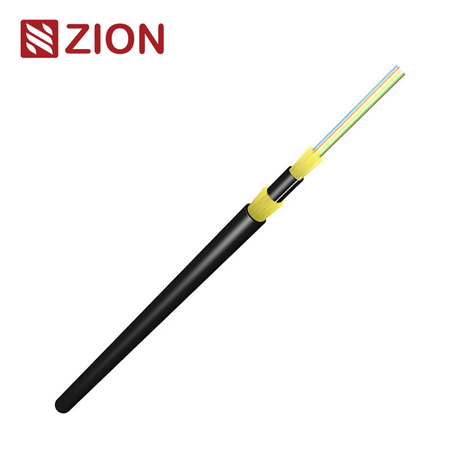




 Fiber Optic Cable
 Fiber Optic Tools
 Ethernet Cable
 Coaxial Cable
 Fire & Security Cable
 Voice, Audio & Video
 Power & Control Cable