F/FTP Cat6A Ethernet Cable for Shielded 10G Structured Cabling
F/FTP Cat6A cable uses foil around each twisted pair plus an overall foil screen to help control interference in 10G structured cabling. This range includes five solid-copper installation cables. Choose first by route and jacket requirement: PVC, CM or CMR for specified indoor installations, LSZH where low-smoke materials are required, or PE for suitable outdoor routes.
F/FTP Cat6A Cable Range
The five models share individually foil-screened pairs and an overall foil screen, but their jacket materials and ratings serve different routes. Models 7112332, 7112333, 7112334 and 7112336 use 23 AWG solid bare copper conductors and are specified to 500 MHz. Model 7112331 uses 0.55±0.005 mm solid bare copper conductors, a PE jacket and a stated maximum frequency of 750 MHz.
![7112331 F/FTP Cat6A PE cable]()
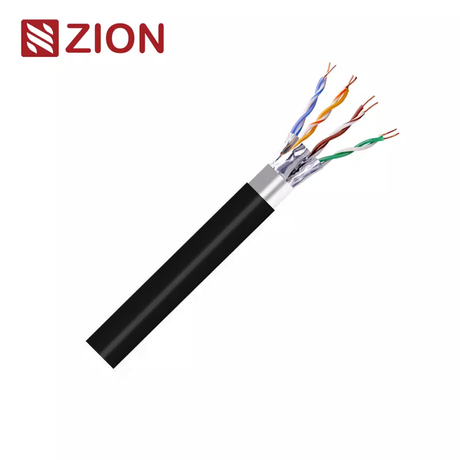
7112331
F/FTP Cat6A PE Cable
0.55±0.005 mm solid bare copper, four pairs, 7.5±0.5 mm PE jacket and up to 750 MHz. Consider it for suitable outdoor routes; confirm exposure conditions, pathway and required compliance documents for the project.
View Product Details →![7112332 F/FTP Cat6A 23 AWG PVC cable]()
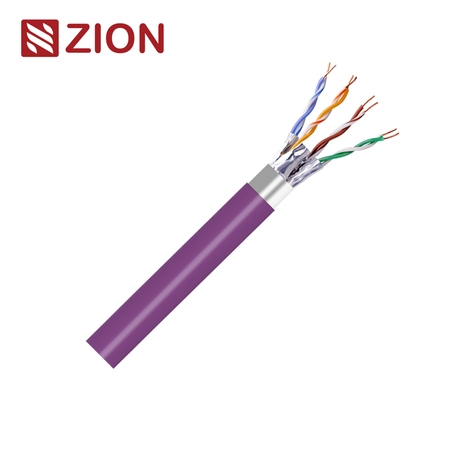
7112332
F/FTP Cat6A 23 AWG PVC Cable
Four-pair, 23 AWG solid bare copper cable with an 8.0±0.2 mm PVC jacket and 500 MHz specification. Consider it for indoor structured cabling where the project does not require a specific CM, CMR or LSZH jacket designation.
View Product Details →![7112333 F/FTP Cat6A 23 AWG PVC CM cable]()
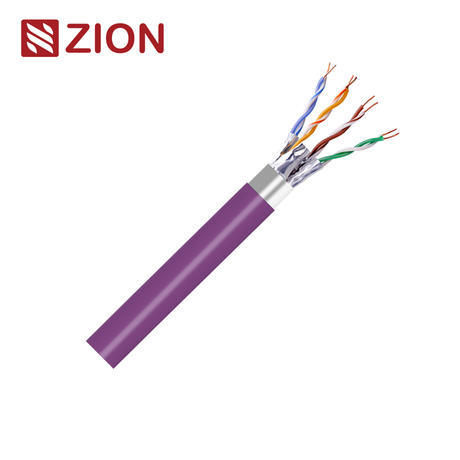
7112333
F/FTP Cat6A PVC CM Cable
Four-pair, 23 AWG solid bare copper construction with an 8.0±0.2 mm PVC CM jacket and 500 MHz specification. Consider it where a CM-designated indoor cable matches the route and local code requirements.
View Product Details →![7112334 F/FTP Cat6A 23 AWG PVC CMR cable]()
7112334
F/FTP Cat6A PVC CMR Cable
Four-pair, 23 AWG solid bare copper cable with an 8.0±0.2 mm PVC CMR jacket and 500 MHz specification. Consider it for vertical riser routes where the specified CMR designation and local installation rules apply.
View Product Details →![7112336 F/FTP Cat6A 23 AWG LSZH cable]()
7112336
F/FTP Cat6A 23 AWG LSZH Cable
Four-pair, 23 AWG solid bare copper cable with an 8.0±0.2 mm low-smoke zero-halogen jacket and 500 MHz specification. Consider it where the project calls for LSZH materials; confirm the exact fire-performance documentation required.
View Product Details → How Do I Choose the Right F/FTP Cat6A Cable?
Start with the installation route, not just the Cat6A label. Jacket material or rating, environmental exposure, the complete shielded channel and local code requirements usually separate the correct model from a cable that only looks similar on a specification list.
Indoor or outdoor route?
Use a jacket suited to the route. The 7112331 PE model is the outdoor-oriented option in this range. PVC, CM, CMR and LSZH models are selected for specified indoor pathways. Confirm UV, moisture, burial or duct exposure rather than assuming every PE cable suits every outdoor condition.
Need CM, CMR or LSZH?
Match the designation to the project specification and local code. Choose 7112333 for the CM option, 7112334 for the CMR option, or 7112336 for an LSZH jacket. LSZH describes smoke and halogen behavior; it does not replace a required fire-class or certification check.
500 MHz or 750 MHz?
Models 7112332, 7112333, 7112334 and 7112336 are specified to 500 MHz; model 7112331 lists a 750 MHz maximum frequency. Frequency alone does not determine an installed link. Use the selected cable's datasheet together with compatible Cat6A connectivity, channel length and field-test requirements.
How will the shield be terminated?
Plan the complete shielded channel before ordering. F/FTP performance depends on compatible shielded jacks, plugs, panels and practices for screen continuity, bonding and grounding. The cable construction does not compensate for an incomplete or incorrectly installed shielded system.
Quick Comparison
Read the jacket column first, then verify frequency, dimensions and project documentation. The table is a selection guide; final approval should use the chosen model's datasheet and the complete channel design.
| Model | Conductor | Jacket / Rating | Maximum Frequency | Selection Direction |
|---|
| 7112331 | 0.55±0.005 mm solid bare copper, 4 pairs | PE, 7.5±0.5 mm | 750 MHz | Suitable outdoor route after exposure review |
| 7112332 | 23 AWG solid bare copper, 4 pairs | PVC, 8.0±0.2 mm | 500 MHz | General specified indoor structured cabling |
| 7112333 | 23 AWG solid bare copper, 4 pairs | PVC CM, 8.0±0.2 mm | 500 MHz | CM-designated indoor routes |
| 7112334 | 23 AWG solid bare copper, 4 pairs | PVC CMR, 8.0±0.2 mm | 500 MHz | CMR-designated riser routes |
| 7112336 | 23 AWG solid bare copper, 4 pairs | LSZH, 8.0±0.2 mm | 500 MHz | Projects requiring an LSZH jacket |
What Does F/FTP Mean in Practice?
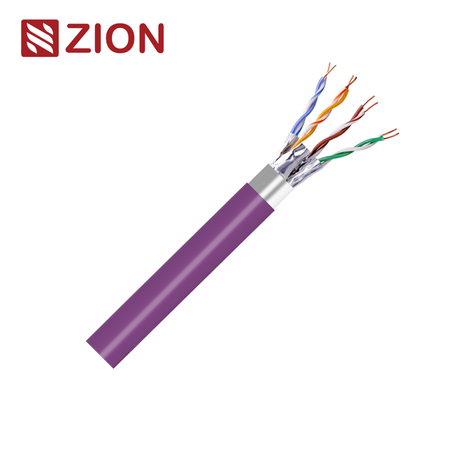
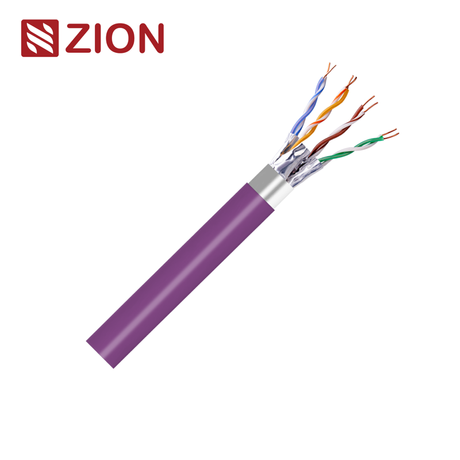
F/FTP means each twisted pair has its own foil screen and the four-pair cable core has an additional overall foil screen. In plain language, the cable provides two foil-screening layers to help manage electromagnetic interference and crosstalk in demanding copper cabling environments.
The benefit depends on the installed system. Use shield-compatible Cat6A hardware, preserve screen continuity through the channel, follow bend-radius and pulling limits, and apply the project's bonding and grounding rules. For 10GBASE-T, verify the complete permanent link or channel rather than treating the cable's MHz value as a standalone performance guarantee.
Where Does F/FTP Cat6A Cable Fit?
These are solid-conductor bulk installation cables for permanent structured cabling, not flexible equipment patch cords. They fit projects that need Cat6A performance and a planned shielded channel, with the final model chosen by pathway and environmental conditions.
Data centers and equipment rooms
A practical fit for permanent links in dense copper environments when the channel is designed with compatible shielded components. Confirm pathway rating, heat and bundle conditions, PoE requirements and field-test limits.
Commercial building cabling
Choose PVC, CM, CMR or LSZH only when that designation matches the route and local requirements. A jacket label should not be substituted for the project's specified fire-performance class or supporting documents.
Industrial and high-interference areas
F/FTP construction can help control interference, but route separation, shield termination, bonding and grounding remain essential. Confirm the actual interference environment and installation standard before selecting cable solely by shielding name.
Outdoor pathways
Use the 7112331 PE cable only after confirming whether the run is exposed, in duct, subject to water, or requires direct-burial construction. The indoor PVC and LSZH models should not be treated as outdoor substitutes.
Frequently Asked Questions
What is F/FTP Cat6A cable?
It is a Cat6A twisted-pair cable with foil around every pair and another foil around the overall core. This construction is used when a project needs a shielded copper channel and additional interference control.
What is the difference between the five ZION models?
The main difference is jacket construction and rating. Model 7112331 uses PE; 7112332 uses PVC; 7112333 uses PVC CM; 7112334 uses PVC CMR; and 7112336 uses LSZH. Model 7112331 also lists 750 MHz, while the other four list 500 MHz.
Does F/FTP Cat6A support 10 Gigabit Ethernet?
Yes, these Cat6A models are specified for 10GBASE-T applications, but the installed result depends on the complete link or channel. Confirm compatible connectors, channel length, workmanship and the required field-test standard.
Can I use the LSZH model outdoors?
Do not assume so. LSZH describes the jacket's smoke and halogen behavior, not outdoor exposure resistance. For an outdoor route, start with the PE model and confirm UV, water, duct or burial requirements.
Do I need shielded connectors and grounding?
Plan for a complete shielded cabling system. Use compatible shielded connectivity and follow the applicable bonding and grounding standard for the installation; otherwise, the cable's screen may not provide the intended system-level benefit.
RFQ Checklist
You do not need to know every cable term before requesting a quote. Share the route and system requirements below so the jacket, rating, packaging and supporting documents can be matched to the project.
Installation route: indoor horizontal, riser, public area, outdoor duct, exposed outdoor or another pathway
Required jacket or rating: PVC, CM, CMR, LSZH, PE or a project-specific fire class
Permanent-link or channel length, number of runs and planned pathway
Network requirement: 10GBASE-T, lower Ethernet rate, PoE type and connected equipment
Shielded connectivity, bonding and grounding approach
Cable color, meter or foot marking, reel or pull-box length, packaging and labeling
Order quantity and delivery destination
Required datasheet, test report, certification or compliance documents for the selected model and market





 Fiber Optic Cable
 Fiber Optic Tools
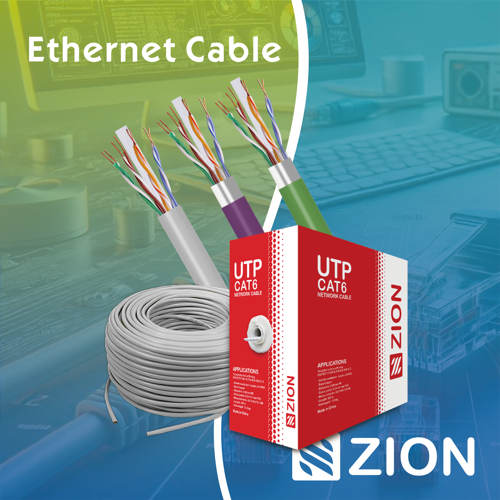 Ethernet Cable
 Coaxial Cable
 Fire & Security Cable
 Voice, Audio & Video
 Power & Control Cable