Fiber Optic Tools, Test Equipment & Installation Hardware
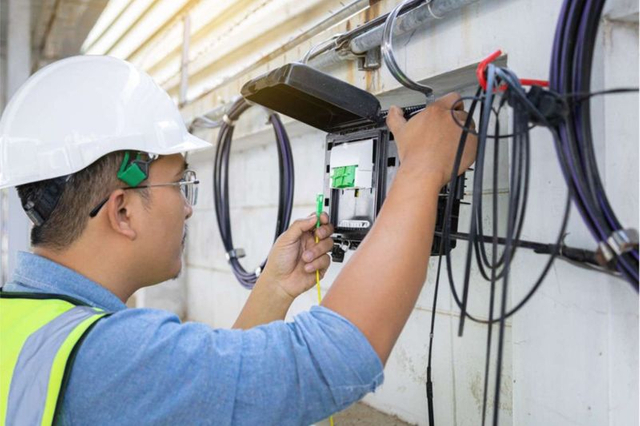
This fiber optic tools range covers preparation, termination, cleaning, testing, fusion splicing and outside-plant installation. Choose the work first—such as finding a fault, making a splice, preparing fiber, securing FTTH drop cable or supporting ADSS/OPGW—then confirm the cable dimensions, test functions, load or span, material and kit contents required for the project.
How Do I Choose Fiber Optic Tools?
Choose by the task and the exact cable or network condition, not by appearance alone. A complete field workflow may need separate preparation, cleaning, splicing and verification tools, while aerial hardware must be selected from mechanical project data.
Need to locate or measure a fault?
Use an OTDR when distance-to-event and trace analysis are required; use a visual fault locator for visible continuity checks, and an optical power meter for level or loss measurements. Confirm wavelength, range, connectors and whether testing is on a live network.
Making permanent fiber joints?
Choose a fusion splicer by alignment method, supported fiber type, splice and heating cycle, battery capacity, environmental protection and kit contents. Cleaving, stripping, cleaning and splice protection are separate steps even when sold in one kit.
Preparing or terminating fiber?
Match the tool to the coating, buffer, jacket and cable profile. A 250 µm buffer stripper, a 2–3 mm jacket tool and an FTTH flat-drop stripper solve different preparation tasks; confirm every diameter before ordering.
Securing FTTH drop cable?
Choose clamps and hooks from the cable profile, diameter, route, mounting point and required working load. Similar-looking ZCSPC, ZCPAC, ZCSSC and ZCHK items are not automatically interchangeable.
Installing ADSS or OPGW?
Start with cable diameter, span, maximum working tension, support or dead-end location, pole or tower geometry, vibration conditions and corrosion environment. The cable design and project calculation determine the correct grip, suspension set, damper and fitting.
Where Do These Products Fit?
The range supports workshop, field-test and outside-plant tasks, but the correct product depends on the fiber system and mechanical design. Do not substitute a general hand tool for a calibrated test function or project-rated aerial fitting.
FTTH installation and repair
Use preparation tools, cleavers, fusion splicers, VFLs, power meters, drop clamps and hooks as required by the installation method. Confirm the drop-cable profile and the network test plan.
Telecom link testing
Use OTDRs, launch cable boxes, visual fault locators and optical power meters according to the acceptance or troubleshooting procedure. A single instrument does not automatically replace every Tier 1 or Tier 2 test.
ADSS and OPGW deployment
Use project-matched dead-ends, suspension sets, dampers, down-lead clamps and fittings. Mechanical selection must follow cable data, route geometry, span, tension and environmental calculations.
Fiber preparation and cleaning
Use dimension-matched stripping, cleaving and cleaning products before termination or fusion splicing. Cleanliness and correct tool geometry matter; confirm consumables and replacement parts for the workflow.
Frequently Asked Questions
What are fiber optic tools?
Fiber optic tools are products used to prepare, join, clean, inspect, test and install optical fiber systems. The term can include precision hand tools, fusion splicers, OTDRs, power meters, cleaning supplies and project-specific installation hardware.
Which tools are needed for fiber splicing?
A typical fusion-splicing workflow needs stripping, cleaning, precision cleaving, fusion splicing and splice protection. The exact tool set depends on the fiber type, cable construction, splice method and required field test.
What is the difference between an OTDR, VFL and optical power meter?
An OTDR shows events and distance along a fiber, a VFL makes some local faults visible with red light, and a power meter measures optical level or loss when used with the appropriate source and procedure. Their functions overlap only in limited cases.
Can one stripper be used for every fiber cable?
No. Strippers are selected for specific coating, buffer, jacket or cable-profile dimensions. Confirm the selected tool against the actual fiber and cable construction before use.
Can FTTH clamps be used on ADSS cable?
Not automatically. FTTH drop clamps and ADSS suspension or tension hardware are selected from different cable profiles, loads and route conditions. Use the cable data and project mechanical requirements to choose the correct component.
What information is needed to select ADSS or OPGW hardware?
Provide the cable type, outside diameter, mass, rated tensile data, span, support or dead-end position, pole or tower interface, route angle, wind and ice conditions, corrosion environment and applicable project standard.





 Fiber Optic Cable
 Fiber Optic Tools
 Ethernet Cable
 Coaxial Cable
 Fire & Security Cable
 Voice, Audio & Video
 Power & Control Cable