Cat6A S/FTP Ethernet Cables for Shielded 10G Networks
Cat6A S/FTP cables use foil around each twisted pair plus an overall braid to help control interference in fixed 10G Ethernet links. This range includes solid-copper PVC and solid-CCA LSZH constructions. Choose first by conductor and jacket requirements, then confirm bandwidth, cable diameter, installation length, grounding, and the compliance required for your project.
Which Cat6A S/FTP Cable Fits Your Project?
The practical choice is between a 23AWG solid bare-copper cable with a PVC jacket and No. 7112346E, a solid CCA cable with an LSZH jacket. Both are fixed-installation S/FTP designs, but conductor material, jacket type, diameter, bandwidth listing, and project acceptance requirements differ.
![Ethernet Cat6A S/FTP cable with 23AWG solid bare copper conductors]()
S/FTP CAT 6A
Ethernet Cat6A S/FTP Cable
A 23AWG solid bare-copper installation cable with a PVC jacket, 500MHz bandwidth, 8.70 ± 0.30mm outer diameter, and 10GBASE-T support up to 100m. Consider it for indoor permanent links where PVC is permitted. Confirm grounding, termination hardware, and the required fire rating before ordering.
View Product Details →![No. 7112346E S/FTP Cat6A CCA LSZH Ethernet cable]()
NO. 7112346E
S/FTP CCA Cat6A LSZH Cable
A solid CCA installation cable with an LSZH jacket, listed maximum frequency of 750MHz, 7.5 ± 0.2mm outer diameter, and 10GBASE-T application support. Consider it where an LSZH jacket and this conductor construction are accepted. Confirm channel length, PoE loading, standards, and local project approval for the selected version.
View Product Details → How Do I Choose a Cat6A S/FTP Cable?
Start with the installation specification, not the shielding label alone. The same S/FTP construction can be supplied with different conductors, jackets, dimensions, and electrical limits, so every decision should match the approved project design.
Copper or CCA?
Choose the conductor required by the specification. The 23AWG solid bare-copper cable is intended for fixed permanent links. No. 7112346E uses solid copper-clad aluminum. Do not substitute one for the other without checking channel performance, PoE current, termination compatibility, and the project's approved-material list.
PVC or LSZH?
Match the jacket to the installation environment and code. PVC is the listed jacket for the bare-copper model; it is not a plenum substitute. LSZH means low smoke and zero halogen and is the listed jacket for No. 7112346E, but LSZH wording alone does not prove every regional fire classification. State the exact flame, smoke, and CPR or local approval required in the RFQ.
Need 10G up to 100m?
Use a complete Cat6A channel design. The bare-copper model is listed for 10GBASE-T up to 100m, while the CCA LSZH model is listed for 10GBASE-T applications. Final performance depends on installed length, connectors, patch cords, bend control, shielding continuity, grounding, and field testing; confirm the allowed channel configuration for the selected cable.
Will the cable carry PoE?
Specify the PoE type, device power, bundle size, ambient temperature, and conductor requirement. The No. 7112346E page lists PoE Types 1–4, but the completed installation must still meet the project's electrical, thermal, and standards requirements. Request a version-specific datasheet and approval before using it for high-power PoE.
Quick Comparison
Use conductor and jacket as the first filter, then compare bandwidth listing, diameter, and available reel length. Ask for the exact ordered-version datasheet when a project specification, PoE load, or fire classification is mandatory.
Where Are Cat6A S/FTP Cables Used?
These cables suit fixed structured-cabling routes where 10G Ethernet and interference control are part of the design. They are installation cables, not general-purpose flexible patch cords, and their jacket and conductor must match the site's code and specification.
Enterprise buildings
Use for permanent horizontal links between telecommunications rooms and work areas when Cat6A and shielded pathways are specified. Select PVC or LSZH only after checking the local fire and smoke requirement; the PVC model must not be treated as a plenum cable.
Equipment and data rooms
Use where fixed 10G copper links pass through cable-dense or electrically noisy routes. S/FTP shielding only works as intended when compatible shielded hardware, bonding, grounding, and workmanship maintain shield continuity across the installed channel.
PoE device cabling
Use only after the cable version is approved for the device load, bundle, ambient temperature, and applicable PoE standard. This is especially important when specifying high-power wireless access points, cameras, displays, or other continuously powered devices.
Frequently Asked Questions
What does S/FTP mean on a Cat6A cable?
S/FTP means each twisted pair has an individual foil shield and the four-pair cable has an overall braided screen. In practical terms, it is a two-level shielding construction intended to control pair-to-pair and external interference, but it still needs compatible shielded termination and grounding.
What is the difference between the two Cat6A S/FTP models?
The main differences are conductor and jacket. The Ethernet Cat6A S/FTP Cable uses 23AWG solid bare copper with PVC, while No. 7112346E uses solid CCA with LSZH. Their listed bandwidth and outside diameter also differ, so select by the approved specification rather than price or shielding name alone.
Can these cables support 10 Gigabit Ethernet?
Yes, both product pages position the cables for 10GBASE-T applications. The bare-copper model explicitly lists support up to 100m. A completed link must still use compliant Cat6A components and remain within the approved channel design; request test requirements and the selected-version datasheet before installation.
Is the PVC Cat6A S/FTP cable suitable for plenum spaces?
No plenum claim should be made for the listed PVC version. If the route enters an air-handling plenum or another regulated space, specify the required rating and obtain documentation for a separately approved version before purchase.
Can I use Cat6A S/FTP bulk cable as a flexible patch cord?
These solid-conductor products are intended for fixed installation, not repeated flexing. For equipment jumpers or frequent movement, use a purpose-built stranded Cat6A patch cable with compatible shielded connectors and the required jacket.
RFQ Checklist
You do not need to translate every requirement into cable terminology before requesting a quote. Provide the project conditions below so the conductor, jacket, reel, test, and compliance details can be matched to the intended installation.
Required conductor: solid bare copper or approved solid CCA construction
Jacket and fire requirement: PVC, LSZH, plenum, CPR class, or another local rating
Network requirement: 10GBASE-T, target channel length, bandwidth, and field-test standard
PoE type, powered-device load, bundle size, and ambient temperature
Installation route, EMI conditions, grounding and bonding plan, and compatible shielded hardware
Required cable diameter or conduit-fill limit, reel length, jacket color, marking, and packaging
Quantity, delivery destination, requested test reports, certificates, and version-specific datasheet





 Fiber Optic Cable
 Fiber Optic Tools
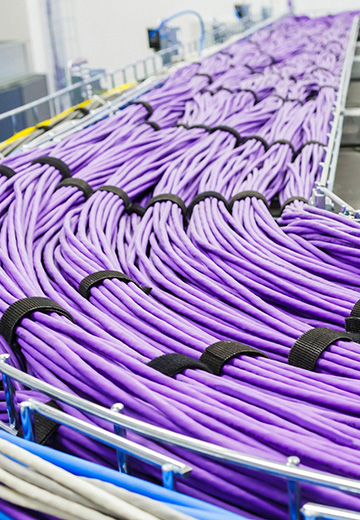
 Ethernet Cable
 Coaxial Cable
 Fire & Security Cable
 Voice, Audio & Video
 Power & Control Cable