Dual Cat6 Ethernet Cable for Paired Structured Cabling
Dual Cat6 Ethernet cable places two U/UTP Cat6 runs in a joined profile, helping installers route a paired link as one cable assembly. This range uses 23 AWG solid bare copper conductors and is specified to 250 MHz. Choose the jacket and installation rating for the route, then confirm channel length, termination hardware, test requirements, and application load before ordering.
Dual Cat6 Product Range
The range is built around one U/UTP dual Cat6 construction. In plain terms, U/UTP means the twisted pairs have no added foil or braid shield, so the cable suits routes where shielding is not required. Jacket material, fire rating, installation conditions, and the final channel design still need to be specified for each project.
![U/UTP Dual Cat 6 twisted pair installation cable]()
U/UTP DUAL CAT 6
Dual Cat6 Twisted Pair Installation Cable
A joined-profile installation cable with 23 AWG solid bare copper conductors, four twisted pairs per Cat6 run, 250 MHz performance, and a nominal 6.5 × 13 mm outer profile. Consider it when two unshielded structured-cabling runs should follow the same route. Confirm the selected jacket, rating, channel length, and termination plan.
View Product Details → How Do I Choose a Dual Cat6 Cable?
Start with the route and required number of links, then match the jacket, fire rating, electrical performance, and installation method. The dual profile simplifies paired routing, but each link still needs a complete Cat6 channel design and verification.
Why use a dual profile?
Use it when two Cat6 links need to follow the same pathway and a joined cable can simplify pulling, identification, and route planning. Confirm that pathway fill, pulling tension, bend radius, separation rules, and termination space suit the 6.5 × 13 mm profile.
Is U/UTP right for the route?
Choose U/UTP where the cabling design does not require an overall foil or braid shield. For routes near motors, variable-frequency drives, large power conductors, or other strong interference sources, review separation and grounding requirements and consider a shielded construction instead.
Which jacket should I specify?
Match the jacket to the installation location and project code. Available order directions include PVC, CMX, CM, CMR, CMP, LSZH, and LDPE. Do not treat these labels as interchangeable: confirm the exact construction, applicable listing or test evidence, indoor or outdoor exposure, and destination-market requirement.
What performance must be confirmed?
The cable is specified to 250 MHz with 100 ± 15 Ω impedance. Select connectors and patch hardware for the intended channel, then state the maximum permanent-link or channel length, Ethernet application, field-test limit, and any power-delivery load. A Cat6 label alone does not verify the complete installed channel.
Quick Dual Cat6 Comparison
There is one verified construction in this category, so the practical comparison is between project configurations rather than multiple models. Use the fixed construction facts below, then specify the jacket, rating, length, packing, and test requirements in the RFQ.
| Model | Construction | Rated Frequency | Outer Profile | Best Fit |
|---|
| U/UTP Dual CAT 6 | 23 AWG solid bare copper; 4 pairs per Cat6 run; unshielded | 1–250 MHz | 6.5 × 13 mm ± 0.2 mm | Two parallel structured-cabling links on the same route |
Where Does Dual Cat6 Cable Fit?
Dual Cat6 is most useful when a project repeatedly needs two unshielded network links along the same pathway. It is not a substitute for route design, shielding review, fire-code selection, or installed-channel testing.
Paired office outlets
Use one joined cable where two horizontal Cat6 links serve the same work area or outlet location. Check pathway fill and allow enough separation at the endpoint for two compliant terminations.
Voice and data pathways
The construction can support paired structured-cabling runs for digital or analogue voice and data systems when the selected application and complete channel are compatible. State both endpoint devices and the required test limit in the RFQ.
Routes with strong EMI
Do not select this U/UTP construction by default for high-interference routes. Review cable separation, bonding, grounding, and equipment requirements; use an appropriate shielded cable when the project design calls for it.
Frequently Asked Questions
What is a dual Cat6 Ethernet cable?
It is a joined-profile cable intended to route two Cat6 runs together. Each run still terminates and tests as its own structured-cabling link, so the dual construction changes installation handling rather than combining two links into one network port.
How is dual Cat6 different from standard Cat6 cable?
The main difference is the joined outer profile for paired routing. The U/UTP Dual CAT 6 construction uses 23 AWG solid bare copper and is specified to 250 MHz; the selected jacket and project rating must be confirmed separately.
Can dual Cat6 support 10GBASE-T?
The product specification lists 10GBASE-T among its applications, but the usable distance and result depend on the complete Cat6 channel, installation environment, connectors, patch cords, and test criteria. State the required application and maximum length so the selected construction and test plan can be confirmed.
Can I use this cable for PoE devices?
PoE suitability should be confirmed for the exact project. Provide the PoE standard or power class, bundle size, ambient temperature, channel length, conductor requirement, and installation method so current capacity and temperature rise can be reviewed.
Is dual Cat6 suitable for outdoor installation?
Only when the ordered jacket and construction are approved for the actual route. Confirm UV exposure, moisture, conduit or direct-burial conditions, temperature range, required rating, and whether water-blocking or additional mechanical protection is needed.
RFQ Checklist
You do not need to know every cable term before requesting a quotation. Share the route, devices, performance target, and installation conditions so the exact dual Cat6 configuration can be reviewed.
Required number of paired links, route length, and quantity
Ethernet application and maximum permanent-link or channel length
Indoor, outdoor, conduit, riser, plenum, or other installation location
Required jacket material, flame rating, standard, listing, or test report
EMI conditions and whether an unshielded U/UTP design is acceptable
PoE standard or power class, bundle size, and ambient temperature
Connector, patch-panel, termination, and field-test requirements
Reel or spool length, marking, color, packaging, and labeling requirements




 Fiber Optic Cable
 Fiber Optic Tools
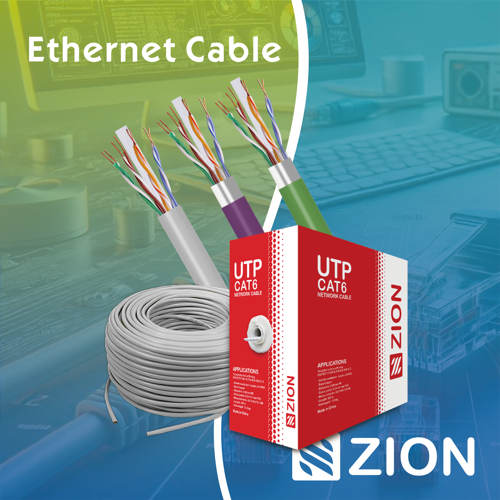 Ethernet Cable
 Coaxial Cable
 Fire & Security Cable
 Voice, Audio & Video
 Power & Control Cable