Rural Network Fiber Optic Cables for FTTH and OSP
Rural fiber networks need cable choices that match long routes, scattered subscribers, difficult terrain, lightning exposure, and limited installation resources. This range focuses on distribution cables for aerial, duct, and vertical routes, including all-dielectric, flat self-supporting, Figure-8, LSZH, HDPE, and APL-armored constructions. Select the route segment first, then confirm fiber count, load, sheath, and hardware.
Which rural network fiber cables are available?
Six distribution cable families cover different route conditions. Start with the installation method—self-supporting aerial, non-self-supporting aerial, duct, or vertical—then compare dielectric design, sheath, armor, fiber organization, and representative mechanical data.
![GYAXZY non-metallic aramid LSZH rural network fiber optic cable]()
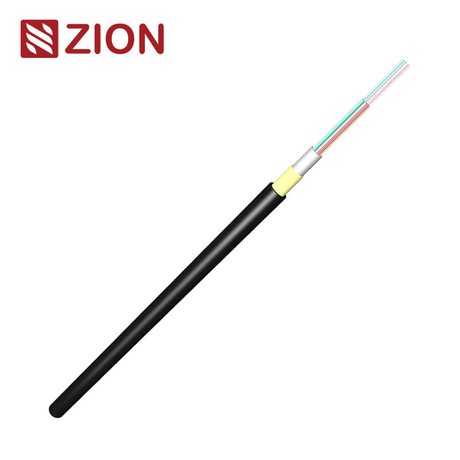
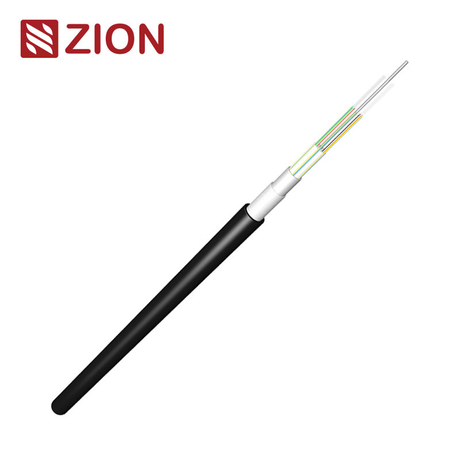
GYAXZY
Aramid-Armored LSZH Uni-Tube Cable
An all-dielectric uni-tube cable with aramid yarn strength members and an LSZH sheath. Consider it for short-distance self-supporting aerial or duct routes where low-smoke material and metal-free construction are required.
View Product Details →![GYGXY non-metallic glass-yarn HDPE rural network drop cable]()
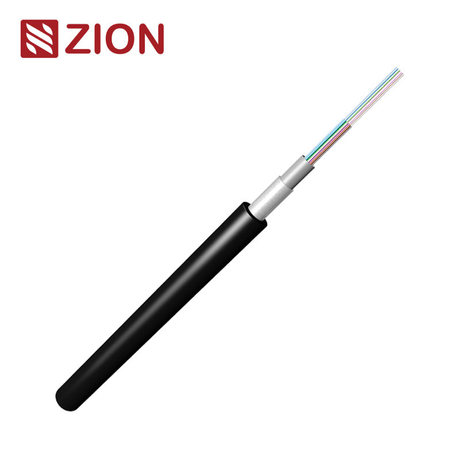
GYGXY
Glass-Yarn HDPE Uni-Tube Drop Cable
A non-metallic uni-tube distribution cable using glass-fiber tape and an HDPE sheath. Consider it for compact rural drops where dielectric construction and added glass-yarn protection are part of the specification.
View Product Details →![GTJGA slotted-core tight-buffered APL-armored rural fiber optic cable]()
GTJGA
Slotted-Core Tight-Buffered APL Cable
An all-dry slotted-core cable with tight-buffered fibers, a steel central strength member, water-blocking tape, APL armor, and a PE sheath. It is intended for duct, vertical, or non-self-supporting aerial installation.
View Product Details →![GYFXBY flat self-supporting uni-tube rural fiber optic cable]()
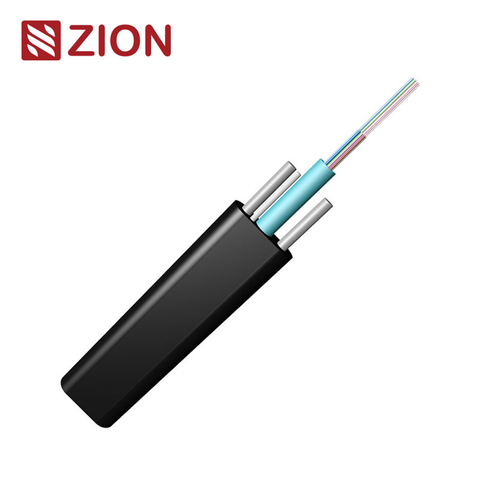
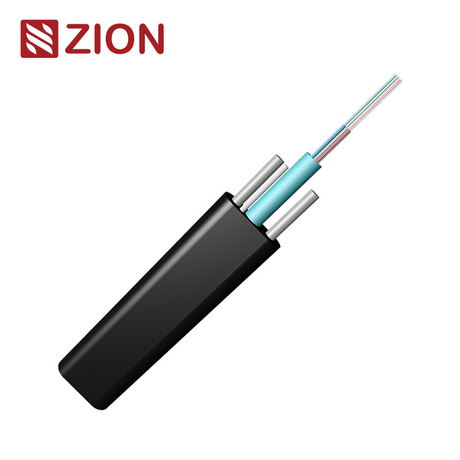
GYFXBY
Flat Self-Supporting Uni-Tube Cable
A flat, all-dielectric uni-tube cable with two parallel FRP rods and a PE sheath. Consider it for compact self-supporting aerial distribution routes using compatible wedge clamps.
View Product Details →![GYAXTC8Y Figure-8 steel-wire self-supporting rural fiber optic cable]()
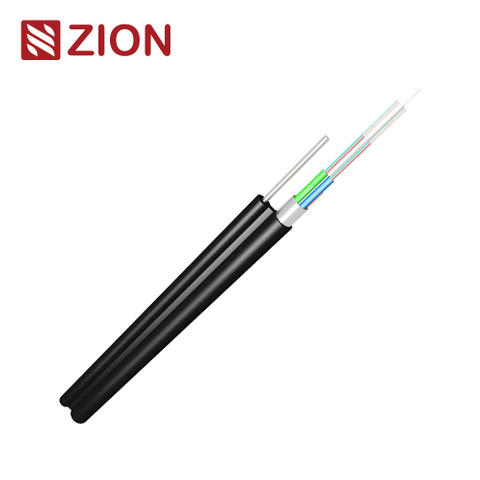
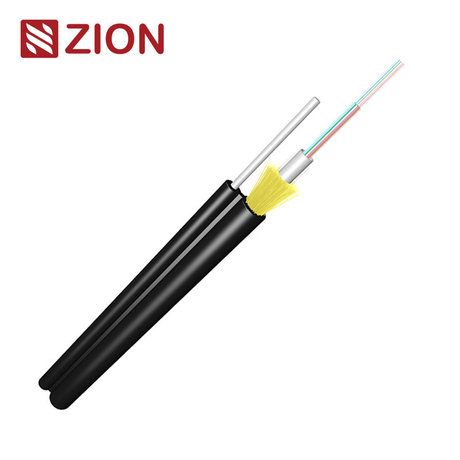
GYAXTC8Y
Figure-8 Steel-Wire Uni-Tube Cable
A Figure-8 uni-tube cable with aramid yarns, dry water blocking, a steel messenger, and a PE sheath. Consider it for short-distance self-supporting aerial distribution where metallic support is acceptable.
View Product Details →![GYFC8A-3U three-unit APL-armored Figure-8 micro optical cable]()
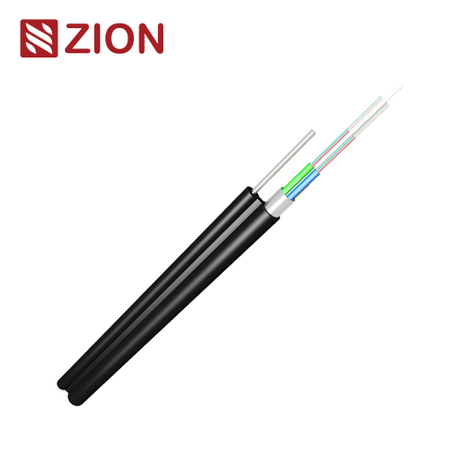
GYFC8A-3U
3-Unit APL Figure-8 Micro Cable
A three-loose-tube micro cable with an FRP central member, APL armor, steel messenger, and Figure-8 PE sheath. Consider it when a multi-unit self-supporting aerial construction is required.
View Product Details →How do I choose cable for a rural FTTH network?
Map the feeder, distribution, and drop segments before choosing a model. Rural routes often mix long backbone runs, branching distribution, and short subscriber drops, so one cable construction rarely fits every section.
Which network segment?
Use high-capacity stranded loose-tube cable for the feeder design, choose one of the six cables below for distribution conditions, and use a suitable bow-type or other approved drop cable for the final subscriber connection. Confirm that every transition point has compatible closures and splicing capacity.
Aerial, duct, or vertical?
Choose GYFXBY, GYAXTC8Y, or GYFC8A-3U for self-supporting aerial routes; GYAXZY and GYGXY can be considered for specified short aerial or duct applications; GTJGA is a non-self-supporting option for duct, vertical, or supported aerial installation.
Metal-free or metallic?
Choose an all-dielectric design where lightning exposure, induced voltage, or grounding constraints make conductive members undesirable. GYAXZY, GYGXY, and GYFXBY are dielectric constructions; GTJGA, GYAXTC8Y, and GYFC8A-3U contain steel or aluminum elements.
LSZH, HDPE, or PE?
LSZH limits smoke and halogen emissions where the approved route requires that material. HDPE and PE are common outdoor sheath choices. Do not select the sheath from location alone; confirm fire rules, UV exposure, moisture, abrasion, installation method, and local project standards.
What must be engineered?
Confirm fiber type and count, route length, pole span, sag, wind and ice load, tensile and crush requirements, bend radius, drum length, closures, clamps, and future expansion. Representative catalog values are not a substitute for the selected version's datasheet.
How do feeder, distribution, and drop cables work together?
A rural FTTH route typically moves from a high-capacity feeder to branching distribution cables and then to a short subscriber drop. The cable count and construction can change at each stage to balance distance, terrain, subscriber density, installation labor, and future growth.
![Feeder, distribution, and drop segments in a rural fiber optic network]()
Feeder
Carries aggregated traffic from the central office or upstream node toward the service area.
Distribution
Branches through villages or dispersed service zones and is the main focus of this six-product range.
Drop
Connects the final access point to an individual home, farm, business, or remote site.
Quick comparison of rural network fiber cables
The values below identify representative configurations published for each family. Use them to shortlist a structure, then request the exact datasheet for the selected fiber count, diameter, load, and sheath.
| Model | Construction | Installation fit | Representative size / weight | Representative load data |
|---|
| GYAXZY | Dielectric uni-tube, aramid yarn, LSZH | Short self-supporting aerial or duct | 6.0 mm; 42 kg/km | 600/1500 N tensile; 300/1000 N/100 mm crush |
| GYGXY | Dielectric uni-tube, glass-fiber tape, HDPE | Specified aerial or duct drop route | 6.0 mm; 35 kg/km | 600/1500 N tensile; 300/1000 N/100 mm crush |
| GTJGA | Slotted tight-buffered core, steel CSM, APL, PE | Duct, vertical, or supported aerial | 24F: 11.5 mm / 125 kg/km; 48F: 12.8 mm / 140 kg/km | Confirm for the selected version |
| GYFXBY | Flat uni-tube, two parallel FRP rods, PE | Self-supporting aerial with compatible clamps | 4.6 × 8.1 mm; 35 kg/km | 400/1400 N tensile; 1000/5000 N/100 mm crush |
| GYAXTC8Y | Figure-8 uni-tube, aramid, steel messenger, PE | Short self-supporting aerial route | 5.4 × 9.5 or 5.6 × 9.8 mm; 45 kg/km | 600/1500 N tensile; 300/1000 N/100 mm crush |
| GYFC8A-3U | Three loose tubes, FRP CSM, APL, steel messenger, PE | Short self-supporting aerial route | 7.5 × 12.5 mm; 62 kg/km | 600/1500 N tensile; 300/1000 N/100 mm crush |
Where do these rural fiber cables fit?
They fit distribution routes between feeder branching points, village access points, and subscriber areas. Final suitability depends on the approved installation method and project loads; a rural application label does not make every model suitable for every aerial, duct, or buried route.
![Rural FTTH fiber optic network across dispersed communities]()
Village distribution
Use the six families to connect branching points and local access points across dispersed villages. Plan spare fibers, branch closures, restoration capacity, and drum lengths before assigning a model.
Pole-line FTTH
GYFXBY, GYAXTC8Y, and GYFC8A-3U provide distinct self-supporting aerial structures. Pole spacing, sag, wind, ice, messenger or FRP load, clamps, grounding, and clearance must be checked for the selected version.
Duct and vertical routes
GYAXZY and GYGXY can support specified duct uses, while GTJGA is designed for duct, vertical, or supported aerial installation. Confirm pulling load, bend radius, fire rules, support spacing, and closure entry dimensions.
Lightning-prone areas
All-dielectric GYAXZY, GYGXY, and GYFXBY remove conductive metal from the cable construction. They still require a complete route assessment, compatible hardware, and compliance with local clearance and safety rules.
Frequently Asked Questions
What is a rural network fiber optic cable?
It is an optical cable selected for the long distances, dispersed users, outdoor exposure, and mixed installation methods common in rural broadband networks. The correct construction still depends on whether the route is feeder, distribution, or drop.
Which model is best for an aerial village route?
There is no single default. Choose GYFXBY for a flat dielectric design, GYAXTC8Y for a uni-tube Figure-8 design with steel messenger, or GYFC8A-3U for a three-unit APL-armored Figure-8 construction, then verify the actual span and load.
Why choose an all-dielectric rural fiber cable?
An all-dielectric cable contains no conductive metal, which can simplify grounding considerations and suit lightning-prone or electrically sensitive routes. It does not remove the need for pole loading, clearance, and installation engineering.
Can GTJGA be used as a self-supporting aerial cable?
No self-supporting claim should be assumed for GTJGA. Its product construction is intended for duct, vertical, or non-self-supporting aerial installation, so a separate support method and approved hardware are required for an aerial route.
Are the listed diameter and load values valid for every version?
No. They are representative configurations. Fiber count, tube arrangement, sheath thickness, tensile design, diameter, weight, drum length, and environmental limits must be confirmed on the datasheet for the quoted version.
RFQ Checklist
If the cable model is not yet fixed, provide the route and network requirements first:
Network segment: feeder, distribution, or final subscriber drop.
Installation method: self-supporting aerial, supported aerial, duct, vertical, or another approved route.
Route length, pole spacing, maximum span, sag, wind, ice, temperature, elevation, and terrain.
Required fiber type, fiber count, branch plan, spare capacity, and expected future growth.
Metal-free requirement, lightning exposure, grounding plan, and nearby power conductors.
Sheath and protection requirements: LSZH, HDPE/PE, APL, water blocking, UV, abrasion, or rodent risk.
Tensile, crush, bend-radius, diameter, weight, and drum-length limits.
Clamps, messenger or support method, closures, splitters, joint boxes, termination, and testing requirements.
Quantity, printing, packaging, required documents, and delivery destination.






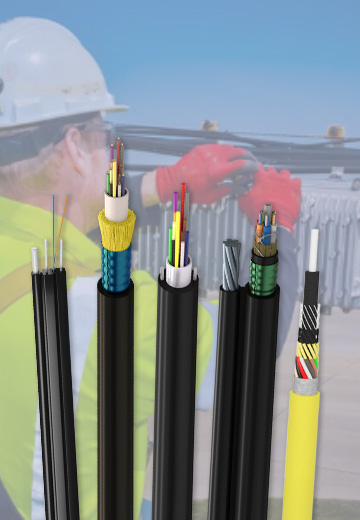 Fiber Optic Cable
 Fiber Optic Tools
 Ethernet Cable
 Coaxial Cable
 Fire & Security Cable
 Voice, Audio & Video
 Power & Control Cable