CAT5E RJ45 Patch Cables for Gigabit Ethernet Networks
ZION CAT5E patch cables are pre-terminated RJ45 cords for connecting switches, routers, patch panels, computers, and other Ethernet equipment. The range includes U/UTP for ordinary low-interference runs and F/UTP when a foil screen is preferred. Choose the shielding first, then confirm jacket material, length, color, installation conditions, and project compliance requirements.
Which CAT5E patch cables are available?
The range contains two 4-pair, stranded bare-copper RJ45 patch cord constructions rated to 100 MHz: an unshielded U/UTP version and a foil-screened F/UTP version. Both are offered with PVC or LSZH jacket options; confirm the required length, color, and finished construction when requesting a quote.
![CAT.5e U/UTP RJ45 patch cord]()
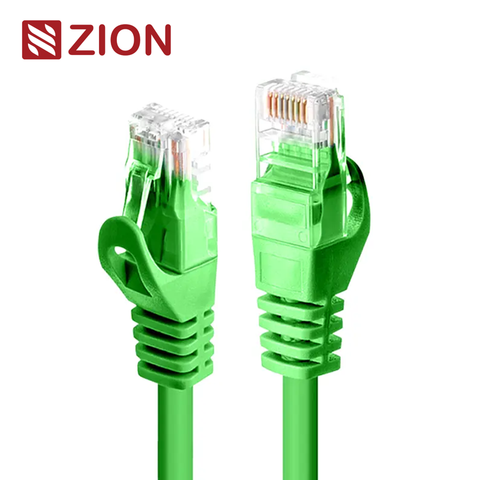
CAT.5E U-UTP
CAT5E U/UTP RJ45 Patch Cord
An unshielded 4-pair cord with stranded bare-copper conductors, 100 MHz performance, and PVC or LSZH jacket options. Consider it for ordinary indoor Ethernet runs where electromagnetic interference is controlled.
View Product Details →![CAT.5e F/UTP RJ45 patch cord]()
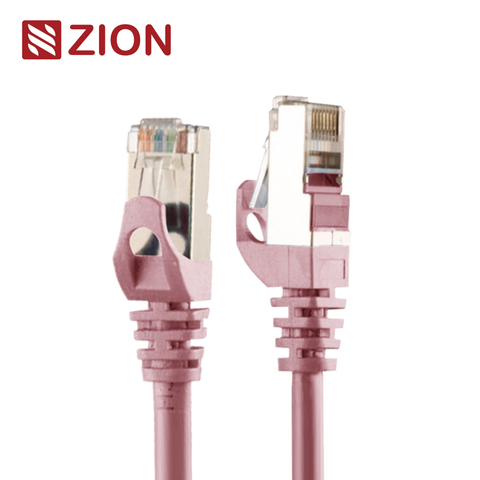
CAT.5E F-UTP
CAT5E F/UTP RJ45 Patch Cord
A foil-screened 4-pair cord with stranded bare-copper conductors, 100 MHz performance, and PVC or LSZH jacket options. Consider it where the cabling plan calls for added control of external electromagnetic interference.
View Product Details → How do I choose a CAT5E patch cable?
Start with the installation environment, because that determines whether an unshielded or foil-screened construction is appropriate. Then confirm the complete channel design rather than choosing from the CAT5E name alone.
Low or higher EMI?
U/UTP is the simpler choice for controlled office, home, and equipment-room environments. Use the F/UTP version when the design calls for an overall foil screen; the screened link must be planned with compatible grounded components.
PVC or LSZH?
Choose the jacket according to the building specification and installation zone. PVC is a general jacket option; LSZH means low smoke zero halogen and may be requested where smoke and halogen emissions are part of the project requirements. Confirm the exact fire and compliance rating separately.
How long is the run?
Specify the finished patch-cord length and the full permanent-link length. CAT5E supports 1GBASE-T in a compliant channel up to 100 m, but the patch cords, fixed cable, connectors, installation quality, and test method all contribute to that channel limit.
Need PoE?
Do not select a cord for Power over Ethernet from the CAT5E label alone. State the required PoE standard, device power, conductor size, length, bundle size, ambient temperature, and connector requirements so the selected construction can be confirmed.
Quick comparison: U/UTP vs F/UTP
Both models provide the same CAT5E frequency class and RJ45 format; the practical difference is the shielding construction. Use the table for initial selection, then confirm the exact jacket, length, color, and project-specific test requirements.
| Model | Shielding | Frequency | Core Construction | Jacket Options | Typical Selection |
|---|
| CAT.5E U-UTP | U/UTP, no overall screen | 1–100 MHz | 4 pairs, stranded bare copper, 100 Ω | PVC or LSZH | Controlled, lower-interference indoor environments |
| CAT.5E F-UTP | F/UTP, overall foil screen | 1–100 MHz | 4 pairs, stranded bare copper, 100 Ω | PVC or LSZH | Links designed with compatible screened and grounded components |
What construction details should be confirmed?
The electrical category is only one part of a finished patch cord. Both constructions use four twisted pairs, HDPE insulation, stranded bare-copper conductors, RJ45 plugs, and snagless boot options; the listed operating range is −20°C to +60°C and connector durability is at least 750 mating cycles.
For purchasing, confirm conductor construction, jacket, finished length, color, boot style, pinout, contact plating, packaging, labeling, applicable standard, and required test report. Compliance documents and certificates should match the exact quoted version rather than the category name alone.
Where are CAT5E patch cables used?
CAT5E patch cords suit short, flexible equipment connections inside a compliant copper Ethernet channel. They are not a substitute for selecting the correct permanent cable, grounding design, outdoor rating, fire rating, or PoE construction.
Office and home LANs
Use U/UTP patch cords to connect computers, printers, routers, switches, and wall outlets where interference is controlled and the installed channel meets CAT5E requirements.
Racks and patch panels
Use the required length and color to organize switch-to-patch-panel connections. If the rack uses a screened cabling system, specify the F/UTP cord with compatible screened hardware and grounding.
Cameras and access points
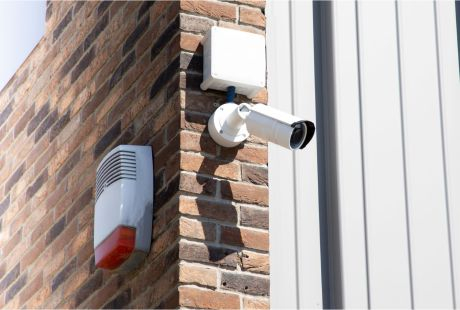
CAT5E can carry data to IP cameras and wireless access points, but any PoE requirement must be checked against the selected cord, channel length, equipment power, bundle conditions, and installation temperature.
Frequently Asked Questions
What is a CAT5E patch cable?
It is a flexible, pre-terminated Ethernet cord used to connect network equipment. These ZION versions use stranded conductors and RJ45 plugs, with CAT5E performance up to 100 MHz.
What is the difference between U/UTP and F/UTP CAT5E?
U/UTP has no overall cable screen, while F/UTP adds an overall foil screen around the twisted pairs. Choose F/UTP only as part of a compatible screened cabling and grounding design.
Can CAT5E patch cables support Gigabit Ethernet?
Yes, CAT5E is used for 1GBASE-T up to a 100 m compliant channel. The limit applies to the complete channel, so cable length, connectors, permanent link, installation, and testing must all meet the relevant requirements.
Can I use these CAT5E cords for PoE cameras or access points?
Possibly, but the exact cord must be confirmed for the required PoE standard and installation conditions. Include device power, channel length, bundle size, ambient temperature, and conductor requirements in the RFQ.
Should I choose PVC or LSZH?
Choose the jacket required by the building and fire-safety specification. LSZH addresses smoke and halogen emissions, but it does not by itself confirm a specific fire rating or regional approval.
RFQ Checklist
You do not need to know every technical term before asking for a quote. Provide the following project details so the cable construction and documentation can be matched to the installation.
U/UTP or F/UTP shielding requirement and the surrounding cabling system
Required finished length, quantity, color, and boot style
PVC or LSZH jacket and any required fire or regional rating
Network application, equipment combination, and total channel length
PoE standard, powered-device load, bundle size, and ambient temperature if applicable
Pinout, conductor size, contact plating, test report, and certificate requirements
Packaging, labeling, logo, and other OEM or ODM requirements





 Fiber Optic Cable
 Fiber Optic Tools
 Ethernet Cable
 Coaxial Cable
 Fire & Security Cable
 Voice, Audio & Video
 Power & Control Cable