1/2-Inch 50 Ohm RF Corrugated Coaxial Cables
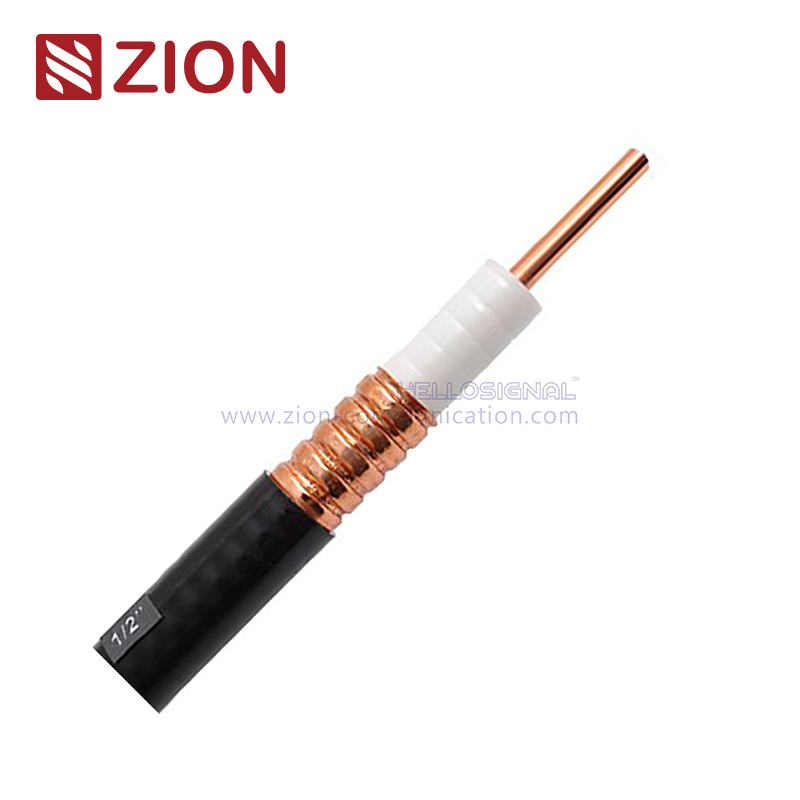
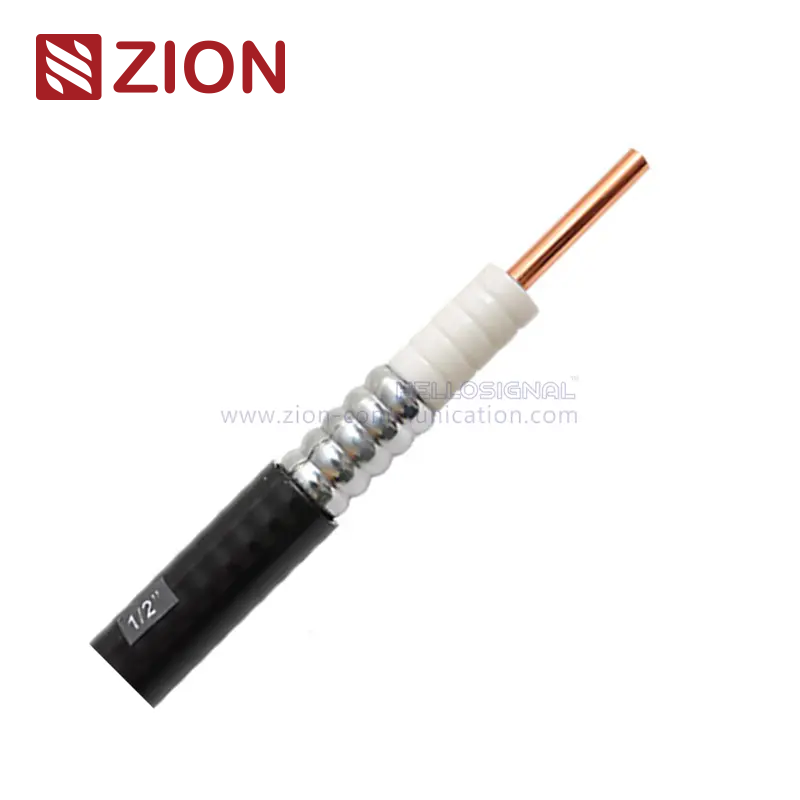
ZION 1/2-inch RF corrugated coaxial cables are 50 ohm feeder cables for carrying radio-frequency signals between transmitters, antennas, and distributed antenna system equipment. The range includes standard-flex, super-flexible, copper-outer-conductor, aluminum-outer-conductor, foam-dielectric, and air-dielectric designs. Start by matching flexibility, outer-conductor material, operating frequency, jacket, and installation conditions.
Which 1/2-Inch RF Coaxial Cables Are Available?
The range contains five 50 ohm models. The main choice is between standard and super-flexible construction, followed by copper or aluminum outer conductors and the frequency limit required by the system.
![7101117 1/2-inch aluminum air dielectric RF coaxial cable]()
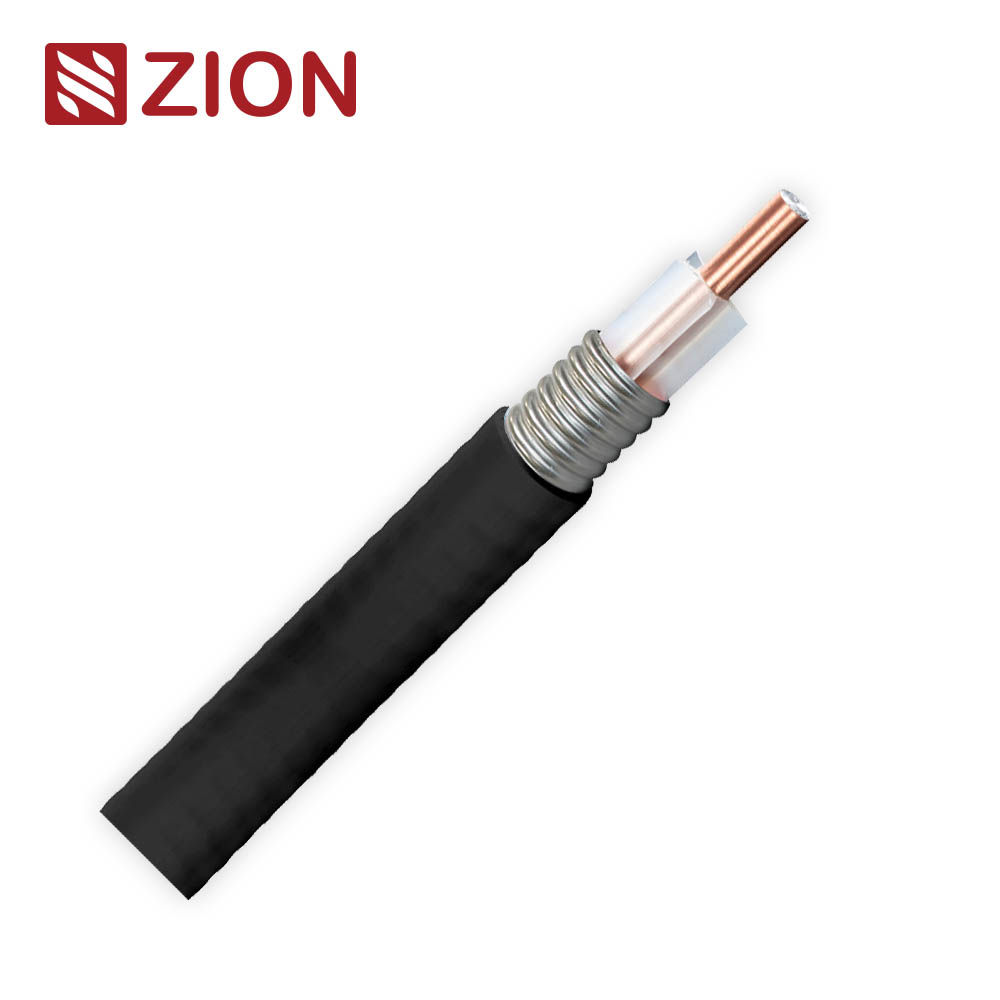
NO. 7101117
Aluminum Air Dielectric RF Coaxial Cable
A 50 ± 2 Ω air-dielectric design with a corrugated aluminum outer conductor and operation up to 6 GHz. Consider it when aluminum construction fits the project; confirm the required jacket grade and ordered length.
View Product Details →![7101116 1/2-inch copper air dielectric RF coaxial cable]()
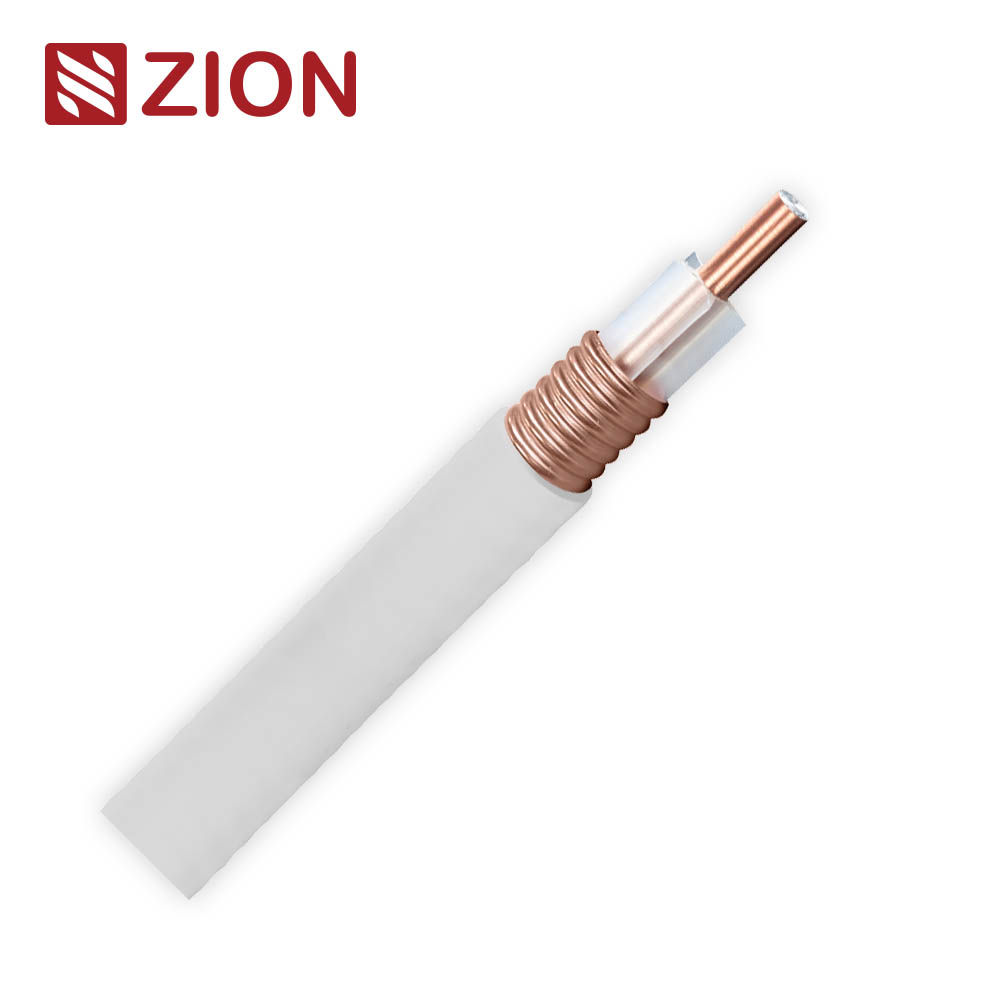
NO. 7101116
Copper Air Dielectric RF Coaxial Cable
A 50 ± 1 Ω air-dielectric design with a corrugated copper outer conductor and operation up to 6 GHz. Consider it when copper outer-conductor construction and higher verified tensile strength are important.
View Product Details →![7101105 1/2-inch super flexible RF coaxial cable]()
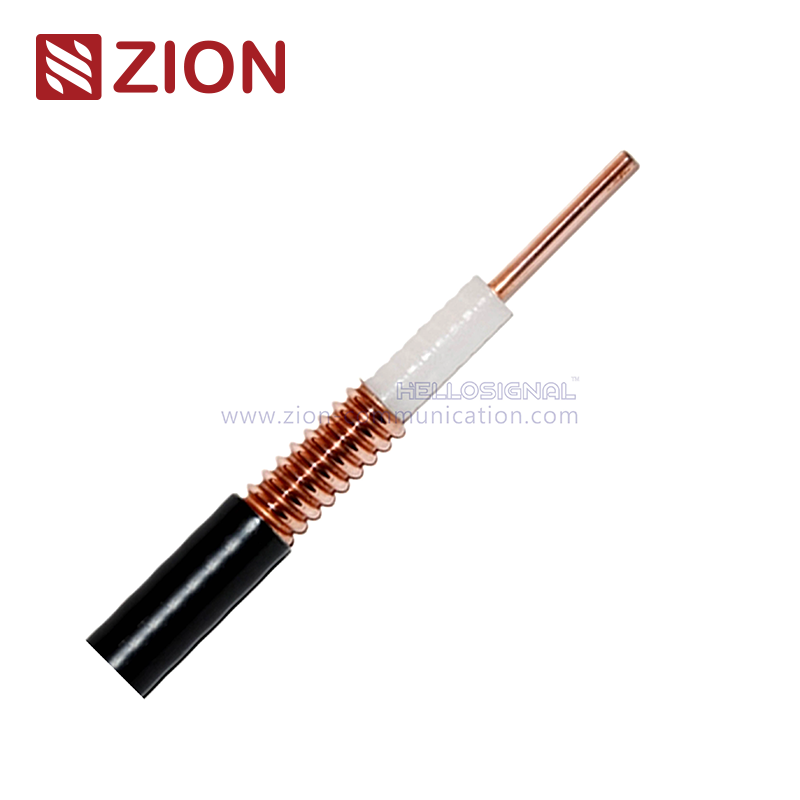
NO. 7101105
Super Flexible RF Coaxial Cable
A 50 ± 1 Ω foam-dielectric cable with a helical corrugated copper outer conductor and operation up to 10.2 GHz. Choose it for routing that needs the super-flexible construction; select PE or LSZH jacket by installation requirement.
View Product Details →![7101106 1/2-inch RF corrugated coaxial cable]()
NO. 7101106
Standard RF Corrugated Coaxial Cable
A 50 ± 1 Ω foam-dielectric cable with an annular corrugated copper outer conductor and operation up to 8.8 GHz. Choose it for standard feeder runs; PE and LSZH jacket versions are listed for different installation conditions.
View Product Details →![7101107 1/2-inch aluminum RF corrugated coaxial cable]()
NO. 7101107
Aluminum RF Corrugated Coaxial Cable
A 50 Ω foam-dielectric cable with an annular corrugated aluminum outer conductor and a black PE jacket. Consider it when aluminum outer-conductor construction is specified; confirm the required operating-frequency range for the selected version.
View Product Details → How Do I Choose a 1/2-Inch RF Coax Cable?
Start with the route and system frequency, then choose outer-conductor material and jacket. The connector type, cable length, attenuation budget, and installation environment must be checked as one system before ordering.
Tight route or open run?
Choose 7101105 Super Flexible RF when routing flexibility is the first constraint. For ordinary feeder routing, compare the standard annular-corrugated models, but still respect the published single and repeated bend limits.
Copper or aluminum outer conductor?
Select the material named in the project specification. The range includes corrugated copper models 7101116, 7101105, and 7101106, plus corrugated aluminum models 7101117 and 7101107. Do not treat them as interchangeable without checking attenuation, strength, connectors, grounding, and environmental requirements.
What frequency must it carry?
Match the cable's stated maximum operating frequency to the full band plan. The verified limits are 10.2 GHz for 7101105, 8.8 GHz for 7101106, and 6 GHz for 7101116 and 7101117. Confirm the operating-frequency range for 7101107 during quotation.
Which jacket and installation conditions?
Choose PE, PVC, or LSZH only after matching the route, fire-performance requirement, temperature range, and local project rules. A jacket name alone does not confirm the exact fire classification, so identify the required suffix and supporting documentation in the RFQ.
Quick Comparison of the Five Models
Use the table to narrow the range, not to approve the final cable. Attenuation at the project frequencies, VSWR, power handling, bend limits, connector compatibility, jacket suffix, and ordered length still need to be checked for the selected model.
| Model | Outer Conductor | Impedance | Max. Operating Frequency | Listed Jacket | Selection Direction |
|---|
| 7101117 | Corrugated aluminum | 50 ± 2 Ω | 6 GHz | White PVC | Aluminum air-dielectric option |
| 7101116 | Corrugated copper | 50 ± 1 Ω | 6 GHz | White PVC | Copper air-dielectric option |
| 7101105 | Helical corrugated copper | 50 ± 1 Ω | 10.2 GHz | PE or LSZH | Super-flexible routing |
| 7101106 | Annular corrugated copper | 50 ± 1 Ω | 8.8 GHz | PE or LSZH | Standard copper feeder |
| 7101107 | Annular corrugated aluminum | 50 Ω | Confirm for the selected version | Black PE | Standard aluminum feeder |
Where Do 1/2-Inch RF Feeder Cables Fit?
These cables fit 50 ohm RF feeder paths where low-loss corrugated construction is required. They are not substitutes for 75 ohm television coax, small flexible RF jumpers, or complete connectorized assemblies unless the full interface and system requirements are specified.
Wireless antenna feeders
Use the range to connect compatible 50 ohm RF equipment and antennas after calculating attenuation at the operating bands. Specify the connectors, run length, routing, grounding, and weatherproofing separately.
In-building DAS
Air-dielectric models 7101117 and 7101116 list in-building distributed antenna systems among their applications. Confirm fire-performance requirements, pathway conditions, power, frequency, and connector compatibility for the specific building.
Broadcast and mobile radio
The 7101116 and 7101117 product ranges identify TV and radio broadcast and mobile radio uses. Select by actual frequency, attenuation, average power, route, and connector system rather than application name alone.
Not a connectorized jumper by default
These category items are bulk cable designs. If the project needs a finished jumper, provide both connector interfaces, orientation, assembly length, test requirements, and weatherproofing details instead of assuming the bulk cable includes connectors.
Frequently Asked Questions
What is a 1/2-inch RF corrugated coaxial cable?
It is a 50 ohm feeder cable with a corrugated metal outer conductor for RF transmission. The 1/2-inch description identifies the cable size family, while the exact overall diameter, frequency range, flexibility, conductor materials, and jacket depend on the model.
What is the difference between 7101105 and 7101106?
7101105 is the super-flexible design with a helical corrugated copper outer conductor and a stated maximum operating frequency of 10.2 GHz. 7101106 uses an annular corrugated copper outer conductor and is rated up to 8.8 GHz. Compare bend limits and attenuation at the project frequencies before choosing.
Can I replace a copper outer conductor with aluminum?
Not automatically. Copper and aluminum versions can differ in attenuation, DC resistance, mechanical strength, connector systems, grounding details, and environmental behavior, so the replacement must be approved against the complete RF and installation specification.
Can these cables be used for 75 ohm TV or CCTV systems?
No, not as a direct 75 ohm substitute. This category is built around 50 ohm RF cables, so using it in a 75 ohm system creates an impedance mismatch unless a qualified system design specifically accounts for it.
Does every model include connectors?
No. Treat these listings as bulk cable unless the quotation identifies a finished assembly. For a connectorized cable, specify each connector type and gender, cable length, orientation, assembly testing, grounding, and weatherproofing.
RFQ Checklist
You do not need to choose every technical detail alone. Provide the system information below so the cable model, jacket suffix, length, packaging, and any assembly requirements can be checked against the project.
Operating frequency band or bands in MHz/GHz, plus the required 50 Ω system impedance
Cable run length, acceptable attenuation, transmitter power, and VSWR requirement
Standard-flex or super-flexible route, including minimum bend radius and pulling conditions
Preferred copper or aluminum outer conductor and the reason for that requirement
Indoor, outdoor, riser, plenum, low-smoke, fire-performance, temperature, and UV requirements
Bulk cable or finished assembly; connector types, genders, orientations, grounding, and weatherproofing
Required cable marking, reel length, packaging, quantity, and labeling
Requested test reports, compliance documents, and project-specific acceptance criteria





 Fiber Optic Cable
 Fiber Optic Tools
 Ethernet Cable
 Coaxial Cable
 Fire & Security Cable
 Voice, Audio & Video
 Power & Control Cable